
A freshly dog-eared review
The Best Dark Academia Books: 17 Novels of Secret Societies, Campus Murder, and Beautiful Rot
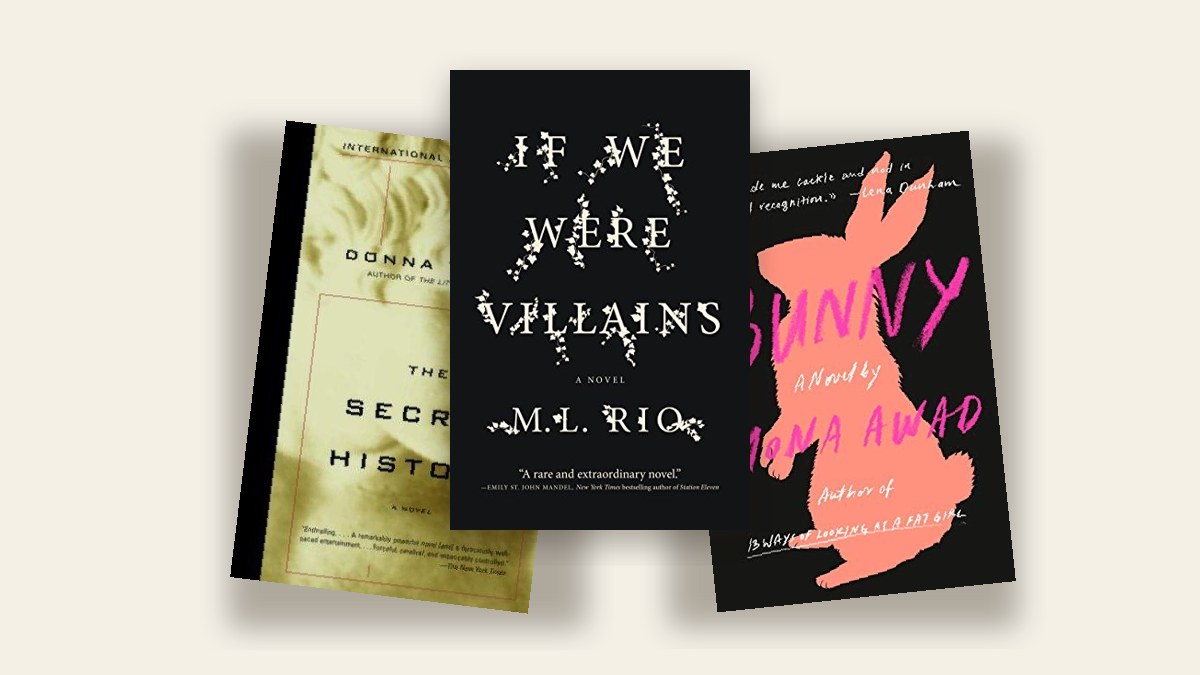
I have read every book on this list. Some of them twice. One of them five times, which I will admit to in a minute. I’m telling you this up front because most dark academia roundups read like they were assembled by someone who skimmed The Secret History, saved forty photos of Oxford to a mood board, and called it expertise. This is not that list. This is the list I would send you at one in the morning if you made the mistake of asking.
Here’s how it started for me. I found my copy of The Secret History at a library book sale, two dollars, spine cracked in three places. The previous owner had underlined “beauty is terror” in pencil and written “yes” in the margin, and I remember thinking, calm down, and then reading the whole thing in a weekend during a January when my radiator was broken. I read it wearing a coat indoors, drinking tea that kept going cold, which I realize now was accidental cosplay. By the time Bunny went over the edge of that ravine I had stopped noticing I was freezing.
The embarrassing part is what the book was compensating for. My actual college experience was linoleum hallways, a commuter bus, and one Greek philosophy course taught at 8 a.m. in a basement by a man who sighed between every slide. Nothing about it was candlelit. Nobody recruited me into anything. Which is exactly why this genre works on me, and probably on you. Dark academia is nostalgia for an education almost nobody actually had. I know this. I keep buying it anyway.
And look, we need to talk about the label, because somewhere around 2020 “dark academia” stopped being a kind of book and became a costume. It’s a hashtag now, a filter, a way to sell plaid. Publishers slap “for readers of Donna Tartt” on any novel containing a quad and a corpse, and roughly half of those books are lying to you. The corpse is real but the ideas are set dressing. Part of my job here is telling you which half is which. I have been burned by enough gorgeous covers wrapped around empty seminars.
One more thing before the list. Every good book in this genre is a seduction story. Not a romance, a seduction. A person, a clique, an institution, or an idea talks you into handing over your judgment, and you do it gladly, and then the bill comes. If a dark academia novel doesn’t make you feel a little complicit, it isn’t working. The best ones on this list made me an accessory. A couple of the famous ones just made me check how many pages were left, and I’ll name those too, because a list where everything gets five stars is an ad, not an opinion.
What dark academia actually is (besides a Pinterest board)
Strip the aesthetic off and here’s the machine underneath. You need a closed world where intelligence is the only currency that matters: a campus, a seminar, a conservatory, a secret society. You need a gatekeeper, usually a charismatic teacher or a golden clique, who makes admission feel like election. You need knowledge treated as transgression, the sense that the real curriculum is dangerous and reserved for the worthy. And then you need a crime, almost always a death, that the characters rationalize using everything they’ve learned. Their education doesn’t fail to prevent the murder. Their education is how they justify it. That’s the whole sick engine: beauty and rot at the same time, not beauty first and rot later.
What it feels like to read one, when it’s done right, is being recruited. The narrator is usually an outsider looking through the window, and you press your face to the glass right beside them, and the flattery of finally being let in is so warm that you barely register what you’re agreeing to. Then comes the moment, and every great one has it, where you realize you’d have helped carry the body. That’s the difference between this and a campus novel, which is satire, and stands outside the institution laughing at it. Dark academia stands inside, in love, taking notes.
What it is not: blazers, candles, an autumn playlist. A vibe is not a plot. Remember that when we get to the cautionary tier.
The ones worth the hype
The Secret History by Donna Tartt
Start here or don’t start at all. Tartt built the modern version of this genre in 1992 and nobody has beaten her since, which is either impressive or depressing depending on the day. Six classics students at a small Vermont college, a professor who admits only the chosen few, a bacchanal that goes badly wrong, and Bunny Corcoran, poor doomed Bunny, who knows too much and can’t stop talking. Tartt tells you about the murder on the first page and it costs her nothing, because the suspense was never whodunit. It’s how did these people convince themselves, and the horrible answer is: gracefully, in Greek. This is the one I’ve read five times, and what I notice now is that Richard, the narrator, is the least honest person in the book. First read, you’re there for Henry. Fifth read, you’re there for the lies Richard tells you with a straight face.
If We Were Villains by M.L. Rio
Openly derivative of Tartt and I genuinely do not care. Seven acting students at an elite conservatory, typecast on stage and off, the hero, the villain, the tyrant, the ingenue, until the casting starts to bleed into real life and the tyrant ends up dead. They quote Shakespeare at each other mid-conversation, which should be unbearable, and instead it does something sneaky: it shows you people who only know how to feel things through borrowed words. Oliver’s confession, told ten years later after prison, gives the whole thing a bruised tenderness Tartt would never allow. That’s the real difference. Rio loves her characters. Tartt autopsies hers.
Bunny by Mona Awad
Full disclosure: I threw this book across the room at around page 60. The Bunnies, a clique of MFA girls who all call each other Bunny in a saccharine chorus, were so twee I couldn’t breathe, and I quit. Then I picked it back up out of spite a week later, hit the workshop scene, the one where their “hybrid projects” turn out to be something you will not guess and I will not spoil, and did not put it down again. It’s an MFA satire wearing a horror mask, or possibly the reverse, and underneath both masks it’s about loneliness so severe it hallucinates friendship. Funniest book on this list. Also the meanest. The thing I mistook for tweeness was the trap being set for me specifically.
Ninth House by Leigh Bardugo
Yale’s secret societies are real, and in Bardugo’s version they do real magic, and they use it exactly the way you’d expect rich institutions to: insider trading, better parties, prettier lies. Alex Stern, a survivor of things far worse than academia who can see the dead, gets recruited to police them. She’s the best protagonist in this entire genre, because she’s the only one who never for a second believes the institution loves her. This is Bardugo’s angriest book. It’s about who gets protected and who gets consumed. Slow for the first hundred pages, and then it pays for every one of them.
Babel by R.F. Kuang
Worth the hype, with caveats I’m not going to hide. Oxford in the 1830s, where translation is literal magic, silver bars powered by the meaning lost between languages, and the British Empire runs on the stuff. That premise is the best fantasy conceit in a decade, full stop. Robin Swift, taken from Canton to feed the machine that’s strangling his homeland, breaks slowly and believably. The caveat: Kuang will stop the novel cold to explain her themes to you, footnotes and all, like a TA who doesn’t trust the class. I rolled my eyes at least a dozen times. I also cried at the end, so she wins. The subtitle is The Necessity of Violence. She means it.
Never Let Me Go by Kazuo Ishiguro
Nobody shelves this as dark academia and everybody is wrong. A sheltered boarding school, teachers who ration out forbidden knowledge, students who half understand what they’re being raised for and keep being polite about it. It has every structural bone of the genre with none of the candelabra, and it’s the quietest book on this list and the one that hurt me the most. Where Tartt’s students kill to protect what they’ve learned, Ishiguro’s students learn, gradually, gently, what’s going to be done to them, and the horror is how graciously they accept it. Read it after two or three of the flashier ones. It will recalibrate you.
Deep cuts your feed hasn’t shown you
The Likeness by Tana French
The premise is absurd and you’ll accept it inside ten pages: detective Cassie Maddox goes undercover as a murdered woman, living among the dead girl’s four postgrad housemates, because the two of them looked eerily identical. What follows is the genre’s best trick played backwards. Instead of watching a golden clique rot from the outside, Cassie infiltrates one and starts rotting on purpose, because Whitethorn House, with its shabby grandeur and its closed circle of brilliant people who’ve renounced the outside world, is everything she’s ever wanted. I read this in two nights while housesitting a friend’s much nicer apartment, surrounded by someone else’s better life, which turns out to be exactly what the book is about. French writes the seduction of belonging better than anyone since Tartt. Her ending is sadder, too, and nobody even has to die for it. Well. Almost nobody.
Black Chalk by Christopher J. Yates
Six friends at Oxford invent a game of escalating dares, with consequences designed to humiliate, and the game does what games in these books always do. Narrated years later by a damaged recluse in New York who is lying to you, and knows he’s lying to you, and is possibly lying to himself. A nasty little machine of a book. The final reveal actually lands, which in this genre is rarer than it should be.
These Violent Delights by Micah Nemerever
Not the Shanghai Romeo and Juliet one. This is the 1970s Pittsburgh one, two brilliant Jewish boys who fall into first love with the intensity dial snapped off, egging each other toward something irreversible while quoting philosophy the whole way down. It’s Leopold and Loeb refracted through a queer love story, and it is the most emotionally violent book on this list. Nemerever writes obsession from the inside, no safe narrative distance, no cool retrospective voice, just two people becoming one deranged organism in real time. Gorgeous, upsetting sentences. I recommend it to maybe a third of the people who ask me for dark academia, and I mean that as the highest praise.
The Lessons by Naomi Alderman
Oxford, again, but this one understands something the glossier books miss: patronage is a horror plot. A struggling student gets absorbed into the orbit of Mark, beautiful and Catholic and catastrophically rich, who collects friends the way other people collect debts, and every gift has interest compounding quietly underneath. Short, cold, and criminally under-discussed. Alderman wrote this before The Power and you can already see the teeth.
The Bellwether Revivals by Benjamin Wood
Cambridge. An organ scholar named Eden Bellwether believes his music can literally heal the sick, and his sister’s working-class boyfriend gets close enough to find out whether he’s a genius or something much worse. Opens with bodies and works backward, so you read the whole thing braced. The real question underneath is one this genre keeps circling: what if brilliance is just illness with better PR? Nobody ever mentions this book. Somebody besides me should.
Special Topics in Calamity Physics by Marisha Pessl
Structured as a great-books syllabus, complete with a final exam at the end, and yes that is showing off, and yes she earns it. Blue van Meer, raised on the road by her itinerant professor father, lands at a school where the magnetic film teacher Hannah Schneider hosts a select dinner-party clique, and then Hannah is found hanging in the woods. Too long by eighty pages. I don’t care. The voice is a controlled substance and the last fifty pages reorganize everything you read before them.
The Orchard by David Hopen
The deepest cut here. A yeshiva-educated kid from ultra-Orthodox Brooklyn transfers to a wealthy Modern Orthodox academy in Florida, where the golden boys read Talmud and Nietzsche in the same breath and chase transcendence right off a cliff. It’s uneven, it’s overstuffed, it’s swinging at Tartt with total sincerity, and it has stuck with me longer than tidier books. Dark academia almost never gets written about religious learning, which is strange, since that’s where the stakes of forbidden knowledge are actually real.
Proceed with caution: the overrated, the divisive, the mid
The Atlas Six by Olivie Blake
I wanted to love this. Six magicians compete for initiation into a secret society guarding the Library of Alexandria, five get in, one gets eliminated, everyone is hot and mean and morally flexible. That’s a perfect elevator pitch, and the book that follows is four hundred pages of people describing each other’s auras in rooms. The plot advances maybe three times. It became a phenomenon on aesthetic alone, which makes it Exhibit A for my rant up top: this is what happens when the mood board publishes first and asks questions later. People I respect love it for the character psychology, so call it divisive if you’re feeling generous. I found homework where the murder should be.
The Maidens by Alex Michaelides
A thriller in a dark academia trench coat. Cambridge, a Greek tragedy professor with a private circle of female students called the Maidens, dead girls with ritual staging. All the right furniture. But the book treats its ideas like set dressing, the professor is menacing in the way of a cologne ad, and the twist is the kind you get mad about on a bus two days later. Reads fast, evaporates faster. Mid, with excellent sourcing.
Catherine House by Elisabeth Thomas
Genuinely divisive, and I’ll defend both camps. Students surrender three years of their lives, completely cut off from the outside world, in exchange for an education at a school that is clearly, luminously wrong. The sentences are dreamy and precise, the atmosphere is a full sensory event, and the plot dissolves the moment you try to hold it. If you need payoff, you’ll finish it furious. If atmosphere alone can be a meal for you, this is a double portion. I liked it best at 2 a.m., half asleep, which may tell you something about the ideal reading conditions.
The Magicians by Lev Grossman
Divisive number three, and here I’m mostly for the defense. Yes, Quentin Coldwater is insufferable. That’s the point, and if you quit because of his whining you quit before the argument starts. Grossman wrote what actually happens when a depressed person is handed everything he ever wanted: the wanting just moves. Brakebills is the best magic school in fiction precisely because it’s tedious, brutally hard, and full of high-functioning drunks, which is to say, because it’s graduate school. Not comfort reading. Closer to a warning label.
Every great dark academia novel is a seduction followed by an invoice.
Where to start
Because seventeen books is a syllabus, not an answer, here’s the short version, no hedging.
- Never touched the genre: The Secret History. There is no clever contrarian alternative. Start at the source.
- You want the mystery machinery to actually work: The Likeness, then Black Chalk.
- You want to feel flayed: These Violent Delights, with Never Let Me Go as the quiet aftershock.
- You want magic with your rot: Ninth House if you like your heroines armored, Babel if you’re willing to attend a few lectures on the way to the heartbreak.
- You want to laugh while being disturbed: Bunny, and don’t quit at page 60 like I almost did.
- You already love Tartt and want the warm version: If We Were Villains.
Keep reading with me
If Babel put R.F. Kuang on your radar, I already had a long, complicated argument with her debut in my review of The Poppy War, which is angrier and messier and worth your time. And if what you actually loved here was the secret-society menace, Gideon the Ninth is dark academia’s feral cousin: locked gothic palace, competing scholar-necromancers, a murder that picks them off one by one. I have opinions about that one too. I always do.