
A freshly dog-eared review
Best Dark Romance Books: 17 Morally Gray Love Stories, Honestly Ranked (Overrated Ones Included)
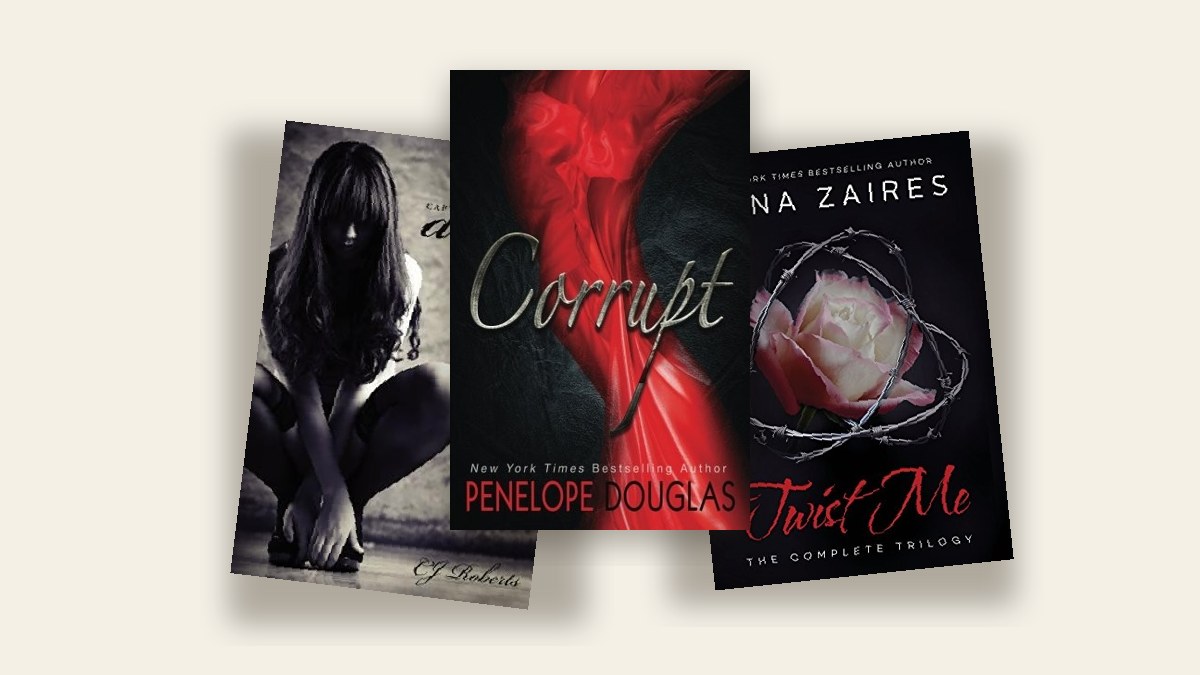
I read my first real dark romance on a delayed flight out of O’Hare in 2012, Kindle tilted toward the window so the man in 14B couldn’t see my screen. It was Captive in the Dark by CJ Roberts, handed to me by a Goodreads forum thread that said, roughly, “do not read this if you are a normal person.” I finished it somewhere over Pennsylvania feeling like I’d been caught doing something. There was no shelf for it then. No black-and-red covers, no masked men on TikTok, no trigger warning pages formatted like cocktail menus. Just a whisper network of readers passing around books that romance proper wanted nothing to do with.
Fourteen years later the whisper network has a merch table. Dark romance is now an aesthetic: knives, masks, “he’s a monster but he’s HER monster,” annotation tabs in arterial red. And look, I’m not above it. I own the special editions. But somewhere between then and now, “dark romance” became a sticker publishers slap on any book where a rich man is rude for forty percent of the page count and then grovels. That’s not dark romance. That’s a Tuesday.
Here’s the thing: I have read essentially all of it. The classics, the self-published legends, the BookTok juggernauts, the criminally under-edited why-choose chaos novels, the quiet terrifying ones nobody makes edits about. I’ve read this genre in airports, in waiting rooms, at 3 a.m. against my own better judgment. My taste has been shaped, warped, refined, and occasionally insulted by this genre, and I love it anyway.
So this list is not a Goodreads aggregate. Some books everyone worships are on my overrated shelf, and I’ll tell you why. Some books nobody talks about anymore are, I think, the actual best the genre has produced. I’ll flag content honestly, because that’s the deal with dark romance: the warnings aren’t an apology, they’re a handshake.
One more confession before we start. Every couple of years I ask myself why I read these. Books about captivity and stalking and consent that lives in the gray, written mostly by women, read mostly by women, defended constantly against people who think we can’t tell fiction from an instruction manual. And every time I land in the same place: the genre is a locked room where you get to feel the scariest feelings with the door handle still in your hand. That’s not sickness. That’s what fiction is for.
Anyway. The books.
What dark romance actually is (and what it isn’t)
A dark romance is a love story where the romance coexists with something that should disqualify it. Captivity. Stalking. Violence. Revenge that uses a person as the weapon. Consent that starts compromised and has to be earned back, or renegotiated, or reckoned with. The hero is frequently the danger. Not “danger” like he rides a motorcycle. Danger like the plot problem is him.
What it is not: a mafia guy with good cheekbones being emotionally unavailable. It is also not erotica with a mean voiceover, and it’s not a thriller. This matters. A thriller can end in ruin. A dark romance, whatever it drags you through, still owes you a love story that lands. The happy ending after the unforgivable thing is the whole tension of the genre. That’s the tightrope. Books that skip the reckoning and sprint to the epilogue are the ones that feel cheap.
What it feels like to read, when it’s done well: dread and want at the same time, and being slightly furious at the author for making those two things share a nervous system. You keep reading to find out if the book can possibly justify itself. The great ones do. The bad ones just add another knife to the cover.
Every book below comes with the general warning: assume dubious consent, violence, and captivity themes unless I say otherwise. I’ll flag the heavier stuff specifically.
The ones worth the hype
Captive in the Dark by CJ Roberts
Still the cornerstone. Caleb abducts Livvie to train her and sell her, as one move in a long revenge plot against the man who destroyed his own childhood. What makes it matter is that Roberts gives you Caleb’s point of view and refuses to soften him. The book never asks you to excuse him. It just asks whether you’ll keep reading, which is a much more honest question. There’s an early moment where Livvie tries charm on him and realizes charm is a currency he recognizes and does not accept, and that’s when you know what kind of book you’re in. Heavy warnings, all of them. If you want to know what this genre is actually capable of, start here and clear your weekend for the sequel.
Corrupt by Penelope Douglas
The gateway drug, and I mean that with respect. Devil’s Night, Thunder Bay, Michael Crist and Rika and a revenge scheme that does not survive close reading, and doesn’t need to. Corrupt is a soap opera doused in kerosene. By genre standards Michael is barely a criminal, but Douglas’s actual superpower is longing: the years of watching, the almost-touches, the hatred that was never hatred. Not the darkest book on this list. Possibly the most re-readable.
Twist Me by Anna Zaires
Julian kidnaps Nora to a private island, and the book’s great virtue is that neither Julian nor Zaires ever pretends this is redeemable. Clean, unfussy prose, no moral hand-wringing, no last-act personality transplant. He is not sorry, and the book isn’t either. Weirdly refreshing.
Lights Out by Navessa Allen
The consent-forward one, and proof the genre can do menace without violating anybody. Aly is a trauma nurse publicly thirsting over masked men online. Josh is a masked man who notices, and what follows is essentially stalking as a service: negotiated, opted into, and still genuinely unnerving when it needs to be. It’s also funny, which almost nothing on this list is. If dubious consent is the wall you can’t climb, this is your dark romance. Everyone else can come for the mask and stay because Allen can actually write banter.
Butcher & Blackbird by Brynne Weaver
Two rival serial killers meet through an annual murder game and fall stupidly in love. Honest take: this is a rom-com wearing a blood apron, not dark romance in the internal sense. Nobody’s soul is ever really at risk, and the gore functions as flirting. I don’t care. It’s the best time on this list, and sometimes you want the knives without the despair.
Deep cuts I hand-sell to strangers
Comfort Food by Kitty Thomas
The scary one. Published in 2010, before the genre had a name or a marketing budget. A woman is taken by a captor who never speaks to her, and the book is a slow, clinical study in conditioning: comfort given, comfort withheld, until you watch a person’s will get quietly rebuilt around someone else’s. No rescue fantasy. No grovel. An ending people have been fighting about for fifteen years. This is the book I test people with, and I say that knowing most readers raised on the TikTok era will bounce off it hard. Comfort Food isn’t fun. It’s the genre with all the aesthetic stripped off, and what’s left underneath will follow you around for a week.
The Risk by S.T. Abby
Serial killer heroine methodically avenging her past; FBI profiler hero hunting her case while falling for her over pancakes. I read the entire Mindf*ck series (five short books) in one feverish flu weekend, sweating through blankets and rooting, without reservation, for a woman with a kill room. The prose is serviceable, the plotting is not subtle, and I have recommended it to more people than anything else here. Rage as love language. It works.
Dark Notes by Pam Godwin
Teacher and student at an elite music conservatory: a broke girl with a real gift and a horrifying home life, and the man who should stay away from her. The premise scares people off. The premise is the point. Underneath the taboo it’s a book about poverty and power and who gets to touch a piano. Godwin is one of the most underrated writers working in this genre.
Prisoner by Annika Martin and Skye Warren
A writing class inside a prison, a hostage situation, and a book far smarter than its premise about rage and the stories we tell to survive. Two authors who each understand darkness separately, combining like a chemical reaction.
Killing Sarai by J.A. Redmerski
A girl held for years in a drug lord’s compound walks out the door with the hitman who came for her captor. Older, with road-movie bones and an odd tenderness the genre mostly doesn’t attempt anymore. Nobody talks about this book now, which I consider a collective failure.
Tears of Tess by Pepper Winters
Melodrama in the best sense. Tess is taken and sold to Q, a man at war with what he wants, and Winters commits so completely to the fever-dream register that resistance is pointless. Purple prose warning, sincerely. Also a heavy-content warning. But commitment counts for a lot in this genre, and nobody commits like Pepper Winters.
Proceed with caution (the real deal)
Haunting Adeline by H.D. Carlton
The most famous dark romance of the decade, and I have complicated feelings, so buckle up. Book one mostly works: a writer inherits her great-grandmother’s manor, finds old diaries, picks up a stalker who calls himself Z, and the gothic cat-and-mouse has genuine pull if you accept the premise, which is a big if, because the premise is a felony. Book two is a different, messier novel. The trafficking subplot gives it tonal whiplash, the pacing bloats, and the moral math gets very “he does crimes but against worse criminals.” Here’s my confession: I read the first one until 3 a.m., feeling vaguely gross about myself, and kept turning pages anyway. That is the genre working exactly as designed. Overhyped and effective are not mutually exclusive. Every warning applies. All of them.
Credence by Penelope Douglas
Let me say it plainly instead of hiding behind euphemism: an orphaned young woman spends a snowbound winter with her guardian (no blood relation) and his two adult sons, and the book goes exactly where you’re afraid it goes. It is designed to make you uncomfortable and it succeeds. It’s also, sentence by sentence, one of the best-written books on this list, because Douglas does isolation and want better than anyone in the genre. I’m not going to tell you it’s fine. I’m telling you it’s effective, and those are different reviews.
Does It Hurt? by H.D. Carlton
Carlton’s meaner, tighter book. Two liars stranded at a remote lighthouse, survival stakes, hostility that curdles into something worse and then something else. Better structured than Adeline, and nobody talks about it, presumably because it has less merch potential.
The overrated shelf (come at me)
Den of Vipers by K.A. Knight
I know. I KNOW. Roxy and her four feral men are beloved, and the chaotic energy is real. But this book reads like a first draft with confidence: repetitive, baggy, in desperate need of an editor with a machete. The hype outran the book by about a mile and a half. I understand why people love it. Loving something doesn’t make it good, a sentence that also describes half the relationships in this genre.
The Ritual by Shantel Tessier
Secret societies, contracts, men called Lords, an aesthetic thick enough to spread on toast. And underneath the aesthetic: not much. The dark parts are set dressing, the wealth is doing the work menace should be doing, and the page count is a war crime. It mistakes rich for dangerous, which is the most common lie in modern dark romance marketing.
Hooked by Emily McIntire
Dark-lite. The Never After series is villain cosplay, a Peter Pan retelling where the danger is mostly wardrobe. It’s fine. It’s candy. My objection is that it gets sold as a weapon, and readers who start here think they’ve seen the genre. The door goes so much further in than this.
Dark romance isn’t about liking bad men. It’s about wanting one honest monster in a book where everyone else is lying.
Where to start
If you’ve never read a dark romance in your life: Corrupt. It’s the shallow end with a strong current.
If you want the real thing, no training wheels: Captive in the Dark, and don’t say I didn’t warn you.
If consent is your hard line: Lights Out. Everything is negotiated and it’s still the sexiest book here.
If you want to laugh while people die: Butcher & Blackbird.
If you want to be quietly ruined and think about a book for a month: Comfort Food.
If you want revenge with a body count and a soft heart: The Risk.
And if you just want to understand what everyone on the internet is arguing about: Haunting Adeline, read with one eyebrow permanently raised.
Keep going (you’re clearly one of us now)
If the mafia-adjacent picks were your favorites, my best mafia romance books roundup goes deeper into that particular basement. If it was the hate-that-isn’t-hate you liked, the enemies-to-lovers list is full of slower burns with fewer felonies. And I wrote a much longer, much more conflicted full review of Haunting Adeline, because apparently 3 a.m. me had a lot to say.