
A freshly dog-eared review
The Best Romantasy Books: 18 Honest Picks, From Fae Courts to Dragon Riders (and the Overhyped Ones to Skip)
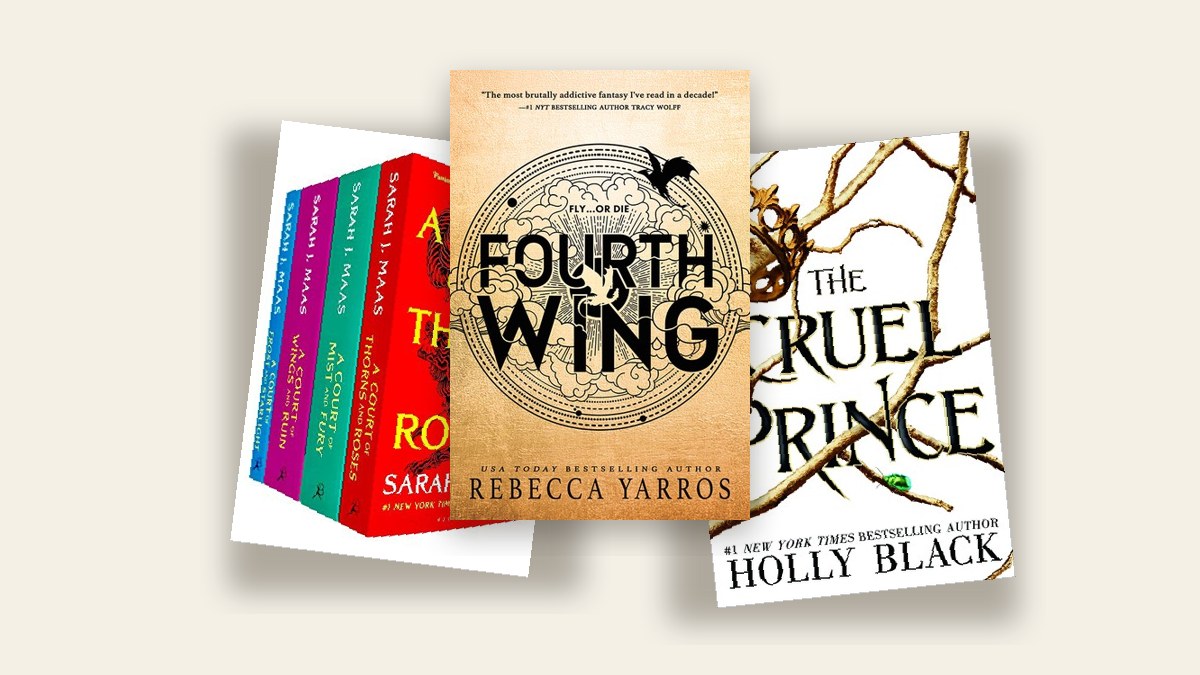
In October 2021 I bought A Court of Thorns and Roses at an airport Hudson News because my flight was delayed four hours, and I want you to know I did it with contempt in my heart. I had been smug about that book for two years. I had opinions about its readers. By the time we boarded I was 150 pages in and annoyed, which felt like vindication. By the time we landed I had already bought the sequel on my phone, which felt like a medical event.
That’s the honest origin of this list. Not a love story. A slow, humiliating conversion.
Here’s the thing about romantasy that nobody warns you about: the genre’s most famous defense is also its most damning one. “It gets good in book two.” People say this constantly, cheerfully, like it’s normal. In no other genre do we accept paying full price for a warm-up act. And yet. I said it to my sister six months later. I have said it to strangers in bookstores. I am probably going to say it to you before this list is over, and I hate that about myself.
Since that airport I’ve read somewhere north of forty of these books. Fae courts, dragon war colleges, vampire tournaments, gods with commitment issues. I’ve read the enormous famous ones and the Kindle Unlimited ones with covers that look like they were designed in PowerPoint. I’ve stayed up until 3 a.m. for books I would describe, professionally, as “not good.” I once missed my train stop because a fictional man with wings said something devastating in an italicized internal monologue.
So this list is not a Goodreads average. It’s my actual taste, which means some beloved books get called mid, some ugly-covered ones get called great, and at least one nine-book bully-romance series gets treated with the confused respect it has beaten out of me. I’ve sorted everything into three tiers: the famous ones that earn it, the deep cuts I physically hand to people, and the ones where I need you to know what you’re signing up for before you spend your money.
One promise: I finished these. Every book below, cover to cover, sometimes against my better judgment. That’s the whole qualification. Let’s go.
What romantasy actually is (besides a marketing sticker)
Ignore the portmanteau. The real definition is structural: in romantasy, the romance is a load-bearing wall. Take the love story out of A Court of Mist and Fury and the plot collapses into rubble. Take the romance out of, say, The Lord of the Rings and you lose approximately one wistful elf subplot. That’s the test. Fantasy-with-kissing is a fantasy novel where two characters happen to fall in love. Romantasy is a book where the political marriage, the mate bond, or the tournament alliance IS the engine, and the war plot and the love plot are rigged to detonate on the same page.
What it feels like to read, when it works: epic fantasy stakes running on a romance novel’s dopamine schedule. You get dragons and coups and ancient prophecies, but the chapter-to-chapter fuel is proximity. One tent. One bed. One dance at a masquerade where somebody’s hand lingers a half-second too long while a kingdom burns in the background. It is genuinely one of the most efficient pleasure-delivery systems fiction has ever built, which is why people who “don’t read” suddenly read eleven of these in a summer.
Also, and this matters: it isn’t new. Jacqueline Carey was doing this in 2001. Grace Draven built a whole career on it in the self-pub mines. What the Maas and Yarros era changed wasn’t the recipe, it was the shelf space and the print runs. The heat level runs the full spectrum too, from chastely-closed doors to books I would not recommend reading on public transit. I’ll flag as we go.
The ones worth the hype
Famous, everywhere, and, irritatingly, actually good.
A Court of Mist and Fury by Sarah J. Maas
Yes, you have to read A Court of Thorns and Roses first, and yes, book one is a mediocre Beauty and the Beast riff with a boring love interest. I told you I’d end up saying it: it gets good in book two. But ACOMAF isn’t just better, it’s the book that built the modern genre’s emotional template. Feyre comes out of book one with actual trauma the narrative refuses to wave away. She can’t paint anymore. She’s wasting away in a pretty cage while everyone tells her she should be happy, and the book takes her side. The pivot to Rhysand works because he’s the first character who offers her choices instead of protection. Maas’s prose tics are real (if I never read the word “males” again I will be fine), but the middle stretch of this book is the genre operating at full power. It rewired an entire market for a reason.
Fourth Wing by Rebecca Yarros
This is the book your coworker who reads two books a year suddenly read in a weekend, and I understand why. Basgiath War College opens with cadets crossing a rain-slick parapet on day one, and the ones who fall just die, on the page, no ceremony. Violet’s body is the smart part: she’s brittle-boned in a school built to kill the healthy, so she cheats, poisons, and out-thinks, and the book treats that as strategy rather than inspiration porn. Now the honesty: the sentence-level writing is functional at best, some dialogue reads like a CW show, and the shadow-wielding love interest is a factory-standard brooding unit. Did any of that stop me? It did not. The dragons are mean and funny, the ending recontextualizes everything, and I finished Fourth Wing at 3 a.m. with work the next day. Judge me from inside your own glass house.
The Cruel Prince by Holly Black
The meanest, smartest power fantasy on this list. Jude is a mortal girl raised in the fae court of Elfhem by the general who murdered her parents, and her only weapons are nerve and a willingness to be worse than everyone around her. Nobody writes faeries like Holly Black: beautiful, petty, and genuinely dangerous, not just tall men with ear prosthetics. Fair warning, Cardan is useless for about a book and a half. That’s the point. The romance here is a knife with a bow on it, and the coronation twist is one of my favorite chapters in YA, full stop.
The Serpent and the Wings of Night by Carissa Broadbent
“Vampire Hunger Games” sounds like a joke pitch. It isn’t. Oraya is a human raised by a vampire king, entering a goddess’s tournament where every ally is a future problem. What separates Broadbent from the mid-tier is grief: this book is about being loved by someone who is also, structurally, your predator, and it takes that seriously. The ending lands like a door slamming. I sat there for a while after.
Divine Rivals by Rebecca Ross
Two rival newspaper columnists, enchanted typewriters, and letters slipping under a wardrobe door while a war between gods eats the countryside. It’s soft, wistful, more foggy-1920s than fae court, and I’ll be honest: the worldbuilding is tissue paper. The letters carry the entire book. They are enough. I read the last third in a laundromat and got weepy near the dryers, which is not a sentence I enjoyed typing.
One Dark Window by Rachel Gillig
Gothic romantasy: mist, plague, forbidden magic cards, and a heroine sharing her skull with an ancient rhyming monster called the Nightmare. He is the best character on this list, human or otherwise, and I include everyone’s book boyfriends in that count. The actual romance is solid. The monster is better. Read it in autumn if you can manage it.
The deep cuts
What I hand people once they’ve burned through the famous ones and think they’ve read the genre. They have not.
Radiance by Grace Draven
I found this one in a 1 a.m. Kindle Unlimited spiral, nearly scrolled past it because the cover looks like 2015 self-pub (because it is), and it turned out to be one of the kindest books I’ve ever read. Arranged marriage between a human woman and a prince of the Kai, and here’s the trick: each finds the other physically repulsive, and instead of angst they bond by joking about it at their own wedding. No miscommunication arc. No cruelty engine. Two adults deciding to be on the same team and then falling in love inside that decision. It’s proof the genre doesn’t need contempt to generate heat, and I love it without a single reservation. Radiance deserves ten times its print run.
Kushiel’s Dart by Jacqueline Carey
The ancestor. Published in 2001, before the shelf label existed. Phèdre is a courtesan-spy in a lush alt-Renaissance nation, marked by a god to experience pain as pleasure, and she gets dragged into treason at the level of empires. The sentences actually do things, the politics are real politics, and the kink is load-bearing rather than decorative. Honesty: the first 200 pages are homework, it’s 900 pages total, and if you arrived via the Fourth Wing pipeline the pacing may feel like continental drift. But if you want evidence this genre can be literature, here it is, two decades early.
The Bridge Kingdom by Danielle L. Jensen
An assassin bride sent to seduce and destroy the king she marries. Tight, tropey, and executed with unusual competence, like watching a gymnast stick a routine you’ve seen fifty people fall off. Sometimes that’s exactly what you want.
Emily Wilde’s Encyclopaedia of Faeries by Heather Fawcett
A grumpy professor of faerie folklore doing fieldwork in a frozen village, narrated as her academic journal, footnotes included. Her maybe-colleague, maybe-rival Wendell is too charming to be human and too lazy to be trusted. This is the cozy end of the genre without being lobotomized: the fae here still steal children. The romance simmers so slowly you could miss it. Don’t.
Uprooted by Naomi Novik
A standalone, which in this genre feels like a gift. The Wood is the scariest villain anywhere on this list, a forest that corrupts what it swallows, and Novik’s prose reads like a folktale someone remembered slightly wrong in the best way. Now the divisive part: Sarkan, the wizard love interest, is rude, ancient, and emotionally constipated, and half of readers want to set him on fire in a non-romantic way. I get it. I like the book anyway, mostly for the Wood and for Kasia, the best friend the story refuses to throw away.
Daughter of the Moon Goddess by Sue Lynn Tan
Chang’e mythology, celestial kingdoms, and prose with actual perfume to it. Full disclosure: the romance is the weakest system in the book, and the love triangle frustrated me enough that I muttered at it on a bus. Read it for the world, the archery, and a heroine who earns things instead of inheriting them.
The Jasmine Throne by Tasha Suri
An imprisoned princess and a maidservant with a dangerous secret, in an empire that burns inconvenient women. Sapphic, literary, and slow the way a fuse is slow. The romance is two knives circling each other, and it matters because this shelf skews relentlessly straight and this is the best counterargument in print. Not a comfort read. A good one.
Proceed with caution
Divisive, mid, or inflated. I finished all of these too, which is either credibility or a confession.
From Blood and Ash by Jennifer L. Armentrout
Look, the central twist is visible from orbit, the prose is fast food, and I have read six of these books. Six! I keep trying to figure out what that says about me. Poppy is a veiled, untouchable Maiden whose new guard is exactly who you think he is, and the first three books have genuine pulp momentum, the kind where you forgive a lot because the pages keep eating themselves. After book three the series dissolves into lore soup with a thousand proper nouns. Get on, enjoy the ride, and know when to get off.
House of Earth and Blood by Sarah J. Maas
Crescent City is Maas doing urban fantasy, and the first 150 pages are a glossary wearing a trench coat. Angels with smartphones, fae with nightclubs, an avalanche of invented terms. Here’s the maddening part: the final hundred pages contain maybe the best climax she has ever written, a genuine stand-up-off-the-couch sequence. Whether that’s worth the 800-page toll is between you and your god.
A Touch of Darkness by Scarlett St. Clair
Hades and Persephone in a modern city of gods, and I’ll be blunt: this is billionaire romance with a trident. The fantasy is set dressing, the power dynamic is the whole product, and the plot is an afterthought in a nice suit. If that sentence excited you, genuinely, go with my blessing. If you came for the mythology, Persephone deserves better lawyers.
Quicksilver by Callie Hart
The recently anointed one, and the most lab-grown book on this list: take one mouthy heroine, one immortal fae with a tragic backstory, add a training arc, shake. The banter is legitimately good and the middle sags like a hammock. I was entertained and slightly insulted at the same time, which might be the defining romantasy emotion of this decade. Your enjoyment will scale precisely with how recently you finished ACOTAR.
Zodiac Academy by Caroline Peckham and Susanne Valenti
A side rant, first: “enemies to lovers” is the most abused label in publishing. Marketing slaps it on any book where a man is mildly rude at a ball once. That is not enemies. That is a bad first impression. Zodiac Academy, whatever else you say about it, means it: the love interests spend early books being genuinely, upsettingly cruel to the heroines, and the series makes you crawl through nine enormous volumes for the payoff. Readers either mainline it like potato chips or DNF in moral outrage, and both reactions are correct. It’s trash that knows it’s trash, executed with total commitment. I respect it the way you respect weather.
Nobody ever handed me a fantasy novel and said the tax policy is what got them. It’s always the wing scene.
Where to start
If you’ve never touched the genre and want the full famous experience: A Court of Thorns and Roses, with my standard warning taped to the cover about book one being the toll you pay for book two.
If you want maximum momentum and zero homework: Fourth Wing. If you want the fae to actually feel dangerous: The Cruel Prince. If you’re an adult who wants adults, kindness, and no manufactured drama: Radiance, and please ignore the cover. If you want to cry near a major appliance like I did: Divine Rivals.
If you want the genre’s literary high-water mark and have a free month: Kushiel’s Dart. Cozy and funny: Emily Wilde. Sapphic and sharp: The Jasmine Throne. And if you want deliberate, self-aware trash for a long winter: Zodiac Academy, godspeed, text someone your location first.
Keep reading
If the “enemies” in your enemies-to-lovers actually need to draw blood, my best enemies-to-lovers books list sorts the real feuds from the marketing. And when you need a palate cleanser with zero kissing quotas, the best fantasy novels roundup is where I keep the dragons that don’t date.