
A freshly dog-eared review
Books Like Colleen Hoover: 17 Emotional Romances That Actually Wreck You
My sister-in-law handed me Ugly Love at a Fourth of July barbecue with the words “don’t judge me,” which remains the most honest book recommendation I have ever received. I judged her anyway. Then I read it that night in the bathtub until the water went cold and my fingers pruned, and I sat there dripping and genuinely angry at a fictional pilot named Miles Archer, and I understood that Colleen Hoover is not really a novelist. She’s a delivery system for a very specific chemical event.
Since then I have read her entire catalog. All of it. Some twice. Ugly Love three times, which I’m not proud of, but we’re being honest here.
And here’s my honest position, which you will not get from the fifty other lists on this topic that were clearly assembled by someone skimming back covers: her catalog is wildly uneven. It Ends With Us is her most carefully built book, and the one where the stakes feel personal instead of engineered. Verity is an unhinged fever dream that I respect more than I like. Slammed reads like a debut because it is one. November 9 has a gimmick (they only meet once a year, on the same date) that creaks more every year. She is not a great sentence writer. It doesn’t matter, because what she’s actually good at, better than almost anyone alive, is information control. She knows exactly what you don’t know, and exactly when telling you will hurt the most.
So when people search for “books like Colleen Hoover,” they are not searching for a genre. They’re searching for a feeling. That drop in your stomach at the seventy percent mark. Being lied to by a narrator and thanking them for it. Staying up until 2am furious at a made-up man.
The problem is that most readalike lists don’t understand this. They see “romance” and “popular” and they throw The Love Hypothesis on the pile, which is like recommending a golden retriever to someone who asked for a wolf. Cute, technically the same species, completely different experience. Nobody cried on an airplane because of a fake-dating professor.
I did cry on an airplane, though. Seat 23B, somewhere over Nebraska, and we’ll get to which book did it. The stranger next to me offered me a napkin and then avoided eye contact for the rest of the flight, correctly.
Everything on this list, I’ve actually read. Some of them I love without reservation. Some are here specifically so I can warn you. That’s the deal.
What “like Colleen Hoover” actually means (it’s not a genre, it’s a bruise)
Technically we’re talking about emotional contemporary romance, with a heavy lean toward what publishing used to call “new adult.” But the label tells you nothing about the experience, so let me describe the experience.
These books are almost always first person, often present tense, with short chapters that make “one more” a lie you tell yourself at midnight. There is a secret. Someone, usually the love interest, sometimes the narrator, is withholding something, and the whole book is structured like a slow leak around that withheld thing. Grief is usually in the walls. Somebody has lost a parent, a sibling, a child, a whole previous life. The romance is real, but it’s not the point. The point is that loving someone will cost you, and the book intends to make you pay the cost alongside the characters.
This is not Nicholas Sparks. Sparks hurts you from the outside, with weather and terminal diagnoses. Hoover and her descendants hurt you with information. The pain is architectural. It was load-bearing the whole time and you just didn’t see it.
And when it works, there’s nothing like it. You finish at 1am, slightly unwell, and you text a friend “are you awake” because you need a witness. When it doesn’t work, you can feel the author reverse-engineering your tears, dangling a dead sibling like a car air freshener. Part of my job on this list is telling you which is which.
The ones that earn the hype
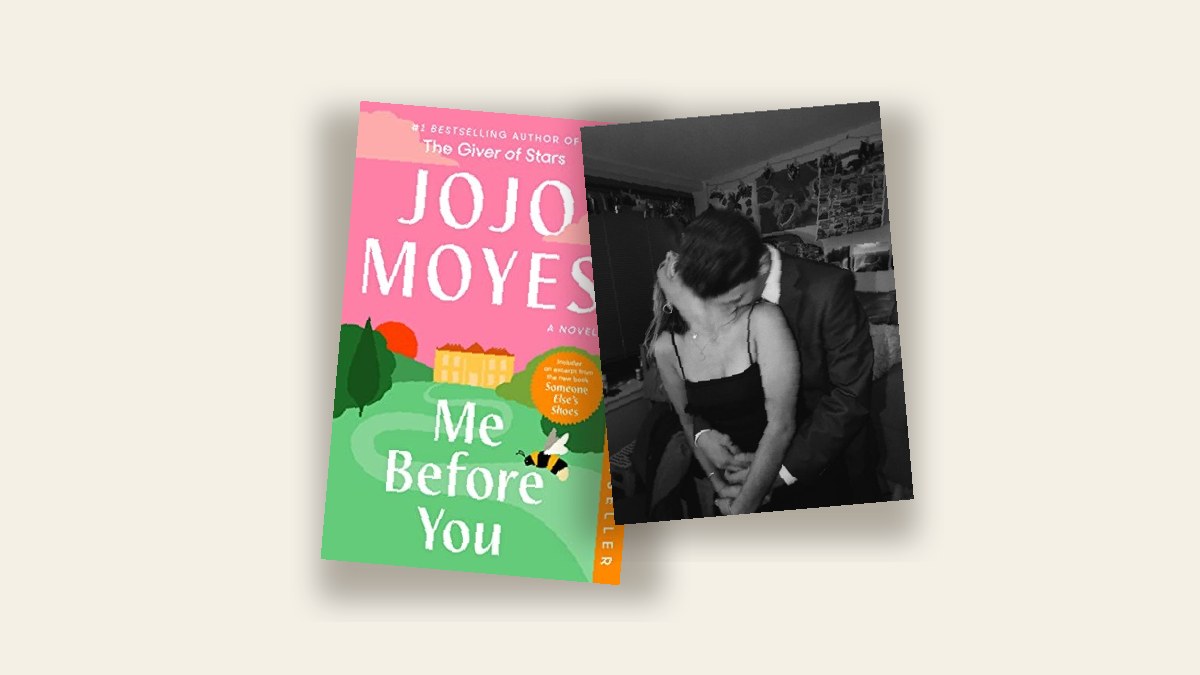
Me Before You by Jojo Moyes
This is the airplane book. Seat 23B. I knew where it was going, everyone knows where it’s going, and it did not matter even slightly. Louisa Clark, a small-town girl with bumblebee tights and no plan, takes a job caring for Will Traynor, a man whose entire big life ended with an accident. Moyes is a better prose writer than almost anyone else on this list, and she lets the book be funny for long enough that you forget to keep your guard up. I have to be honest about the rest of it too: the ending is genuinely controversial, and readers in the disability community have made serious criticisms of what this book implies about whose life is worth living. I don’t think you should read it uncritically. I think you should read it, and then sit with why it made you feel what it made you feel.
Archer’s Voice by Mia Sheridan
If you want the closest possible match to the Ugly Love chemical event, this is it, and it’s better written. Bree arrives in a small Maine town running from something terrible, and meets Archer Hale, a man who hasn’t spoken since a childhood accident took his voice, who lives alone behind a fence the whole town pretends not to see. They talk in sign language. That’s the book: two wrecked people building a private language. It sounds precious. It is not precious. Also, and I only noticed this on the reread, we have Archer Hale here and Miles Archer in Ugly Love, so apparently the mid-2010s decided all damaged romance men must be named Archer. Fine by me.
Before We Were Strangers by Renée Carlino
Opens with a missed-connections ad. A man sees a woman on the New York subway, fifteen years after they loved each other in a college dorm and lost each other over a misunderstanding, and he posts into the void hoping she reads it. Carlino is the most underrated author in this whole subgenre, and this book weaponizes the one thing scarier than heartbreak: wasted time. I read the dorm chapters grinning like an idiot and the present-day chapters with a low-grade ache behind my sternum. Nobody dies in this one. It still hurts. That’s craft.
Love and Other Words by Christina Lauren
The writing duo everyone knows for romcoms wrote one book with the Hoover architecture, and it’s their best. Macy and Elliot grow up reading in the same window seat in a little Northern California town, trading a word of the day like currency, and then one night splits their lives into before and after. The book alternates between the growing-up chapters and the reunion chapters, and the gap between timelines is where all the dread lives. You spend 300 pages bracing for the reveal of what happened that night. It lands. Softest recommendation on this list in the best way, like being hit with a very heavy pillow.
The Friend Zone by Abby Jimenez
Marketed as a romcom. It has jokes, banter, a chihuahua named Stuntman Mike. It is not a romcom. Kristen is facing down a medical decision that touches everything she believed about her own future, and Jimenez writes the infertility storyline with a bluntness that romance almost never allows. And then the last stretch of this book detonates something I will not spoil, except to say I finished it in a laundromat and had to pretend I was having allergies in front of a man folding his towels. Jimenez writes grief and jokes in the same paragraph, which is the actual Hoover skill, and she does it with better sentences.
Long Shot by Kennedy Ryan
The heaviest recommendation here, and I need you to take the content warnings seriously: this book contains sustained, explicit domestic abuse, and it does not flinch. A young sportscaster gets trapped in a relationship with one basketball star while the man she actually connected with, one perfect night before everything, watches from across the league. Here’s my blunt take: this is the book the entire It Ends With Us discourse wishes it was arguing about. Ryan writes at a sentence level Hoover simply doesn’t, and she refuses to make the abuse a plot twist. It’s the ground the book is built on. Devastating, angry, and earns every single thing it puts you through.
Deep cuts the algorithm won’t show you
Mud Vein by Tarryn Fisher
Fisher is Hoover’s actual friend and sometime co-author, and she is the mean one, and I say that with total admiration. A reclusive writer wakes up locked inside a house in the middle of snowbound nowhere with her ex, and the book excavates why she’s the kind of person who ends up there. Barely a romance by strict definition. If Verity was your favorite Hoover, skip everything else and start here.
The Air He Breathes by Brittainy C. Cherry
Cherry is the most Hoover-shaped writer that people outside Kindle Unlimited have never heard of. A widow and a man who lost his wife and son wash up in the same small town and grieve at each other until it turns into something else. I cried twice. You will not find a marketing machine behind this one, just a decade of readers pressing it into each other’s hands.
Making Faces by Amy Harmon
The most sincere book on this list, and I mean sincere as a warning label for the cynical. A small-town golden boy enlists after 9/11 with four friends and comes home alone, disfigured, to a girl who has loved him invisibly her whole life. There is a secondary character, Bailey, who I think about more than characters in books I claim are better than this one. In worse hands this material would be a Hallmark card. Harmon commits so completely that it becomes something close to hymnal. Not a joke in it. Doesn’t need one.
Ten Tiny Breaths by K.A. Tucker
Vintage 2013 new adult, from the exact cultural moment that produced the Hoover boom. Kacey walks away from the car crash that took nearly everyone she loved and moves to Miami with her little sister to start over, and then the book does a thing, a reveal I refuse to spoil, that made me put my Kindle face-down on the couch and stare at the wall. If you love Hoover specifically for the twist that recontextualizes the whole romance, this is the purest hit available.
A Love Letter to Whiskey by Kandi Steiner
Wrong timing as a full-length novel. Two people who are obviously right for each other keep meeting at the exact moments they can’t have each other, and the whole thing is narrated through a whiskey conceit that should be insufferable and somehow isn’t. Steiner is self-pub royalty in the yearning space. This one’s for the readers who thought Ugly Love needed more pining and less plot.
The Last Letter by Rebecca Yarros
Before the dragons, before every airport in America built a shrine to Fourth Wing, Yarros wrote contemporary tearjerkers, and this is the brutal one. A soldier promises his best friend he’ll look after the man’s sister if anything happens. Something happens. He shows up in Colorado to a bed and breakfast, a stubborn woman, twins, and a diagnosis that turns the middle of this book into a war of attrition against your tear ducts. I read the last hundred pages standing up in my kitchen because sitting down felt too passive. And when you think Yarros is done with you, she is not done with you. Buy tissues first. I’m not being cute. This is logistics advice.
Forever, Interrupted by Taylor Jenkins Reid
Everyone knows Evelyn Hugo. Almost nobody reads early TJR, which is strange, because early TJR was writing exactly this kind of book. Elsie has been married for nine days when her husband bikes to the store for cereal and doesn’t come back, and she ends up grieving alongside a mother-in-law who did not know she existed. It’s a grief procedural more than a romance, told in before-and-after chapters, and it’s the book that convinced me TJR was going to be enormous about four years before she was.
Proceed with caution: the divisive, the dated, and the overrated
After by Anna Todd
Look, I read all of it, so I’ve earned the right to say this: After is the most overrated book in this entire category. It began as Harry Styles fanfiction on Wattpad and became a publishing phenomenon, and none of that changes the fact that Tessa and Hardin’s dynamic is a hostage situation with abs. Every emotional beat is the same beat: he detonates, she forgives, repeat for 500 pages. I understand why it hooks people. The withholding machine works; that’s the Hoover DNA. But where Hoover eventually hands you a reason for the pain, After just hands you more pain and calls it passion. Read it with your eyes open or not at all.
Beautiful Disaster by Jamie McGuire
A time capsule from 2012, back when “he punched a wall for you” was considered swoon material. Abby, a good girl with a hidden past, bets Travis Maddox, an underground fighter with a temper, that he can’t win a fight, and the stakes are living in his apartment for a month. I inhaled this book when it came out. I reread it two years ago and spent the whole time wincing like I was watching old footage of myself dancing at a wedding. The possessiveness that read as devotion in 2012 reads very differently now. Divisive is the polite word. Some readers still love it without apology, no judgment. I just can’t come back.
Every Summer After by Carley Fortune
Half the people who read this book will tell you it wrecked them beautifully. The other half threw it. Six summers at an Ontario lake, told against one loaded weekend years later, with a slow reveal of the thing Percy did that torched the whole first love. The atmosphere is genuinely gorgeous; Fortune writes lake-town summer like she’s smuggling you into her own memories. But I’m in the second camp on the reveal: I think it’s cheap, the kind of mistake a plot requires rather than a person makes, and the book forgives it faster than I did. Read it for the sunscreen-and-dock-wood feeling. Just know you might finish it mad, and not in the fun way.
Punk 57 by Penelope Douglas
Pen pals since fifth grade who have never met, until he sees who she actually is at school, decides she’s a fraud, and enrolls under a fake name to torment her without telling her who he is. Every character is mean. The premise is a catfishing scheme wearing a leather jacket. Some readers imprint on this book so hard it becomes a personality, and I sort of get it, because Douglas commits to the ugliness in a way that feels honest about being seventeen. I mostly found it exhausting. But I can’t deny it produces the authentic Hoover cortisol spike, so it stays on the list, over by the door, where I can keep an eye on it.
A good readalike doesn’t copy her plots. It copies the bruise, and you can’t fake a bruise. Readers always press on it to check.
Where to start
Because I know some of you scrolled straight here, and fine, I forgive you:
If you want the closest thing to Ugly Love, read Archer’s Voice. If you want to cry in public and make a stranger uncomfortable, it’s Me Before You or The Last Letter, depending on whether you prefer your devastation British or Coloradan. If you loved Hoover’s twists more than her romances, go straight to Ten Tiny Breaths, and if Verity was your favorite, you’re actually a Tarryn Fisher reader who hasn’t met Mud Vein yet. If It Ends With Us mattered to you and you can handle heavier, Long Shot is the serious version. If you want the pain with jokes as anesthesia, The Friend Zone. And if this whole list sounds like too much and you’d like your feelings administered gently, read Before We Were Strangers, which will hurt you politely, like a Canadian.
Keep the pain going
If the thriller side of Hoover is what hooked you, I ranked every book I could find that scratches the same itch in my books like Verity list, which got contentious in ways I stand behind. And if Forever, Interrupted sent you down the early-TJR rabbit hole like it did me, I ranked every Taylor Jenkins Reid book from skippable to life-ruining. Bring whatever tissues you have left.