
A freshly dog-eared review
Books Like Emily Henry: 17 Smart, Funny Romances That Actually Earn the Feelings
I bought Beach Read at an airport bookstore in Minneapolis because my flight was delayed three hours, and I want to be honest about my intentions: I bought it ironically. Cartoon couple on the cover, sherbet sunset colors, a title that sounded like a shelf category instead of a book. The plan was to skim it, feel superior, and abandon it in the seat pocket.
Somewhere over Ohio the woman next to me asked if I was okay.
That is the entire Emily Henry experience, compressed. She lets you believe you’re reading fluff. January Andrews eating cereal for dinner in her dead father’s secret beach house, trading insults with the literary novelist next door, everything quippy and light. And then a sentence lands sideways and suddenly the book is about grief and the stories parents tell us and whether love is a thing you believe in or a thing you do, and you are crying on a regional jet while a stranger offers you a ginger ale.
Since that flight I have read everything publishers comp to her. Everything. “For fans of Emily Henry” is stamped on roughly half the trade paperbacks printed since 2020, and I regret to inform you that most of those comps are marketing fraud. The illustrated cover was supposed to be a signal, a little flag that said funny and warm and smart. It became camouflage. Grief novels dressed as romcoms. Romcoms with no jokes. Books with neither the wit nor the wound, wearing the uniform anyway. I have been burned so many times I now read the first ten pages standing in the bookstore like I’m checking a melon for bruises.
So this list is a few years of my reading life, filtered down. I read the hyped ones. I read the deep cuts nobody talks about. I read the ones the algorithm would not stop shoving at me until I gave in out of exhaustion. Some are better than their reputations. A few are dramatically worse, and I’ll name them, because every other list on the internet is forty books long and rates everything five stars, which is the review equivalent of a participation trophy.
One more confession before we start: I am not a neutral party. I will defend Happy Place, which everyone tells me is her weakest and which I cried at anyway. In an airport. Again. Apparently this is just who I am now. But being a partisan means I know exactly what the real thing tastes like, and I can tell you when a book is the real thing and when it’s a cardboard couple on a teal background hoping you won’t notice.
What an Emily Henry book actually is (it’s not the cover)
Here’s the thing everybody gets wrong. “Like Emily Henry” is not a trope. It’s not enemies-to-lovers, it’s not a beach, it’s not a specific spice level, and it is definitely not an art style. It’s a structure, and the structure is this: the banter is load-bearing.
In a real Emily Henry book, the jokes aren’t decoration. They’re how the characters survive. Gus deflects because his childhood was a horror show. Nora performs sharkishness because someone has to hold her family together. The comedy is a pressure bandage over an actual wound, and the whole novel is the slow process of someone else peeling it back. When people say her books have “emotional depth,” that’s what they mean. The funny and the sad are the same material.
The other ingredients: adults with actual careers and actual money problems, not vague marketing jobs. Interiority thick enough to swim in, because you live inside the narrator’s head and her head is good company. And this is the big one, the romance and the self-repair are the same plot. The love interest doesn’t fix the protagonist. Falling in love just makes it impossible for her to keep lying to herself.
What it feels like to read: you’re grinning for forty pages, then one line about a dead parent or a failed dream catches you under the ribs and you have to put the book down and stare at a wall. That oscillation is the product. Books that only do the grinning are candy. Books that only do the wall-staring are literary fiction with a better cover. The list below is sorted by who actually pulls off both.
The ones worth the hype
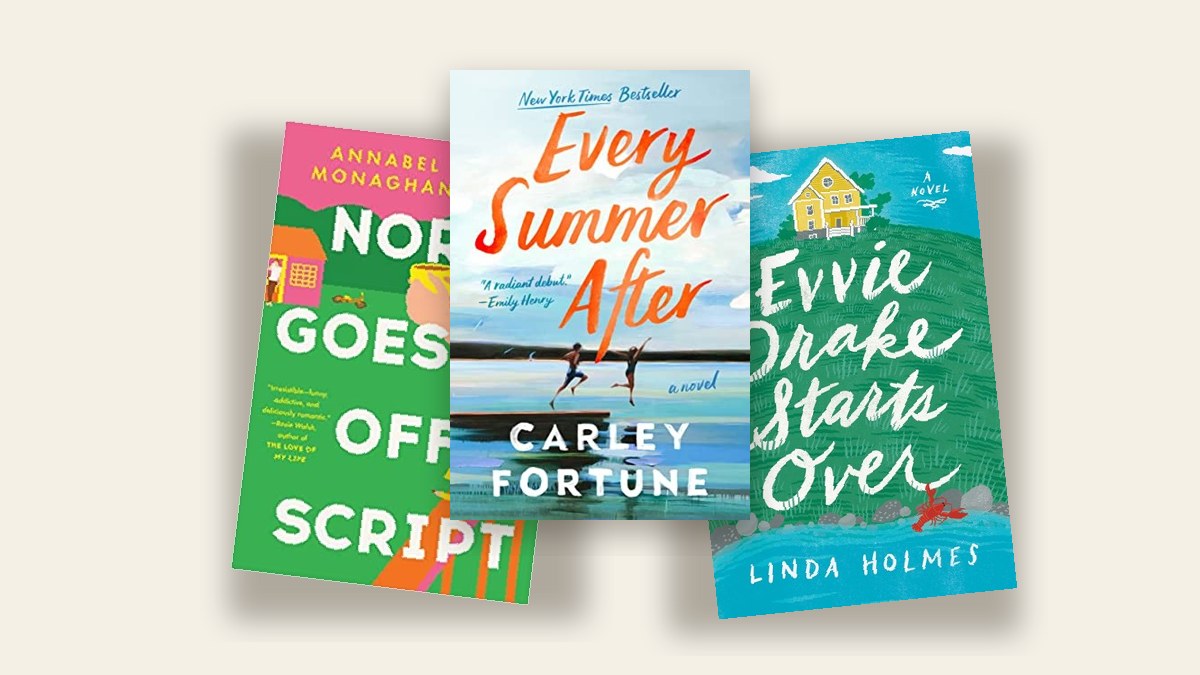
Nora Goes Off Script by Annabel Monaghan
If you handed me a stack of unmarked manuscripts and told me one was a secret Emily Henry, this is the one I’d pick. Nora writes formula movies for a Hallmark-style channel, her husband walks out, and she does the most writer thing imaginable: she sells the divorce as a screenplay. Then the movie star playing her ex-husband stays in her backyard tea house and the book becomes something warmer and stranger than the setup suggests. The scene where her actual ex comes back, and the reason he comes back, made me genuinely angry on Nora’s behalf, which is how you know a book is working. Funny, wounded, competent-woman-finally-receives-tenderness. I’ve bought this for three separate people and I’m not done.
Every Summer After by Carley Fortune
This is People We Meet on Vacation’s sadder Canadian cousin. Six summers at a lake in Ontario, one devastating weekend in the present, Percy and Sam and the thing that broke them. Fortune writes ache better than she writes jokes, so know going in that this leans heavier than Henry, less banter, more longing. The big betrayal reveal is genuinely divisive, half of my reading friends threw the book, and I’ll defend it: people at that age do exactly that kind of stupid, self-destructive thing. Read it in summer, near water if you can manage it, and don’t plan anything for the evening you finish.
Evvie Drake Starts Over by Linda Holmes
I read most of this in a laundromat over two consecutive Sundays, and I still associate the smell of other people’s dryer sheets with Evvie’s kitchen. She’s a widow who isn’t grieving the way widows are supposed to, because her marriage was not what everyone thinks it was. He’s a major league pitcher who suddenly, inexplicably, cannot throw. They share a house in Maine and fix nothing about each other for a long, lovely time. The humor is dry rather than quippy, and the emotional intelligence is off the charts. This is the quietest book on this list and possibly the kindest.
Romantic Comedy by Curtis Sittenfeld
A late-night sketch writer who has watched schlubby male colleagues date pop stars, confronting what happens when a pop star seems to like her. This is a literary novelist doing romance, and it reads like it: the pandemic email-correspondence section in the middle either charms you or kills the book dead. It charmed me completely, and I’ve since wondered whether that says something embarrassing about how much of my own romantic life has happened in writing. Sittenfeld is scalpel-sharp on the double standard at the heart of the premise. Less warm than Henry, exactly as smart.
Part of Your World by Abby Jimenez
Big-city ER doctor, small-town carpenter who is also somehow the mayor, an age gap where the woman is older and the book actually does something with that. Jimenez writes heavier trauma than Henry, there’s an emotionally abusive ex here who is handled with real seriousness, but the wit-to-warmth ratio is the closest match in mainstream romance. Fair warning that her small towns run about 15 percent more twinkly than reality. I roll my eyes at the twinkle and keep reading anyway, every single time.
The Seven Year Slip by Ashley Poston
A grief novel in a romcom trench coat, which is exactly what Beach Read is, so it belongs here despite the magic. The magic: an apartment that occasionally slips seven years into the past, where a woman mourning her aunt meets a chef who technically exists in her present, changed. It shouldn’t work. It works. There’s a lemon pie in this book that carries more emotional weight than most novels’ entire third acts. If you loved Henry for the feelings more than the banter, start here.
Deep cuts I hand-sell to strangers
You Deserve Each Other by Sarah Hogle
A woman at a used bookstore in Michigan physically pressed this into my hands and said “trust me” with the intensity of someone handing off classified documents, and she was right. An engaged couple who secretly can’t stand each other, neither willing to be the one who cancels the expensive wedding, escalating into a full prank war that curdles back into love. It’s feral and petty and then, out of nowhere, it’s the truest book I’ve read about what happens when two people stop choosing each other daily and have to decide whether to start again. Criminally underread. Go be the bookstore stranger for someone else.
Georgie, All Along by Kate Clayborn
Clayborn writes sentences that are simply better than the genre requires, and nobody talks about her enough. Georgie comes home jobless and unmoored, finds a teenage wish list she wrote decades ago, and starts doing the list. The love interest is a former town screwup turned deeply careful man, and the way he pays attention to her is the whole romance. Slow. Character-first. If you need plot engines, skip it. If Book Lovers made you feel seen as the responsible one, this will finish the job.
Funny You Should Ask by Elissa Sussman
A journalist writes a celebrity profile of a movie star that goes viral for its charged, flirty intimacy. Ten years later, he requests her again. Dual timeline, both halves delicious. Anyone who has read a certain genre of magazine celebrity profile knows exactly what energy this book is bottling, and it bottles it perfectly, the parasocial haze, the “was that a moment or was he acting” of it all. The smartest book on this list about fame as a performance both people can get trapped inside.
The Roughest Draft by Emily Wibberley and Austin Siegemund-Broka
Two estranged co-writers, one contract obligating them to finish a final book together, a Florida house full of resentment. It’s Beach Read from inside the collaboration, and it was written by a married writing team, which you can feel in the texture: the fights about sentences are real fights about sentences. The publishing-industry detail is accurate enough to hurt. Quieter than its premise, better than its sales.
Weather Girl by Rachel Lynn Solomon
A TV meteorologist and a sports reporter conspire to parent-trap their divorced, mutually toxic bosses, and fall for each other mid-scheme, obviously. What elevates it: the heroine has depression, on the page, medicated, ongoing, and the book treats it as a fact of her life rather than an obstacle the romance cures. Solomon does Seattle rain and workplace absurdity and hard-won okay-ness. The parent-trap plot is a delivery vehicle for something much more tender than it looks.
Happy Medium by Sarah Adler
A con-artist fake medium tries to scam a skeptical goat farmer and gets heckled by the actual ghost haunting his farm. This is weirder than anything Emily Henry would write, and I mean that as high praise. The jokes-per-page rate matches her best, the ghost subplot sneaks up on you emotionally, and there’s a running bit about goats that made me laugh on public transit. Nobody I know had heard of it. Everybody I’ve forced it on has thanked me.
Proceed with caution
The Love Hypothesis by Ali Hazelwood
I know. I KNOW. Half the internet will tell you this is the obvious next read, and I’m telling you it’s the most overrated comp on the shelf. It’s fine. It’s fanfic-shaped in ways both charming and limiting, and the heroine’s inner monologue is quips all the way down, no wound under the banter, which is the entire Emily Henry difference. Also, and I say this with love, every Hazelwood book is the same book with the nouns swapped. If you want her anyway, read Love, Theoretically instead, it’s her sharpest by a mile. But the hypothesis itself? Skippable.
The Spanish Love Deception by Elena Armas
This book is at minimum 150 pages too long, and I counted. Every emotional beat happens three times: she notices he’s being kind, she reminds us she hates him, repeat until the flight to Spain, which is two-thirds of the way in. The plane scene is genuinely great! There’s a warm, funny novella inside this book screaming to get out. You just have to eat an enormous amount of book to find it, and Emily Henry would have cut it to the bone. Divisive for good reason.
The Unhoneymooners by Christina Lauren
Mid. I said it. Enemies stuck on a free Hawaiian honeymoon after the whole wedding party gets food poisoning, and it’s a perfectly pleasant sitcom that evaporates on contact. There is no wound under these jokes, and it gets comped to Emily Henry constantly, which is the illustrated-cover fraud in its purest form. If you want vacation candy, honestly, enjoy, no judgment. Some judgment. But if you want Christina Lauren doing actual Emily Henry work, read Love and Other Words instead, that one has the childhood ache and the grief and it wrecked me in a way I did not see coming from this duo.
The Hating Game by Sally Thorne
Here’s my rant, and it’s not really about this book: “enemies to lovers” has been inflated into meaninglessness. These two are not enemies. They are horny coworkers who were rude to each other once. Nobody in these books has been an enemy since about 2015. That said, I’ll partially defend The Hating Game, because the yearning is legitimately elite, there’s a detail involving a paint color that lives in my head permanently, and Thorne wrote the template that a hundred worse books photocopied. The plot is thin as tissue and the boss subplot resolves like a shrug. Read it as a historical document with excellent tension.
It Happened One Summer by Tessa Bailey
The pitch is a spoiled socialite exiled to a fishing town with a giant grumpy sea captain, and yes, that pitch is perfect. But know what you’re buying: Bailey writes desire first and interiority a distant second. The emotional beats are real but glazed on thin, like the feelings are a marinade and the point is the meat. Plenty of readers want exactly that, and this is a top-shelf version of it. It is not, however, an Emily Henry book, no matter what the cover’s art style whispers to you. Know thyself.
Banter is cheap. Banter that’s holding a wound closed is the entire genre, and you can tell the difference by page ten.
Where to start
If Beach Read got you with the grief under the jokes: The Seven Year Slip, then Evvie Drake Starts Over.
If People We Meet on Vacation ruined you with friendship-to-lovers ache: Every Summer After, no contest.
If Book Lovers is your favorite because Nora is your favorite: Nora Goes Off Script or Georgie, All Along, depending on whether you want more funny or more quiet.
If you’re a writer and the manuscript-swap of it all is what you loved: The Roughest Draft, then Romantic Comedy.
If you want the biggest laughs per page: Happy Medium or You Deserve Each Other.
If you just want something easy on a plane and don’t care about depth this week: fine, The Unhoneymooners. I’m not your mother.
Keep reading
If this list did anything for you, I went similarly feral in my roundup of the enemies-to-lovers books that actually earn the enemies part, and if your taste runs a shade more devastating, the books like Taylor Jenkins Reid list is where I put everything that made me cry without the safety net of a guaranteed happy ending. Come argue with me about The Love Hypothesis in the comments of either one. I can take it. Probably.