
A freshly dog-eared review
Books Like The Cruel Prince: 17 Fae Court Fantasies With Actual Teeth
I have read The Cruel Prince three times now, and I still don’t fully trust anyone who tells me Jude Duarte is “unlikable.” Unlikable compared to what? A girl who forgives everyone and wants nothing? Jude wants power the way other YA heroines want a boy, and that is exactly why the book works.
Here’s my confession. I came to it late and hostile. By the time my library hold finally came in, sometime in a truly miserable February, the internet had screamed about Cardan for so long that I’d already decided the book was overhyped fairy-boy nonsense. I read the first chapter standing at my kitchen counter, coat still on, planning to skim ten pages and feel superior. Holly Black kills Jude’s parents on page one and I did not sit down for another hour. I finished it at 2am and immediately put a hold on The Wicked King like an addict calling her dealer back.
Then I did the thing you’re probably doing right now. I typed “books like The Cruel Prince” into a search bar, and I got the same recycled list fifteen times. ACOTAR. Throne of Glass. Shadow and Bone, which has no fae in it at all, and which I can only assume got included because someone’s affiliate dashboard told them to. Half those lists are written by people who have read neither The Cruel Prince nor the books they’re comparing to it. You can tell, because they describe every single title as “enemies to lovers” when what they mean is “he was rude to her at a ball once.”
So I did it the annoying way. Over about two years I read or reread everything that gets comped to this book, plus the older fae stuff Holly Black herself grew up on, because the woman did not invent wicked faeries, she just perfected the smirk. Some of these books are genuinely great. Some are fine. A few are wearing The Cruel Prince’s clothes and hoping you won’t check the tag.
What makes Black’s trilogy so hard to replicate is the specific cocktail: a mortal girl with a chip on her shoulder the size of a war, fae who are beautiful in the way knives are beautiful, court politics where every promise is a trap because faeries can’t lie but never stop deceiving, and a romance built out of mutual harm and mutual respect in roughly equal parts. Cardan and Jude hurt each other. Actually hurt each other. Most “rivals” in this genre wouldn’t survive one Elfhame dinner party.
This list is my honest attempt at the real answer. Tiered, opinionated, and including the ones I think you should skip, because a recommendations list with no negative opinions is just a catalog.
What we’re actually chasing (it’s not just wings and thrones)
Let’s define the assignment, because “fae fantasy” has become a marketing sticker slapped on anything with a brooding immortal.
Real fae court fantasy runs on rules. Faeries can’t lie, so language becomes a weapon and every conversation is a contract negotiation. Bargains bind. Names matter. Glamour hides rot under beauty. The pleasure of reading it is the pleasure of watching a mortal walk into a room where everyone is older, stronger, and prettier than her, and win anyway, using the only tools she has: lying, stubbornness, and a tolerance for pain. Reading The Cruel Prince feels like playing chess against someone who is allowed to slap you. That’s the feeling we’re hunting.
And genuine enemies-to-lovers means the enmity is load-bearing. There are stakes, there is harm, there is a real reason these two people should not end up together, and the shift from hate to want happens gradually and against both their wills. If he apologizes and turns sweet by chapter four, that’s not enemies-to-lovers. That’s a boyfriend doing a bit.
One more thing, and this is my hill: the fae have to be a little frightening. Not “dangerous” in the way romance covers mean it, meaning tattoos. Frightening like a species that regards you the way you regard a moth. Books that remember this earn their romance. Books that forget it are costume parties.
The ones worth the hype
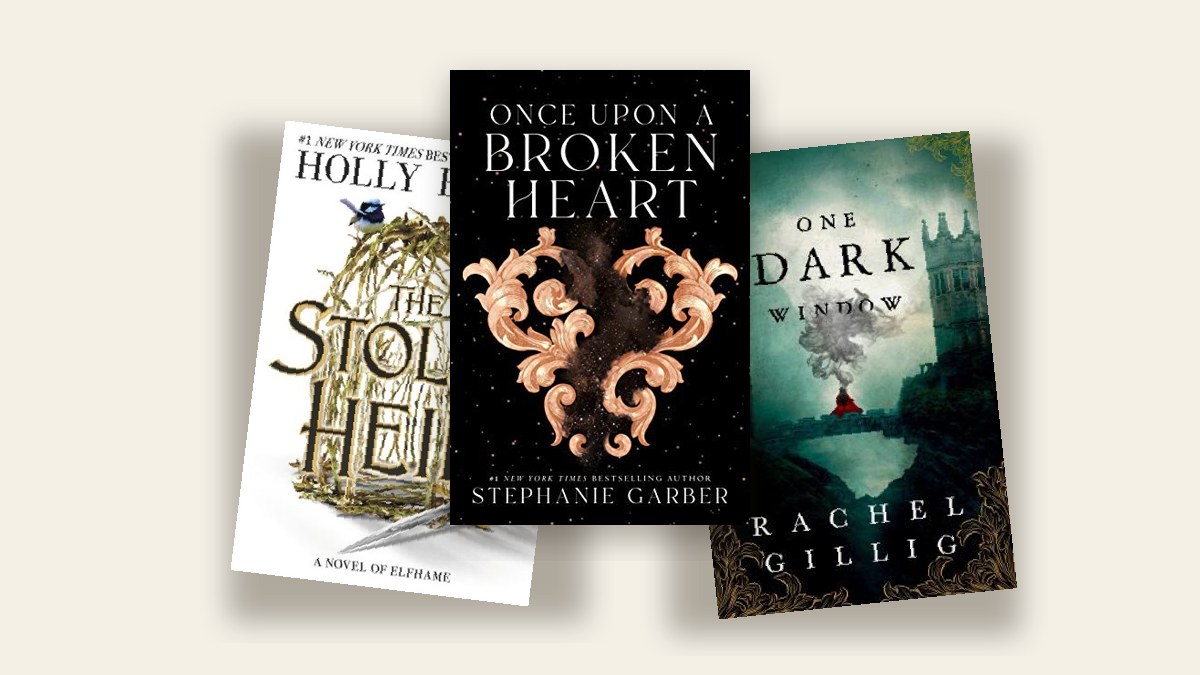
The Stolen Heir by Holly Black
Start with the obvious: Black returned to Elfhame with a duology about Oak and Wren, and it’s good, but I need to manage your expectations because a lot of readers went in wanting Jude 2.0 and came out sulking. Wren is feral in a sad way, not a stabby way. She’s a child queen who was kept in a cage by the Court of Teeth, and her damage is quieter and harder to read. The first book is a slow road-trip of mutual distrust; the second, The Prisoner’s Throne, flips to Oak’s point of view and retroactively makes the first one better, which is a strange trick but it works. Jude and Cardan appear, ruling, terrifying, married. Worth it for those scenes alone.
Once Upon a Broken Heart by Stephanie Garber
Jacks, the Prince of Hearts, is the closest thing to Cardan currently in print: petty, gorgeous, casually cruel, and playing a game several books longer than anyone realizes. The whole trilogy looks like spun sugar and reads like a knife hidden in a wedding cake. My honest caveat: Evangeline, the heroine, trusts people the way toddlers trust swimming pools, and around book two I wanted to shake her until her tiara fell off. But Garber knows exactly what she’s doing with Jacks, and the payoff lands. If Cardan was your entry point rather than Jude, start here.
One Dark Window by Rachel Gillig
Not fae, technically. Gothic kingdom, forbidden magic cards, and a heroine with an ancient monster living inside her skull who speaks in rhymes and wants out. I’m cheating by including it, and I don’t care, because the texture is right: mist, dread, a magic system where every power charges you a toll, and a slow-burn romance with the king’s nephew that’s built on shared treason. The Nightmare, the thing in Elspeth’s head, is the best character, which tells you something about the vibe. This is the one I hand to people who say “like The Cruel Prince but make it scarier.” The duology is complete, so no cliffhanger purgatory.
Spinning Silver by Naomi Novik
The smartest book on this list, full stop. Miryem is a moneylender’s daughter who gets so good at turning debts into profit that the Staryk, winter fae with silver eyes and zero human feeling, take her boast literally and drag her into a bargain she cannot escape. Novik understands fae logic better than almost anyone writing: the Staryk king isn’t mean, he’s operating on rules so alien that cruelty and honor become the same gesture. The enemies-to-something arc here is glacial and earned, and Miryem out-Judes Jude in the “wins through sheer bloody-minded competence” department. I read it over one freezing weekend and kept getting up to check the heat.
To Kill a Kingdom by Alexandra Christo
Genuine enemies. Not banter-enemies. Lira is a siren princess who rips out princes’ hearts as trophies; Elian is a prince who hunts sirens professionally. They have both, personally, tried to end each other’s species. It’s a standalone, it’s fast, it’s nasty in the right ways, and the romance works because neither of them goes soft, they just slowly redirect the violence outward. In a genre bloated with five-book series, a single vicious volume feels like a gift.
The Shadows Between Us by Tricia Levenseller
No fae at all, and I’m including it anyway because it nails the other half of the equation: two terrible people flirting. Alessandra’s plan, stated on page one, is to seduce the Shadow King, marry him, kill him, and take his kingdom. She is vain, ambitious, and completely unapologetic, and the book never punishes her for it. It’s lighter than The Cruel Prince, more champagne than poison, but if what you loved was a heroine who schemes without a redemption arc hanging over her head, this is your palate cleanser.
Rhapsodic by Laura Thalassa
The adult option. Callie, a siren, spent her teens racking up IOUs to the Bargainer, a fae king who collects debts in favors, and now he’s back to collect several hundred of them. The premise is catnip and the dual-timeline reveal of what those favors actually were is genuinely affecting. Honesty portion: the prose is serviceable at best, and if you need sentences to be pretty this will bug you. The dynamic carries it. Heavier content than YA, so check warnings if that matters to you.
Deep cuts and elders (mostly better than the famous ones)
Tithe by Holly Black
I found my copy at a library sale for a dollar, spine cracked, previous owner’s coffee ring on the cover, and it remains one of the best dollars I’ve ever spent. This is Black in 2002, before Elfhame got its glow-up: rust, cigarettes, New Jersey boardwalks, and faeries who are filthy and frightening. Kaye is a pixie changeling raised human, Roiben is a knight caught between courts, and the whole thing has a grimy urgency the later books traded for polish. If you want to see where Cardan’s DNA comes from, it’s here, wearing eyeliner in a diner at 3am.
The Darkest Part of the Forest by Holly Black
Criminally under-read compared to Folk of the Air. A town where tourists picnic around a glass coffin containing a sleeping horned boy, until one day the coffin is empty. Hazel wanted to be a knight; her brother Ben was gifted music by the fae; both of them half-remember bargains they shouldn’t have made. It’s a standalone, it’s strange, and the sibling relationship hits harder than most romances in this genre. Read it in an afternoon, feel weird about the woods for a week.
The Call by Peadar Ó Guilín
The corrective. No romance worth mentioning, no beautiful princes, just Irish teenagers who each get snatched into the Grey Land for three minutes and four seconds of our time, a full day of theirs, and hunted by the Sídhe. Most don’t come back, and the ones who do come back wrong. I read this with the lights on like a coward. Why is it on a Cruel Prince list? Because every so often you need a book that reminds you what the fae are underneath the cheekbones, and after this one, every “dangerous fae love interest” you read will feel a little more dangerous.
Fire and Hemlock by Diana Wynne Jones
The ur-text. A Tam Lin retelling about a girl whose memories have been rewritten, and the man she keeps almost remembering, and a fairy queen who collects people the way other rich women collect houses. It’s older, it’s demanding, it makes you do the work of assembling what happened, and the ending has generated forty years of argument. Not a romance in the modern packaged sense. But if you care about faerie stories as a tradition and not just an aesthetic, this is where the tradition keeps its teeth.
Emily Wilde’s Encyclopaedia of Faeries by Heather Fawcett
Cozy shell, correct fae. Emily is a prickly Cambridge scholar cataloguing faeries in a frozen village, accompanied by her insufferable colleague Wendell, who is very obviously an exiled fae monarch and very obviously in love with her. The romance is colleagues-to-lovers, not enemies, so adjust expectations. But the faerie lore is the most rigorous in contemporary fantasy, footnotes and all, and the book understands that even a charming fae king is a creature whose court once did unspeakable things and will again. Comfort reading with a cold current underneath.
Wicked Lovely by Melissa Marr
The 2007 vintage. Aislinn can see faeries and has spent her life pretending not to, which works until the Summer King notices her. Some of it is dated, the fashion descriptions alone are a time capsule, but the central nightmare of being chosen by a powerful being who won’t take no for an answer still bites, and Marr lets it be a nightmare instead of a meet-cute. Half punchy paragraph because that’s all it needs: it holds up better than you’d think.
Proceed with caution
A Court of Thorns and Roses by Sarah J. Maas
The padding on every list, so let’s be honest. ACOTAR is not actually like The Cruel Prince. Feyre wants safety and love; Jude wants power. The fae courts in Prythian run on vibes and abs, not rules. And the first book is a genuine slog, a Beauty and the Beast retelling where the most interesting character doesn’t show up properly until the last act. A Court of Mist and Fury, the sequel, is legitimately good and I understand why it ate the world. But if you loved Cruel Prince for the scheming and the knife-fight dialogue, know that you’re signing up for something much softer and much hornier. Go in with correct expectations and you’ll have fun. Go in expecting Jude and you’ll bounce off hard.
These Hollow Vows by Lexi Ryan
Cruel Prince cosplay, and I say that with a certain affection. Mortal girl, bargain to save her sister, two fae princes, Seelie and Unseelie courts, betrayals on schedule. The love triangle gave me whiplash, the plot twists are visible from space, and the heroine’s decision-making made me put the book down twice to stare at a wall. And yet. I finished it in two days and then read the sequel, so who exactly is the fool here. Airport-readable. Just don’t expect it to be more than that.
Lightlark by Alex Aster
The marketing story was better than the book. A deadly island game, six rulers, ancient curses, betrayal, romance: the pitch is perfect and the execution is a rulebook that keeps rewriting itself whenever the plot needs a door. The curses have conditions that don’t hold up to a second read, and the twists announce themselves chapters in advance. Plenty of people enjoy it as fast candy, and that’s a legitimate way to read. But it gets comped to The Cruel Prince constantly, and the comparison does it no favors, because Black’s plotting is a Swiss watch and this is a watch drawn on someone’s wrist in pen.
An Enchantment of Ravens by Margaret Rogerson
The divisive one I keep re-litigating with myself. The premise is gorgeous: Isobel paints portraits for the fair folk, who cannot create art without crumbling, and she ruins her career by painting mortal sorrow into the autumn prince’s eyes. The prose is genuinely lovely. The problem is the book is about 300 pages and the romance needed 500; they fall for each other over roughly one week of walking through the woods, and I never fully believed it. Rogerson wrote a better book later (Sorcery of Thorns, no fae, still great). This one is a beautiful sketch of a novel I wish existed. Short enough that the risk is cheap, though.
If your fae prince turns sweet by chapter four, he was never a fae prince. He was a boyfriend in a costume with better cheekbones.
Where to start
You don’t need all seventeen. You need the right next one:
- If you want the closest possible follow-up: The Stolen Heir, then The Prisoner’s Throne. It’s Black. It’s Elfhame. Trust her.
- If Cardan was the whole point for you: Once Upon a Broken Heart. Jacks will hold you over.
- If you want enemies who are actually enemies: To Kill a Kingdom. Heart-collecting siren, siren-hunting prince, no apologies.
- If you’re an adult who wants an adult book: Rhapsodic.
- If you want smarter, colder, better written: Spinning Silver. The best book on this list, and I’ll argue that anywhere.
- If you want to be scared of faeries again: The Call. Lights on.
- If you want a warm bath with a cold current: Emily Wilde.
And if you’ve somehow read this whole list already, go back to Tithe. It’s where the wickedness started, and it still costs about a dollar used.
Keep going
If the enemies-to-lovers part is what hooks you more than the wings, I ranked my favorite enemies-to-lovers fantasy romances where the hatred is actually load-bearing. And if you bounced off my ACOTAR take and want to fight about it, or you just want more of Prythian’s particular flavor, my books like ACOTAR list is the softer, steamier cousin of this one. Bring your grudges. I read all my comments.