
A freshly dog-eared review
The House That Ate the Spains, and Us
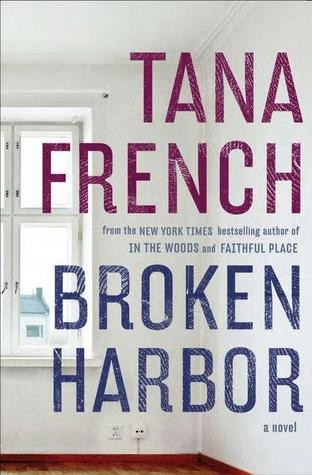
I read the first fifty pages of this book on a beach vacation, which in hindsight was a genuinely stupid choice, because by page sixty I did not want sun or sand or anyone’s cheerful vacation energy anywhere near me. I wanted to be alone in a dark room with a half-built house and a family that was already, quietly, coming apart before anyone laid a hand on them. Tana French wrote a haunted house story with no ghost in it, and it is somehow scarier than one with a ghost.
| Author | Tana French |
| Published | 2012 |
| Genre | Literary crime / psychological suspense |
| Format | Book four of the Dublin Murder Squad series, fully standalone |
| Reception | Widely praised by critics as one of French’s strongest, more divisive among genre readers who wanted a tighter thriller |
| Our rating | 4.2/5 |
| Read it if | You want dread that builds for 400 pages instead of jump scares, and you don’t mind a narrator who is actively lying to himself |
| Skip it if | You need a brisk, plot-forward mystery with a detective you can root for cleanly |
A house with holes in the walls, literally
Here’s the setup, and it’s a great one. Detective Mick “Scorcher” Kennedy gets called out to Brianstown, one of those Celtic Tiger ghost estates: half-finished, half-abandoned housing developments that got built during Ireland’s boom and left to rot when the money vanished. Patrick Spain is dead. His two young kids are dead. His wife Jenny is barely alive. And in the walls of their unfinished dream house there are holes, baby-monitor cameras aimed at empty attic space, and a family journal that reads less like a diary and more like a slow-motion breakdown in real time.
Scorcher is the kind of narrator you’ve met before if you’ve read any French: rigid, controlled, contemptuous of anyone messier than him, and clearly hiding something about his own past that this house is going to drag out of him whether he likes it or not. It turns out he grew up practically next door, back when Brianstown was still called Broken Harbor and was just a stretch of Irish coastline with his family’s caravan on it. His mother drowned herself there. His sister has never been right since. The ghost estate isn’t a metaphor French bolts on afterward, it’s the actual bones of the book, and I loved that she trusted the reader to feel the parallel without underlining it in red pen.
Where it earns it, and where it drags
Look, the setting alone is worth the price of admission. French uses the ghost estate the way good horror writers use an old asylum: not for shock value, but because empty half-built houses are exactly what economic collapse looks like from the inside, and grafting a family’s private collapse onto that public one is the smartest structural choice in the whole book. The chapters where Scorcher walks through the unfinished houses around the crime scene, hearing things that turn out to have mundane explanations (mostly), are some of the best sustained dread I’ve read in crime fiction. Not jump-scare dread. The kind that sits in your stomach.
Here’s the thing though. This book is long, and it knows it, and it does not care. French’s prose is gorgeous, sentence by sentence, but the back third sags in a way I didn’t expect from her. The reveal of what actually happened in that house lands emotionally (I won’t spoil it, but it recontextualizes almost everything Jenny said in the early chapters), yet the path to get there involves a LOT of Scorcher circling the same three suspects and having the same internal arguments with himself about control and weakness and his father’s illness. I remember putting the book down around the two-thirds mark, making tea, and thinking “I know where this is going, why are we still here.” That’s not nothing. A four hundred and fifty page psychological thriller needs every chapter pulling weight, and a chunk of the middle here is treading water even while the prose stays lovely.
And Scorcher himself is a hard sell. French clearly wants you uncomfortable with him, his contempt for his partner Richie, his refusal to see his own family’s history clearly, his need to be the most controlled man in every room. That’s the point. But it means a big stretch of the book is spent inside the head of someone actively unpleasant to be around, and I know some readers just bounce off that, and I don’t think they’re wrong to.
I also want to be honest that I went back and forth on how much I actually loved this one versus just respected it. My gut says it’s the most purely well-constructed of the Dublin Murder Squad books I’ve read. My heart says In the Woods and The Likeness got under my skin faster and stayed there longer. Maybe that’s just because I read this one during a beach week instead of a rainy one, and the mismatch never quite left me. Setting matters more than I give it credit for.
The scariest haunted houses are the ones that were never haunted by anything except what we put into them.
About Tana French
Tana French is an American-born, Irish-raised former actress who apparently decided one day that acting wasn’t going to satisfy whatever itch she had for interiority and control, so she started writing detective novels that read like literary fiction wearing a trench coat. She’s Irish by every measure that counts (accent, home, sensibility), and Dublin is as much a character in her books as any detective. Every entry in the Dublin Murder Squad series is narrated by a different cop from the same unit, which is a wonderfully sly structural trick: someone who was a minor character in one book becomes your unreliable narrator in the next, and your sympathies get rearranged accordingly. She writes slow, she writes long, and she has never once seemed interested in writing fast. You either get on that wavelength or you don’t.
If this wrecked you, read these next
- In the Woods by Tana French, for the series opener and its infamous unresolved thread that still makes people furious in book clubs
- The Likeness by Tana French, if you want French’s most audacious premise, an undercover cop assuming a dead woman’s identity
- The Little Stranger by Sarah Waters, for another haunted-house-without-a-ghost that’s really about class collapse
- We Need to Talk About Kevin by Lionel Shriver, if the family-unraveling-from-within angle is what got you, not the murder mystery part
You can find a copy here: Broken Harbor on Amazon.
For your book club
- Scorcher insists on control and order throughout the book. Did you find him sympathetic, or did his rigidity make him harder to trust as a narrator?
- How does the ghost estate setting change the way you read the Spain family’s isolation? Would this story work the same way in a thriving neighborhood?
- Jenny’s journal entries reveal the family’s decline in real time. Did your read of her change once you learned the full truth of what happened?
- French connects Scorcher’s childhood at Broken Harbor to the present-day case. Did that parallel feel earned, or did it strain credibility?
- The book is famously slow in the middle stretch. Did the payoff justify the pacing for you, or did you feel the length working against the story?
Want another one that’ll sit with you?
If this kind of slow-burn dread is your thing, go dig through more of our book reviews for the ones that made us put the book down and stare at a wall for a minute.