
A freshly dog-eared review
The Kansas Farmhouse Massacre I Can’t Shake
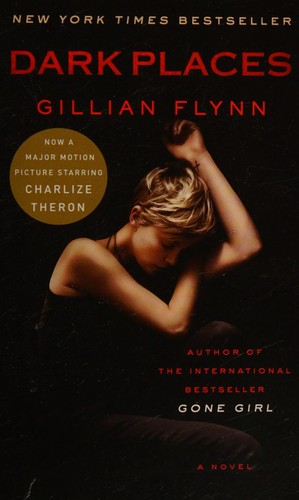
I read the last hundred pages of Dark Places standing up in my kitchen because I could not physically make myself sit down and be comfortable while this book finished ruining my night. It’s not her most famous book. It’s not even, if I’m honest, her best written one. But it might be the meanest. And I mean that as the highest compliment I can give a thriller.
| Author | Gillian Flynn |
| Published | 2009 |
| Genre | Crime thriller, literary suspense |
| Format | Standalone novel |
| Reception | The overlooked middle child of Flynn’s three books, quietly beloved by people who actually read it, permanently in the shadow of Gone Girl |
| Our rating | 4/5 |
| Read it if | you want your thriller to feel like it has dirt under its fingernails |
| Skip it if | you need a single sympathetic character to hang onto for 300 pages |
A farmhouse, a massacre, and the girl who survived it by lying
Libby Day was seven years old when her mother and two sisters were murdered in their Kansas farmhouse in the middle of the night. She survived by running out into a snowy field in her socks. She also, on the witness stand, helped put her fifteen year old brother Ben away for life, testifying that she saw him do it. Twenty five years later she’s a bitter, broke, borderline feral adult living off the dwindling scraps of true crime sympathy money, and a group of amateur murder obsessives called the Kill Club offers to pay her for information, for artifacts, for anything connected to “the Day family murders.” Which is how Libby, who has spent her whole life running from that night, gets dragged into re investigating it. And starts to wonder if she got it wrong.
Here’s the thing about this setup: it should feel gimmicky, a true crime fan club paying a survivor for scraps, but Flynn writes the Kill Club with such specific, gross detail (the guy who wants Libby’s old toys, the collectors, the theorists) that it stops being a plot device and starts feeling like an indictment of an entire genre of people, us included, who consume real tragedy as entertainment. Flynn wrote this in 2009, well before true crime podcasts were a billion dollar industry, and it reads now like she saw it coming.
Libby Day is the least likeable narrator I’ve rooted for in years
Look, I need to say this up front because it’s the thing that divides people on this book: Libby Day is not nice. She steals from a grieving support group’s donation box in the first chapter. She’s manipulative, self pitying, casually cruel, and has basically given up on being a person you’d want at your dinner table. Flynn does not soften her, not once, and I think that’s the whole point and also the reason some readers bounce off this book hard. If you need your protagonist to be likeable, Libby will make you furious. I found her fascinating in the way you’re fascinated by someone at a party who says the thing everyone’s thinking but shouldn’t say out loud.
What genuinely doesn’t work as well: the structure splits between present day Libby and 1985 chapters following her mother Patty and brother Ben in the hours before the murders, and the Ben sections in particular sag in the middle. Teenage Ben’s storyline (his secret girlfriend, the Satanic panic rumors swirling around him at school) is doing important thematic work about how easily a community decides a kid is a monster, but it drags compared to Libby’s chapters, which move like a shark. I found myself skimming a little in the second act, waiting to get back to present day Libby snooping around Kansas in her ratty coat.
And can we talk about the Satanic panic angle for a second. This is peak late 80s hysteria, the kind of thing that actually ruined real lives in that era, and Flynn uses it as the engine of the entire tragedy: everyone was so primed to believe in devil worship and ritual killings that nobody looked hard enough at the boring, human, financial reasons someone might actually want the Day family dead. That’s the trick of this book. The solution isn’t supernatural or even especially twisted. It’s depressingly ordinary, and that’s what makes it devastating instead of just shocking.
The ending pulls off something I didn’t expect: real, earned tenderness. Not redemption exactly, nobody gets that, but something close to mercy. I won’t spoil how Libby and Ben end up in the same room again, but I remember exhaling audibly when I got there, alone in my kitchen, like I’d been holding my breath for fifty pages.
The truest violence in this book isn’t the murders. It’s what an entire town decides to believe instead of looking at what’s actually in front of them.
About Gillian Flynn
Before she was the woman who wrote the book that ruined date night for a decade (Gone Girl, obviously), Gillian Flynn was a TV critic at Entertainment Weekly, which honestly explains a lot about how visually her books work, like she’s already directing the movie in her head while she types. She grew up in Kansas City, which is exactly the flat, forgotten Midwestern nowhere that shows up again and again in her fiction, farmhouses and strip malls and towns nobody’s rooting for. Her three novels (Sharp Objects, Dark Places, Gone Girl) form this loose trilogy of women who are angry in ways women aren’t supposed to be angry, and she got flak early on for writing female characters who are genuinely bad people, to which her answer was basically: so what, men get to be antiheroes constantly, why can’t women. I respect that answer a lot.
If this wrecked you, read these next
- Sharp Objects by Gillian Flynn, her debut, meaner and more claustrophobic, about a journalist returning to her hometown after a child murder
- Gone Girl by Gillian Flynn, if somehow you haven’t, the propulsive marriage thriller that made her a household name
- My Sister, the Serial Killer by Oyinkan Braithwaite, for another darkly funny take on sisters, blood, and who you protect no matter what
- The Ivy Tree vibes aside, try The Silent Patient by Alex Michaelides if you want another unreliable narrator puzzle box that rewards a second read
You can grab a copy here: Dark Places by Gillian Flynn.
For your book club
- Libby lies on the stand as a child and it shapes the next twenty five years of her life. Do you think she believed her own lie by the time she told it?
- The Kill Club members pay for access to tragedy. Are we, as readers of true crime and thrillers, doing something different from them, or just a more polite version of the same thing?
- How much of what happened to the Day family do you think was caused by poverty and desperation rather than any individual’s cruelty?
- Ben gets convicted partly because a scared community needed a monster to blame during the Satanic panic. Where do you see that same pattern happening today?
- Did the ending feel earned to you, or too neat for how bleak the rest of the book is?
Want more like this?
If you like your thrillers with teeth and your narrators a little bit ruined, check out more of our book reviews for the next one to keep you up too late.