
A freshly dog-eared review
Delirium Made Me Terrified of My Own Heart
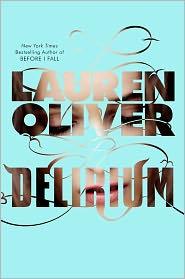
I read Delirium during the exact stretch of my early twenties when I was actively trying to convince myself that falling in love was a design flaw. So when I tell you a YA novel about a government that surgically removes your capacity to love hit me somewhere soft and stupid, believe me. I also need to tell you upfront: this book is gorgeous and overwritten in almost equal measure, and I have gone back and forth on it for over a decade now.
| Author | Lauren Oliver |
| Published | 2011 |
| Genre | Dystopian / YA Romance |
| Format | Series, 3 books plus a novella collection (Delirium, Pandemonium, Requiem, Hana) |
| Reception | Beloved by a devoted YA dystopian fanbase, but widely seen as uneven, with the ending especially dividing readers |
| Our rating | 3.7/5 |
| Read it if | You loved the wave of early-2010s YA dystopias and want gorgeous, aching prose over a tight plot |
| Skip it if | You need a fast-moving story or you’re allergic to insta-love tropes, even weaponized ones |
A World Where Love Is Diagnosed Like a Disease
Here’s the premise, and I still think it’s one of the best hooks in the whole YA dystopian boom: love is classified as a disease. Amor deliria nervosa. It’s in the textbooks, it’s got symptoms, it’s got a cure, and every citizen gets “the procedure” at eighteen, a brain surgery that flatlines your capacity to feel anything too big. No love, but also no grief, no obsession, no risk. Lena Haloway is ninety-five days from her own procedure and she’s counting down the days like it’s a birthday, because her mother died from the deliria (or so she’s been told) and Lena has spent her whole life terrified of becoming her.
Then she meets Alex. Obviously. This is YA in 2011, there was always going to be an Alex.
What I love about the setup, and what I think a lot of people undersell, is how genuinely creepy Oliver makes the “cured” world feel without ever tipping into cartoon villainy. The evaluations, the pairings, the way Lena’s aunt flinches when anyone mentions feeling too much, the raids on “sympathizers,” it all reads like a plausible bureaucratic nightmare rather than a evil-empire fantasy. Portland, walled off and monitored, feels believably suffocating. I remember sitting with this book on a lunch break, barely eating, just completely locked into how wrong the whole premise felt in a way that also made total sense.
The Prose Will Either Undo You or Exhaust You
Okay, here’s the thing. Lauren Oliver writes some of the most lyrical, tumbling sentences in YA, and about a third of the time it’s devastating and about a third of the time I wanted to shake her by the shoulders and say get to the point. There’s a rhythm to her sentences, comma-spliced, breathless, piling clause on clause, that mimics exactly what falling for someone feels like when you’re seventeen and it feels like your whole chest is on fire. When it works, like in the scenes where Lena and Alex are hiding out in the abandoned houses in the Wilds, it’s intoxicating. When it doesn’t work, entire pages go by where nothing happens except Lena describing a feeling for the fourth time in slightly different words.
And I want to be honest about something that bugs me more now than it did the first time I read this: the romance itself is fast. Lena goes from rule-following, procedure-anticipating girl to risking her life for a boy she’s known for a few weeks, and the book wants me to believe this transformation is the whole point (love breaks the rules, love is dangerous, that’s the thesis) but it still occasionally reads like insta-love with better wallpaper. I don’t think that’s an accident, since the entire novel is arguing love is a fever that arrives out of nowhere and takes you over. But knowing the trope is intentional doesn’t always make it land better on the page.
The side characters, though, this is where Oliver’s control really shows. Hana, Lena’s best friend, gets more interesting as the book goes on, quietly experimenting with rebellion in ways Lena is too scared to try. And Lena’s cousin Grace, mute and strange and treated as a cautionary tale by the adults around her, breaks my heart every single time, in a book that’s otherwise mostly about a girl falling in love with a boy in the woods.
Now, the ending. I won’t spoil it, but I will say: it’s abrupt, it’s a gut punch, and it made me immediately want book two, which is exactly what a first-in-series ending should do. Some readers feel cheated by it. I think it’s the strongest thing in the whole book, actually, the one moment where the prose stops swirling and just lands a hit.
Amor deliria nervosa: a world so afraid of heartbreak it forgot love was ever worth the risk.
About Lauren Oliver
Lauren Oliver co-founded a children’s book packaging company (Paper Lantern Lit) while also writing some of the defining YA of the early 2010s, which tells you she understands the machinery of the genre from the inside as much as she loves the poetry of it. Before Delirium she wrote Before I Fall, a Groundhog-Day-but-make-it-grief story that I’d honestly argue is the better book. She’s got range, dystopian romance, contemporary heartbreakers, even middle grade fantasy, and across all of it there’s this same interest in girls on the edge of losing someone, or something, they can’t get back.
If This Wrecked You, Read These Next
- Matched by Ally Condie, for another government-controls-your-love-life dystopia, quieter and more restrained than Delirium.
- Before I Fall by Lauren Oliver, if you want to see Oliver’s prose style applied to a story with a tighter emotional grip.
- Wither by Lauren DeStefano, for more lush, doomed prose and girls trapped by systems built to control their bodies.
- The Giver by Lois Lowry, the granddaddy of “a world that removed feeling to remove pain,” if you want to see where this idea started.
You can find the full trilogy here on Amazon if you want to commit to all three.
For your book club
- Do you think the “cure” in this world is actually about eliminating pain, or about eliminating unpredictability? Is there a difference?
- Lena’s mother is presented as a cautionary tale for most of the book. Did your view of her change by the end?
- Is the romance between Lena and Alex a believable human connection, or a symbol the plot needed? Does it matter which?
- Hana takes a very different path than Lena. Who do you think made the more understandable choice, given what they each stood to lose?
- If a real government offered a permanent cure for heartbreak at the cost of never loving anyone deeply again, would you take it?
Still thinking about Portland’s walls?
So am I, honestly, more than a decade later. If Delirium scratched an itch for you, go dig through more of our book reviews for the rest of the early-2010s dystopian wave, some of it holds up shockingly well, some of it really doesn’t, and it’s fun to figure out which is which.