
A freshly dog-eared review
I Rolled My Eyes at Poppy for 200 Pages, Then Caved Hard
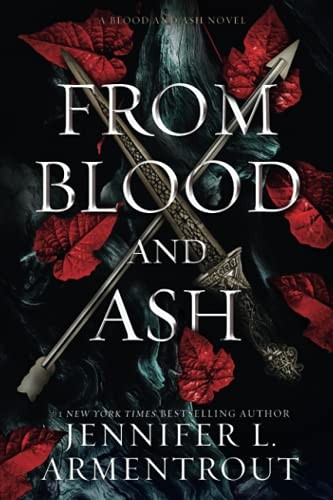
I want to be honest with you before we start: I spent the first third of this book making a face. You know the face. The one where you love your friend but they will not stop talking about a guy. And then somewhere around the halfway point I looked up, it was 1am, my tea was stone cold, and I had become that friend. I am not proud. I am not ashamed either. That is the whole deal with this book.
| Author | Jennifer L. Armentrout |
| Published | 2020 |
| Genre | Romantasy / dark(ish) romance / fantasy |
| Format | Book 1 of the ongoing Blood and Ash series |
| Reception | Genuinely divisive: BookTok adores it, plenty of readers bounce off the pacing and prose |
| Our rating | 3.5/5 |
| Read it if | You want a slow-burn that detonates, a guard-and-his-charge setup, and you are here for the banter and the spice |
| Skip it if | Repetitive prose makes you twitchy, or you need a fast first act |
A girl who cannot be touched, and a guard who really wants to
Here is the setup, no big spoilers. Poppy is the Maiden. Chosen, veiled, sacred, forbidden. She is not allowed to be looked at, spoken to casually, or touched, and she is being kept on ice for a Very Important Ceremony that everyone talks about in ominous capital letters. Into her locked-down little life walks Hawke, a golden new guard with a mouth on him and precisely zero respect for the rule about not flirting with the untouchable holy girl. You can see where this is going. Of course you can. That is not a criticism, that is the entire appeal.
What makes it work, when it works, is that Poppy is not actually the swooning porcelain doll the setup threatens. She sneaks out. She fights. She wants things she is told she cannot want. Armentrout gives her a spine early and then spends the book letting Hawke poke at it. The forbidden-guard tension is old as dirt and it lands because both of them know the rules and keep breaking them anyway, a little at a time, in a way that feels like getting away with something.
The prose drove me up a wall, and then I forgave it
Look, I am going to say the thing everyone says, because it is true. This book has verbal tics. Characters lose “half a breath” so often I started keeping a tally in my head and then gave up because I ran out of fingers. Poppy’s eyes get described roughly nine thousand times. There is a whole vocabulary of little repeated gestures that start to feel like a screensaver bouncing around the same corners. If you are the kind of reader who cannot stop noticing the seams, the first half will test you. I will not pretend otherwise. I noticed. I made the face.
And yet.
The banter is genuinely good. Not “good for the genre,” just good. Hawke and Poppy talking to each other is where the whole thing catches fire, and Armentrout clearly knows it, because she leans into it hard. There is a scene involving Poppy, a fight she is not supposed to be in, and Hawke finding out about her secret capabilities, and the way he reacts (delighted, a little unhinged, way too into it) is the moment I stopped fighting the book. It is also, not coincidentally, the moment the plot finally kicks the door in.
Because that is the real structure here: it is a two-act book pretending to be one book. The first act is slow, moody, repetitive, a lot of Poppy sitting in a room being forbidden. The second act, once things start going wrong and the world reveals what is actually happening out there in the dark, moves. There is a reveal in the back half that recontextualizes the whole romance, and I will not spoil it, but I sat straight up. If you are three chapters in and bored, I am asking you to bear with me and get to the halfway mark. The book you are promised is on the other side of the slow part.
Now the honesty the genre deserves, because I take dark romance seriously enough to be real about it: the spice is real and it arrives with force in the second half, more explicit than a lot of romantasy readers coming from YA-flavored fantasy expect. And there is a layer of dubious consent baked into the premise, given who Hawke is and what he is not telling Poppy. The book knows this. It is doing it on purpose, and it addresses it later. But if that is a hard line for you, go in with eyes open. I would rather tell you than have you find out at chapter twenty.
Quick tangent. I read most of this on a delayed flight, the kind where they keep updating the departure time by fifteen minutes so you cannot commit to a nap. Normally that is a special kind of misery. This book made me want the flight to stay delayed. I resented boarding. That is not nothing. A book that makes airport purgatory feel too short has done something to me, mechanically, prose tics and all, and I have to respect it even while I am rolling my eyes.
Do I think it is a genuinely great novel? Honestly, no, not in the way I would use that word for something with cleaner writing. Do I question my own taste for staying up until 2am with it anyway? A little, yes. But I have decided I am fine living in the gap between “objectively flawed” and “I could not stop.” I like what I like. I am not going to explain myself to the seams-noticing part of my own brain.
The trick of this book is that it is not really about the veil or the ceremony or the prophecy. It is about a girl finding out she was allowed to want things the whole time, and a boy who is very glad to help her find out. Everything else is scaffolding.
About Jennifer L. Armentrout
Armentrout is a machine, and I mean that with affection. She has been publishing across YA paranormal, new adult, and now romantasy for well over a decade, sometimes under the pen name J. Lynn, and she writes fast enough to make the rest of us feel lazy. She knows exactly what her readers want (yearning, banter, a morally gray man who is way too pleased with himself) and she delivers it with zero apology. She is not trying to win a prose award. She is trying to keep you up too late. On that metric she is one of the best working in the genre, and the Blood and Ash series has become one of the tentpoles of the whole romantasy wave for a reason.
If this one got its hooks in you, read these next
- A Court of Thorns and Roses by Sarah J. Maas. The obvious next step and the obvious comparison. Similar slow-to-explosive shape, higher stakes second act, the other pillar romantasy readers argue about.
- Fourth Wing by Rebecca Yarros. If you want the same banter-forward, spice-forward energy but faster out of the gate. Dragons instead of a veil.
- The rest of the Blood and Ash series. Fair warning, once you finish book one the cliffhanger will make this decision for you. Book two answers the questions the reveal opens.
- Serpent and Dove by Shelby Mahurin. Forbidden pairing, enemies circling, that same “we absolutely should not” tension if the guard-and-charge dynamic is your thing.
For your book club
- The book keeps Poppy literally veiled and untouchable for a long stretch. Did that setup feel oppressive and effective, or just frustrating to read? Where did it tip over for you?
- Hawke is charming and withholding key truths at the same time. At what point did you clock what he was really doing, and did it change how you felt about the earlier scenes?
- Let us actually talk about the dubious-consent layer in the premise. Does the book handle it responsibly, dodge it, or lean into it as fantasy? Where do you land?
- The prose is repetitive and a lot of readers bounce off it. Did it bother you, and does “it kept me up all night anyway” cancel that out or not?
- The story splits into a slow first half and a fast second half. If you were editing it, what would you cut, and would the payoff still hit?
Grab it, then come argue with me
If you want to see what all the noise is about, you can find From Blood and Ash on Amazon here, ideally on a night you do not have anywhere to be at 2am. And when you surface, come dig through the rest of our romance and romantasy shelf, where I have plenty more opinions I have not fully justified. I will be over here, still a little annoyed at how much I liked this, still not sorry…