
A freshly dog-eared review
The Book Where the Detective Never Remembers
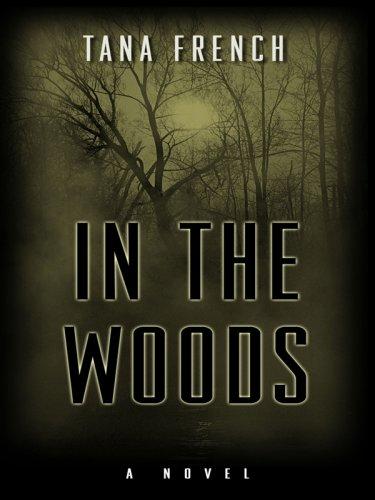
I need to tell you upfront that this book is going to make you furious, and I need to tell you that I loved it anyway, and I need to tell you those two facts are not in conflict. In The Woods is the rare mystery novel that cares more about the wound than the culprit, and depending on who you are, that is either the most honest thing a crime writer has done in twenty years or an unforgivable con.
| Author | Tana French |
| Published | 2007 |
| Genre | Literary crime / psychological mystery |
| Format | Standalone entry point to the Dublin Murder Squad series, 6 books total (each follows a different narrator) |
| Reception | Beloved and argued over in equal measure; huge critical acclaim, a very vocal contingent of readers who feel betrayed by the ending |
| Our rating | 3.8/5 |
| Read it if | you want atmosphere and psychology over tidy resolution, and you can tolerate loose threads |
| Skip it if | you need every mystery to be solved by the last page, no exceptions |
Three kids went into the woods and only one came out
Here’s the setup, and it’s a genuinely great one. Summer, 1984, a housing estate outside Dublin called Knocknaree, three twelve-year-olds go into the wood behind their neighborhood the way kids do when there’s nothing else to do. Hours later the police find one of them, Adam Ryan, standing rigid against a tree, his shoes filled with blood that isn’t his, unable to remember a single thing that happened. The other two, his best friends, are never found. Not a body, not a trace.
Twenty years later that boy is Rob Ryan, a detective on the Dublin Murder Squad, and he’s changed his name and buried the story so deep that most of his colleagues don’t know it’s him. Then a twelve-year-old girl turns up murdered on the edge of that same wood, on the same patch of ground, and Rob and his partner Cassie Maddox catch the case. You can feel where this is going and that’s the trap, because it doesn’t go where you think.
I want to be clear that the setup alone earns its reputation. French writes the wood itself like a character, thick and green and pressing in, and she writes childhood with a kind of specificity that made my chest hurt a little, the three of them building a fort, inventing a language, being the kind of inseparable that only exists before you’re old enough to know it won’t last.
What she gets exactly right, and the one thing I will never forgive
Rob Ryan is one of the best unreliable narrators I’ve read in this genre, and I mean that as a real compliment and also as a warning. He is charming, self-aware, funny in that dry defended way, and he is lying to you constantly, sometimes about small things and sometimes about the thing that matters most. French lets you like him for three hundred pages before you start to understand how much you shouldn’t trust a single thing he’s told you about himself. That’s a genuinely hard trick to pull off and she pulls it off.
The friendship between Rob and Cassie is the actual heart of the book, honestly more than the murder case is. Their partnership has an easy, bantering intimacy that reads like the best kind of platonic love story, and French is smart enough to let it curdle slowly instead of all at once. There’s a dinner party scene with Cassie’s boyfriend Sam that still lives in my head, all that unspoken tension sitting on the table next to the wine glasses. And Cassie herself, sharp and guarded and fully a person rather than a device to reflect Rob’s feelings back at him, is honestly the reason I’d recommend the sequel even to people who bounce off this one.
Now. The thing everyone warns you about, because I have to be honest with you the way I’d want someone to be honest with me before I spent twelve hours on an audiobook. The central mystery, what happened to Rob in those woods in 1984, is never solved. Not partially solved. Not solved-but-ambiguous. Just left there, a door Rob himself chooses not to open, and French made that choice on purpose. I’ve seen readers describe finishing this book and wanting to throw it across the room, and I understand that reaction completely, because for the first three quarters this reads like a book that is building toward an answer, and then it just doesn’t give you one.
Here’s my honest tangent: I read this on a plane, the kind of long red-eye flight where you’re too tired to sleep and too wired to stop reading, and I remember hitting that final stretch somewhere over the Atlantic and actually sitting up straighter, waiting for the reveal, and then closing the book with this strange hollow feeling that took me days to sort out. Was I angry? A little. Was I also kind of in awe that French had the nerve to do that? Also yes. I think this is a book about how some losses don’t resolve, how the not-knowing is the actual injury, and if you read it as a thesis on trauma rather than a whodunit, it becomes a different and much better book. But I won’t pretend that reframe doesn’t feel a little like I’m doing the author’s PR for her. Maybe I’m just protective of a book that hurt me in a specific way and I want that to have meant something.
The present-day murder case, the girl found at the archaeological dig, does get resolved, and it’s genuinely well plotted, with real misdirection and a gut-punch of a reveal about who’s responsible. So it’s not that French can’t stick a landing. She sticks one landing and deliberately refuses the other, and that asymmetry is either the whole point or the whole problem depending on your mood the day you finish it.
This is a book about the difference between solving a crime and surviving one, and it never lets you forget those aren’t the same job.
About Tana French
Tana French grew up between the US, Ireland, and Italy, trained as an actor before she ever published a word, and you can feel that theater background in how her characters perform versions of themselves for each other. She wrote In The Woods, her debut, while still working other jobs, and it won the Edgar, Anthony, and Macavity awards for best first novel, which is the kind of debut that makes other novelists want to lie down for a while. She’s Irish-American and lives in Dublin, and every book she’s written since has stuck with the same device: a new narrator plucked from the edges of the previous book’s cast, so the Murder Squad series reads less like a franchise and more like a city slowly turning to show you its other faces. If you want to sample her before committing, you can find the whole series here.
If the ending wrecked you (in either direction), read these next
If you finished this raging and unsatisfied, the sequel The Likeness might not fix that feeling but it will show you French can also write a more contained, more resolved mystery when she wants to, and it brings Cassie back as the lead in a stranger, more claustrophobic story. If you loved the psychological density and don’t mind another narrator who lies to himself, Broken Harbor is the darkest entry in the series and the one that stuck with me almost as much as this one did. For something adjacent in mood, Kate Atkinson’s Case Histories has that same interest in grief over plot mechanics. And if you want a very different but spiritually related gut-punch, Gillian Flynn’s Sharp Objects shares that same commitment to a narrator who might be the least reliable person in the room.
For your book club
- Do you think French made the right call leaving the 1984 disappearance unsolved, or does it feel like a broken promise to the reader?
- How much do you trust Rob by the end of the book, and at what point did your trust in him start to slip?
- What does the friendship between Rob and Cassie need that neither of them can get from anyone else, and why does it break the way it does?
- Is the present-day murder case a metaphor for Rob’s childhood trauma, a distraction from it, or both?
- If you’ve read further into the series, does knowing Cassie’s future change how you read her here?
Still thinking about the wood
If this one left you sitting with more questions than answers, good, that was the plan. Go find more of our book reviews for what to read next while you argue with yourself about it.