
A freshly dog-eared review
The Book Where Joe Pike Finally Talks (Sort Of)
I have a weakness for the quiet guy in fiction who turns out to be doing all the actual work while everyone else talks. That’s Joe Pike in a nutshell, and after a dozen books of him standing in doorways wearing sunglasses and saying almost nothing, Robert Crais finally handed him the wheel. The result, “The First Rule,” is the book where you find out what’s going on behind those red arrow tattoos, and honestly, some of it made me put the book down and just sit there for a second.
| Author | Robert Crais |
| Published | 2010 |
| Genre | Crime thriller / hardboiled detective fiction |
| Format | Series book, #13 in the Elvis Cole and Joe Pike series, second told primarily from Pike’s point of view |
| Reception | Well liked by longtime series fans, solidly rated, though several readers and critics call it a notch below Crais’s best |
| Our rating | 3.8/5 |
| Read it if | you want to see the stoic sidekick finally get the spotlight and don’t mind a plot that occasionally creaks |
| Skip it if | you haven’t read any earlier Cole/Pike books, or you need every thriller to be airtight instead of just entertaining |
The setup: a dead friend, a family wiped out, and a past nobody wanted dug up
Here’s the pitch. Frank Meyer, an old friend of Pike’s from his mercenary days, gets murdered in his own home along with his wife and kids, in what looks at first like a home invasion gone wrong. The cops treat it as exactly that: rich guy, bad luck, wrong night. Pike doesn’t buy it for a second, and he starts pulling on the thread of who Frank Meyer used to be before he became a guy with a lawn and a minivan.
Turns out Frank wasn’t just an old army buddy who went straight. He was into something, some leftover business from the mercenary years, and the deeper Pike and Elvis Cole dig, the more it looks like the killers weren’t random at all, they were sent. There’s a thread involving Eastern European organized crime and a code among thieves that reads like something darker than the book you thought you’d picked up. I won’t spoil where it lands, but by the midpoint you understand the home invasion wasn’t the crime. It was the cleanup.
What I like about the setup: it’s not really a whodunit. You’re not guessing the killer. You’re watching Pike refuse to accept that his friend died for nothing, and that refusal turns into something close to a one man war. If you know Pike at all, that’s exactly on brand.
What actually works, and what made me roll my eyes
The reason to read this book is Pike’s interiority, and Crais knows it, because that’s the whole pitch of finally putting him in the driver’s seat. For a dozen books he’s been the silent gun who shows up right when Elvis needs him and vanishes again. Here you get his rules, his code, flashes of the young Marine who enlisted to protect and serve and instead got fed into something that broke half of what he believed. There’s a moment where Pike remembers Frank from the old days, before either of them had this much blood on their hands, and it lands with more weight than half the shootouts in the book combined. That’s the good stuff, and it’s why this entry matters even when the plot mechanics wobble.
Now the actual criticism, because I’m not pretending this is Crais at his sharpest. Once the organized crime angle kicks in, the plot gets busy. Too many players on the chessboard, a couple of henchmen who blur together, a climax that leans harder on the action set piece than the emotional gut punch the setup promised. I remember hitting the last hundred pages on a plane and instead of racing through it, I kept flipping back because I’d lost track of which Russian was which. A thriller should never make you page back.
Here’s the thing though. I still liked it, maybe more than the plot deserves, because Pike as a character is carrying the whole book and he’s strong enough to do it. Elvis Cole, usually the wisecracking center of these books, gets pushed to the side, and I missed his voice more than expected. The banter is part of why I fell for this series in the first place, back when I picked up “The Monkey’s Raincoat” used at a library sale mostly because the title made me laugh. This one is quieter, more clenched jaw than one liner. Some longtime fans love that shift. I’m on the fence. I think I wanted both things at once, which probably isn’t fair to the book.
One tangent, because I can’t help it. This is the book that made me understand why crime readers treat Pike like a comfort character despite him barely speaking. He’s not cool because he’s mysterious. He’s cool because he has an actual moral code and never breaks it, even when breaking it would be easier. In a genre full of antiheroes secretly as messy as the villains, Pike’s rigidity is the whole appeal.
Pike doesn’t get angry. Pike gets exact.
About Robert Crais
Robert Crais started out writing for television, gritty seventies and eighties procedurals like Hill Street Blues and Miami Vice, before deciding he’d rather build his own detective instead of writing someone else’s. Elvis Cole showed up in 1987 with “The Monkey’s Raincoat,” and Crais has been quietly one of the most respected names in American crime fiction since, the kind of author other thriller writers namecheck even when casual readers haven’t heard of him. He’s from Louisiana originally, landed in Los Angeles, and writes the city like someone who’s actually sat in its traffic and hated it. It took him over a dozen books to hand Pike the wheel, and you can tell he waited until he had something worth saying.
If Pike’s code wrecked you a little, read these next
If you came out of this one wanting more Pike, more moral rigidity dressed up as violence, here’s where I’d point you.
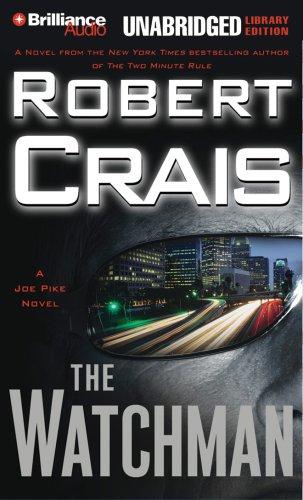
- “The Watchman” by Robert Crais, the first book to hand Pike the spotlight, and honestly the better entry point if you haven’t read it yet.
- “Nemesis” by Lee Child, if you want the same silent-competence energy in a different body, Reacher instead of Pike.
- “The Poet” by Michael Connelly, for readers who want the Los Angeles crime atmosphere without needing the ex-military backstory.
- “A Simple Plan” by Scott Smith, if what you actually wanted was the slow horror of finding out someone you trusted was never who you thought.
You can grab a copy here: find Robert Crais’s Joe Pike novels on Amazon.
For your book club
- Pike operates by a strict personal code even when it isolates him from everyone he loves. Do you think that code makes him admirable, or does it just make him easier to write?
- Frank Meyer spent years building a “normal” life to bury who he used to be. Do you believe people can actually outrun a violent past, or does this book argue they can’t?
- Elvis Cole takes a backseat in this entry. Did you miss his voice, or did the book benefit from quieting him down?
- The killers in this book aren’t random, they’re professional and coded. Does that make the violence feel more justified, or does it just make it colder?
- If you’d never read an earlier book in this series, do you think “The First Rule” works as a standalone, or does it lean too hard on history you’re supposed to already know?
Want more where that came from
If you’re the type who reads one thriller and immediately needs the next fix, you’re in the right place. Check out more of our book reviews for the next book that might wreck your sleep schedule.