
A freshly dog-eared review
Sicily, Sorcery, and a Prince of Hell Who Ruined My Sleep
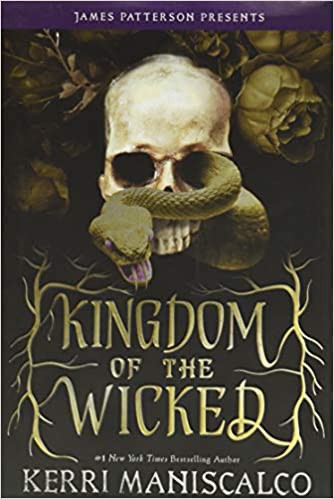
I bought this because of the cover. There. I said it. That black-and-gold monster on the shelf at the airport, a face made of shadow, and I thought, I do not care where I’m flying, I’m reading about a demon prince in Sicily. And look, I got exactly what I paid for, and also a little less, and also more. It’s complicated. Bear with me.
| Author | Kerri Maniscalco |
| Published | 2020 |
| Genre | Dark romantasy / gothic YA fantasy with a slow-burn devil at the center |
| Format | Book 1 of the Kingdom of the Wicked series (four books) |
| Reception | Popular and a little polarizing: people adore the vibes, some find the plot thin and the twist visible from space |
| Our rating | 3.5/5 |
| Read it if | You want atmosphere, witches, and a morally gray hottie you’re not supposed to trust |
| Skip it if | You need a fast plot and a heroine who makes smart decisions on the first try |
Two sisters, one dead girl, and a spell that goes very wrong
Emilia and Vittoria are twins from a family of witches in nineteenth-century Sicily, the kind who run a restaurant by day and quietly practice magic their mother has forbidden them from taking too far. Their whole life is one rule: do not do the dark stuff, do not summon anything, do not draw the attention of the princes of Hell. You can already feel where this is going.
Vittoria turns up dead. Ritually, horribly, with a piece of her missing, and Emilia, wrecked and furious and not remotely willing to grieve quietly, decides she’s going to find who did it and make them regret being born. To do that she breaks every rule her grandmother ever hissed at her, and she summons Wrath, one of the seven Princes of Hell, who arrives less like a lightning strike and more like a very annoyed man who cannot believe he was called for this.
That’s the setup, and it’s a good one. Maniscalco writes Sicily like she’s homesick for it. The food alone. I read the cornetto-and-espresso scenes and got genuinely hungry, which is not something I say about most books involving human sacrifice.
What worked, what made me sigh out loud, and one demon I’d like to discuss
Here’s the thing about Wrath. He’s the whole book. Everyone knows it. He’s cold, he’s maddening, he speaks in that clipped, withholding way that morally gray love interests always speak in, and yes, it works on me, and no, I’m not explaining myself. I like what I like. When he and Emilia are on the page snapping at each other, trading barbs, circling a partnership neither of them trusts, the book hums. It’s a slow burn, and I mean slow. This is not a spicy book. If you came for the romantasy heat that the later, adult-leaning romantasy wave promises, book one is going to feel almost chaste, more smolder than fire. The real payoff is deferred. I’ll come back to that.
The atmosphere is the strongest thing here by a mile. Malvagi lore, the seven princes, blood magic, a grandmother’s warnings, tarot imagery threaded through everything. It’s gorgeous. I read most of it on a rainy Sunday with the blinds half down because the book seemed to want that light, and it earned the mood.
Now the sigh. The mystery plot is thinner than the mood it’s wrapped in. Emilia spends a lot of the book being told things and reacting to them rather than driving, and I lost patience in the middle third, where the investigation stalls and the same beats circle. And the twist. I have to be honest with you, because I promised I would be. I saw it coming. Not vaguely, specifically, early, and once you see it you spend fifty pages waiting for Emilia to catch up. Some readers get genuinely blindsided and I’m happy for them. I was not one of them, and it took a little air out of the ending for me.
Small tangent, because it matters to how I read the whole thing: this book is doing something clever with structure that only becomes clear if you keep going. Book one is the moody, restrained, YA-leaning appetizer. Book two, Kingdom of the Cursed, is where the story crosses into Hell itself and the romance stops being polite. A lot of the complaints about book one being too slow and too tame are really complaints that it’s the first half of a longer, hotter story, and it doesn’t announce that up front. Knowing that going in would have changed my expectations. Consider yourself told.
Emilia herself I go back and forth on. She’s grief-driven and reckless, which I liked, but she also makes the classic gothic-heroine error of trusting the wrong warm smile and doubting the right cold one, repeatedly, and I wanted her to be a step sharper. Then again. Would I have made better choices with a Prince of Hell standing in my kitchen looking like that? Probably not. Let me question my own taste for one honest second: I think I forgive this book things I would not forgive a book with an uglier cover and a less atmospheric setting. The vibes bought it goodwill. That’s a real thing and I’m naming it.
A grief plot dressed as a romance, or a romance dressed as a grief plot: the trick of this book is that it refuses to tell you which, and that ambiguity is more interesting than its actual mystery.
About Kerri Maniscalco
Maniscalco is the writer who first made her name with Stalking Jack the Ripper, the Victorian murder series with the corset-and-scalpel energy, so she came into this genre already fluent in gothic dread and slow-burn banter. She writes atmosphere the way some authors write plot: as the actual point. She grew up, by her own telling, in a family that loved a good spooky story, and it shows, she’d rather give you a candlelit ritual and a beautiful monster than a tidy three-act mystery. Kingdom of the Wicked was her pivot into fantasy, and it landed her firmly on the romantasy map right as that whole shelf was about to explode. Commercially, her timing was immaculate.
If this one got under your skin, read these next
- Kingdom of the Cursed by Kerri Maniscalco — literally just keep going; this is where the heat and the payoff live, and it retroactively improves book one.
- A Deal with the Elf King by Elise Kova — if the reluctant-bargain-with-an-inhuman-hottie dynamic is your drug, this scratches it in a cleaner, cozier package.
- From Blood and Ash by Jennifer L. Armentrout — if you wanted more spice than book one gave you, this is the shameless, propulsive, forbidden-guardian version.
- The Cruel Prince by Holly Black — for the cold, calculating, do-not-trust-him love interest done at a very high level, with mortal-girl-in-a-deadly-court energy.
You can grab Kingdom of the Wicked over here if you want to see the Wrath situation for yourself.
For your book club
- Emilia breaks a sacred family rule out of grief. Was she wrong, or was the rule the problem? Where’s the line between grief and self-destruction here?
- The romance in book one is a slow burn with almost no heat. Did that restraint work for you, or did it feel like the book was withholding its best card?
- Did you see the ending twist coming? If you did, did it ruin the payoff or make the reread more interesting?
- Wrath spends most of the book being cold and withholding. What makes that archetype so appealing, and is it appealing for good reasons?
- The Sicilian setting, food, and lore are arguably the book’s strongest character. How much of your enjoyment came from atmosphere versus plot, and is that a fair way to judge a book?
Where to go from here
If you like your fantasy with a beautiful monster in it and a heroine making questionable choices at midnight, we keep the whole gorgeous, dangerous shelf over on our romance and romantasy shelf. Bring snacks. Sicily made me hungry and I suspect it’ll get you too.
Anyway. I finished this at 1 a.m., annoyed I’d guessed the twist, and immediately ordered book two. Make of that what you will…