
A freshly dog-eared review
Lore Made Me Root for a Girl Who Just Wants Out
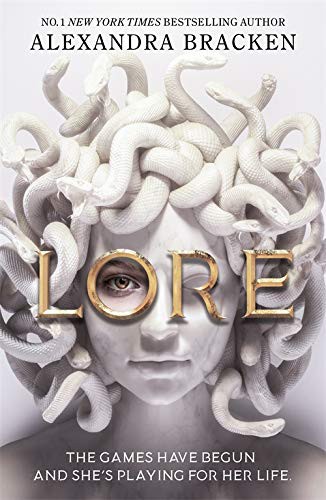
Here’s what nobody tells you about Lore: it’s not really a Percy Jackson book for grown ups, and it’s not really a Hunger Games clone either, even though the marketing wants it both ways. It’s a book about a girl who watched her whole family get murdered in a hotel room and never got to grieve properly, wearing a Greek mythology costume. I picked it up expecting monster fights and mostly got a very angry, very tired twenty two year old bartender, and honestly, that’s the better book.
| Author | Alexandra Bracken |
| Published | 2021 |
| Genre | Young Adult Fantasy / Mythology Thriller |
| Format | Standalone (companion novella exists but skip it) |
| Reception | Well liked, not universally loved. Praised for the Medusa reframing, dinged for a baggy middle. |
| Our rating | 3.7/5 |
| Read it if | You want mythology with teeth and don’t mind a slow burn getting there |
| Skip it if | You need every scene to move the plot or you’re allergic to love triangles that aren’t really triangles |
Every Seven Years, Someone Has to Kill a God
The premise is the best part, so let me sell it to you straight. Nine Olympian gods, cursed for some ancient rebellion, get dumped into mortal bodies every seven years and hunted through the streets of a modern city by the descendants of old bloodlines. Kill a god, absorb their power, become divine yourself. It’s called the Agon, it’s brutal, and it’s basically a citywide bloodsport with rules nobody follows.
Lore Perseous used to be one of those bloodline hunters, a Perseus descendant, until her entire family got slaughtered by a rival house when she was a kid, in a scene Bracken doesn’t shy away from. She’s spent years since scraping by in New York, working a bar job, keeping her head down, wanting absolutely nothing to do with gods or the hunt or her own last name. Then the Agon starts again, and a childhood friend she thought was dead shows up on her doorstep with a dying Athena bleeding out behind him, and Lore gets pulled back in whether she wants it or not.
What I liked immediately: this isn’t a chosen one story where the heroine is secretly the most powerful person alive. Lore is strong because she trained her whole childhood for a life she then rejected, and now she’s rusty, scared, and furious about being dragged back into it. That’s a much more interesting starting point than “discovers she has powers.”
The Medusa of It All
Look, the thing that actually makes Lore worth your time is not the hunt itself, it’s what Bracken does with the side characters, specifically the reframing of Medusa. I won’t spoil how she shows up, but the version of Medusa here is not a monster, she’s a survivor who turned her curse into the only protection she had left, and the book treats her with a tenderness that caught me off guard. That’s the chapter I dog eared. That’s the thread I’d hand to someone who says they’re tired of mythology retellings, because this one actually has an angle, not just a coat of paint.
Here’s the thing though, and I have to be honest because that’s the whole point of this: the middle third drags. There’s a stretch where Lore and Athena are essentially strategizing in apartments and warehouses for what feels like way too long, and Bracken keeps introducing new rules of the Agon and new bloodline politics that I had to flip back to remember. I read a big chunk of this on a red eye flight, the kind where you’re too wired to sleep and too tired to focus, and I actually dozed off during one of the exposition heavy planning scenes and wasn’t mad about missing it. That’s not a great sign for a book that wants to be a thriller.
Then the last hundred pages absolutely do not let up, and I found myself reading in the airport parking garage after my flight landed because I could not put it down for the last ninety minutes. That whiplash, slow slog into breakneck sprint, is the most common complaint I’ve seen from other readers too, and it’s fair. The pacing is genuinely uneven, not just me being impatient.
The Castor and Lore relationship is doing a lot of quiet work in the background, childhood friends who lost each other and found their way back, and I’ll admit I’m a sucker for that particular flavor of romance, the kind built on history instead of instant chemistry. It’s sweet without being the point, which I appreciated. Van, on the other hand, brought some of the moral complexity I wanted more of, and I wish Bracken had given him more page time instead of splitting focus across quite so many bloodline players.
Am I overrating the mythology stuff because I’m a sucker for anything that rehabilitates a “monster” woman from Greek myth? Maybe. I know that’s a soft spot for me and I try to account for it, but even correcting for my own bias, the Medusa material is doing something the rest of the book doesn’t quite reach.
The gods you’re taught to fear are usually just the women who survived something men wrote the story of.
About Alexandra Bracken
Bracken built her name on the Darkest Minds series, the one that got the mediocre Netflix adaptation nobody talks about anymore, and she’s been quietly one of the more reliable YA authors working for over a decade now, jumping between dystopian, pirate fantasy, and now mythology without ever fully repeating herself. She clearly did her homework on the Greek source material for Lore, the bloodline lore isn’t decoration, it’s structural. She’s also written under other genres and done Star Wars tie in work, which tells you she’s the type of writer who likes a sandbox with existing rules and then breaks them on purpose.
If the Medusa Chapters Wrecked You, Read These Next
Circe by Madeline Miller, for the version of this idea done with more patience and better prose, a woman written out of myth reclaiming her own story start to finish.
Ariadne by Jennifer Saint, if you want more mythological women getting their due without the modern day hunt framing.
Sawkill Girls by Claire Legrand, for the same feral, angry teenage girl energy without the Greek gods.
The Cruel Prince by Holly Black, if what you actually wanted was more court politics and morally messy alliances.
You can grab a copy here: Lore by Alexandra Bracken on Amazon.
For your book club
- Lore spends years running from her bloodline identity. Do you think she ever really escapes it, or was going back always inevitable?
- How does the book’s reframing of Medusa change how you think about other “monstrous women” from mythology?
- The Agon rewards violence and punishes mercy. Did any character’s choices during the hunt surprise you, and why?
- Castor and Van represent pretty different kinds of relationships for Lore. What does each one give her that the other can’t?
- If gods walked among us every seven years, hunted by ancient bloodlines, would you want to know, or would you rather stay out of it entirely like Lore tried to?
Want more myth soaked chaos?
If Lore scratched an itch you didn’t know you had, or left you wanting a version with less pacing trouble and more precision, check out more of our book reviews for the mythology retellings and YA fantasy that hit hardest this year.