
A freshly dog-eared review
The Cop I’d Trust to Solve My Own Murder
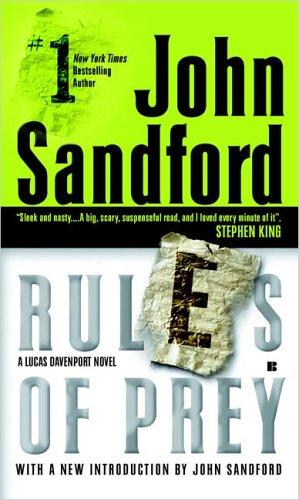
Okay, real talk before I get into this: “Lucas Davenport” isn’t a book. It’s a guy. He’s the cop who’s been running through John Sandford’s Prey novels since 1989, and if you typed that name into a search bar you were probably trying to figure out where to jump into a series that now runs over thirty books deep. I’m not going to pretend otherwise and hand you a fake plot summary. I’m going to tell you what it’s actually like to live inside this guy’s head for two decades of reading, because I have, on and off, since college, and I have complicated feelings about it.
| Author | John Sandford |
| Published | 1989 (Rules of Prey, book one) through present |
| Genre | Crime thriller / police procedural |
| Format | Series, 30+ books and counting |
| Reception | Beloved by thriller readers as reliable comfort food; critics note the formula wears thin and the later books coast |
| Our rating | 4.2/5 |
| Read it if | you want a smart, funny, occasionally brutal cop who feels like a real person and you don’t mind a body count |
| Skip it if | you need every book in a series to evolve, or you’re squeamish about 90s-era gender politics |
Who Is This Guy and Why Does Everyone Keep Reading About Him
Lucas Davenport starts out as a Minneapolis cop who also happens to write video games and wear five hundred dollar sport coats, which in 1989 was apparently the height of aspirational thriller-hero fantasy. He’s smart, he’s a little sociopathic around the edges, he likes fast cars and expensive scotch, and he has a habit of solving crimes by getting inside the killer’s head so thoroughly that he starts to scare his own partners. Over the decades he becomes a US Marshal, gets married, has kids, ages in something close to real time. That last part actually matters. Most series heroes are trapped in amber. Davenport gets older, greyer, slower to throw a punch, and Sandford lets that happen instead of hitting reset every book.
The early ones, Rules of Prey especially, are straight up serial killer hunts with a genuinely disturbing antagonist and a plot structure that alternates between the killer’s point of view and Lucas closing in. It’s the Thomas Harris playbook, executed with a Minnesota accent and a mean sense of humor. Later books shift, some become more about political corruption or organized crime, and the “Prey” title becomes more of a brand than a description. I won’t spoil which victims live or die, but I’ll say this: Sandford is not precious about killing off people you like, and that unpredictability is a lot of why the tension holds up book after book after book.
What Actually Works, and What I’m Tired Of
Here’s the thing that keeps me coming back: Sandford writes dialogue like he’s actually listened to cops talk. It’s clipped, it’s funny in a dark way, nobody explains their feelings, and the banter between Lucas and his colleagues, especially Del Capslock in the middle books, feels lived in rather than written. I remember reading Mind Prey on a plane, the one where a killer targets Lucas’s own family, and getting so wound up I missed the drink cart twice because I didn’t want to look up from the page. That’s a real memory, not a marketing line. Few thriller writers make me forget I’m supposed to be annoyed about turbulence.
What doesn’t work, and I’ll just say it: the misogyny in the early books has not aged well. Rules of Prey and the ones right after it treat women, especially victims, in a way that reads more voyeuristic than the era’s other crime fiction, and I’ve had to put the book down a few times and ask myself whether I actually like this or whether I’ve just been reading it since I was nineteen and never stopped to check. That’s the self-interrogation I promised myself I’d do here, and the honest answer is: some of both. I think Sandford is a genuinely gifted plotter and a genuinely uneven writer of women, and both things are true at once.
The other real criticism, and I think most longtime readers would cop to this too, is that somewhere around book fifteen or twenty the formula starts showing its seams. Lucas gets a lead, chases it, there’s a violent confrontation two-thirds through that doesn’t end the book, then a real climax near the end. It works because Sandford is a pro’s pro at pacing, but if you read four of these back to back you will start finishing sentences before the page does. I did that one miserable Minnesota winter, four in a row, holed up with a space heater, and by the fourth one I was skimming the procedural stuff just to get to Lucas being an asshole to someone who deserved it. Which, fine, is still fun. Just less fun.
Some men are just wolves, and Lucas Davenport has always known the only way to catch one is to think like one.
About John Sandford
John Sandford is the pen name of John Camp, a former newspaperman who won a Pulitzer for feature writing before he ever wrote a novel, which explains why his prose never wastes your time and his research on ballistics, forensics, and Minnesota politics feels like it came from an actual reporter’s notebook rather than a Google search. He’s absurdly prolific, he clearly likes his characters more than he likes tidy moral lessons, and he seems to have made peace with the fact that he is, at this point, less an author than an institution. Grab any Prey novel off an airport shelf and it will do exactly what it says on the cover, which in genre fiction is its own kind of integrity.
If You Want More Cops Who Think Like Killers, Try These
Michael Connelly’s Harry Bosch series, if you want the same procedural bones but a hero who’s more haunted and less flashy. Thomas Harris’s Red Dragon, for the serial-killer-profiling DNA that Sandford clearly studied closely. Sandford’s own Virgil Flowers spinoff series, if you want the same world with a looser, funnier lead who I honestly prefer some days. And Tana French’s Dublin Murder Squad books if you want the police procedural slowed way down and turned literary. You can browse a stack of the Lucas Davenport novels here if you want to just dive in at Rules of Prey and see where it takes you.
For your book club
- Does it matter that a series hero ages in real time, and did that change how you felt about Lucas over multiple books?
- Is Lucas Davenport actually a good person, or just a person good at catching worse people?
- How do the early Prey books hold up against modern true crime and thriller sensibilities around victims, especially women?
- What does Sandford’s journalism background bring to how he handles procedure and pacing?
- Would this series work as well without its dark humor, or is that the actual engine of the books?
Not sure which Prey book to start with?
Start with Rules of Prey and decide from there whether you’re in it for the long haul, honestly most people are. For more honest takes like this one, check out more of our book reviews.