
A freshly dog-eared review
The Bird Lady, the Bog Bodies, and Me at 2 AM
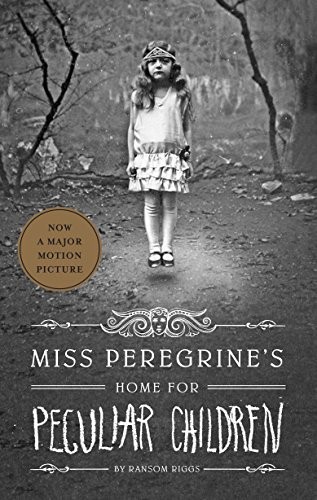
I bought this book because of a photograph of a girl floating in mid-air holding what looks like an invisible rope, and I want to be honest with you upfront: the pictures are the reason this book exists, and about a third of the way through you can feel Ransom Riggs realizing that too, and scrambling to build a plot sturdy enough to hold all his weird found-photo collection together. Sometimes it holds. Sometimes it wobbles like a card table.
| Author | Ransom Riggs |
| Published | 2011 |
| Genre | Young adult fantasy / horror-adjacent |
| Format | First book in a series (six novels total, plus spinoffs) |
| Reception | Beloved for its atmosphere and photos, criticized for pacing and a thin, wandering plot |
| Our rating | 3.7/5 |
| Read it if | You want a spooky, photo-driven mood piece and don’t mind a slow, meandering middle |
| Skip it if | You need tight plotting or you’re allergic to love-triangle-adjacent teen romance |
A dead grandfather, a Welsh island, and some very strange snapshots
Here’s the setup. Jacob Portman is a rich, aimless sixteen year old in Florida whose grandfather Abe has spent Jacob’s whole childhood telling him fantastical stories: monsters with too many mouths, an orphanage on a Welsh island, a woman who could turn into a bird. Jacob believed all of it as a kid, the way kids do, and then grew out of it, the way kids also do. Then Abe dies. Badly. Jacob finds him in the woods behind the house, and what Jacob sees in his grandfather’s last moments (something with too many teeth, gone before anyone else arrives) convinces everyone he’s having a breakdown except Jacob himself, who becomes obsessed with proving the stories were real.
So off he goes to Wales, to the island of Cairnholm, to the bombed out shell of the orphanage where his grandfather grew up, dragging a reluctant therapist-approved chaperone (his dad) along for the ride. And there, in a loop of time that resets every day to September 3rd, 1940, he finds them. Miss Alma Peregrine, headmistress and literal bird. Emma Bloom, who can conjure fire in her bare hands. Olive, who floats. Millard, who’s invisible. A whole houseful of “peculiar” children, frozen in one repeating day so the monsters that eat peculiar souls can’t find them.
It’s a great premise. It’s maybe one of the best premises I’ve read in YA fantasy from that era, the found-photograph conceit alone is worth the price of admission, because every peculiar kid in this book is illustrated with an actual vintage photograph Riggs dug out of flea markets and private collectors, genuinely unsettling images of children doing things that shouldn’t be possible in a photo. You look at the picture of the girl with two mouths and it does something to your stomach that no amount of prose description would manage.
What works, what sags, and the scene that actually got me
Look, I’ll say the quiet part loud: the middle third of this book drags. Once Jacob’s inside the loop and has met everyone, there’s a stretch where the book just sort of hangs out, showing you peculiar party tricks one after another like a very long talent show, and I remember putting it down for three days straight somewhere in there, not because I hated it, just because nothing was pulling me forward. That’s a real flaw. A book this atmospheric shouldn’t have a saggy middle, and this one does.
But here’s the thing. When it’s good, it’s genuinely good. The photographs do a huge amount of narrative work that dialogue alone couldn’t, and Riggs is smart about pacing them, dropping a new unsettling image right when your attention starts to drift. The scene where Jacob first sees the hollowgast, the thing that killed his grandfather, described as a shadow with too many limbs moving wrong against the treeline, actually spooked me, and I was reading it on my porch in broad daylight, which should tell you something.
I also want to be honest about the parts that don’t hold up. Jacob and Emma’s romance is doing some genuinely strange, unaddressed generational math (she was in love with his grandfather, decades ago, when they were both teenagers, and now she’s falling for the grandson who looks like young Abe), and the book never quite reckons with how weird that is. It just lets it happen. I was fully willing to buy the time loop, the monsters, the invisible boy, all of it, but that romance kept snagging on something in my brain every time it came up.
And can we talk about the ending. It sets up book two so hard that this one barely stands as its own story, the last fifty pages are basically a table of contents for the sequel. I don’t mind a series hook. I mind when the hook feels like the book gave up finishing its own sentence.
Still, I keep thinking about Emma in the cave with her hands lit up like lanterns, and about that first photo of the levitating girl, and I wonder if I’m rating this on vibes more than craft. Probably. I think that’s allowed sometimes.
This is a book you read for the pictures and stay for the mood, and the mood is doing more heavy lifting than the plot ever will.
About Ransom Riggs
Ransom Riggs was a photography and vintage-ephemera collector before he was really a novelist, which honestly tells you everything about how this book got made. He built “Miss Peregrine’s Home for Peculiar Children” around a stack of eerie old snapshots he and other collectors had accumulated, essentially reverse engineering a story to fit the pictures rather than the other way around. That’s a genuinely unusual way to write a novel, and it shows, for better and worse. He’s also worked in film and documentary before this, and it’s obvious in how visually he thinks: whole chapters read like storyboards. He turned this book into a franchise (six novels, a Tim Burton movie in 2016, various spinoff titles), and has said in interviews that hunting for the photos was always half the fun for him, maybe more than half.
If the photos hooked you, read these next
- “The Graveyard Book” by Neil Gaiman, for the same eerie found-family-of-outcasts feeling, minus the photo gimmick, plus better prose.
- “Coraline” by Neil Gaiman, if you want the creeping dread without the series commitment.
- “The Night Circus” by Erin Morgenstern, for atmosphere-first storytelling where mood does the heavy lifting the way it does here.
- “House of Leaves” by Mark Z. Danielewski, if you want to see what happens when an author takes the “unconventional visual format” idea and pushes it about ten times further.
For your book club
- Do you think the found-photograph concept strengthens the story, or does the plot feel built to justify the pictures rather than the other way around?
- How do you feel about the age dynamics in Jacob and Emma’s relationship, given what she knew about his grandfather? Did the book earn that storyline or dodge it?
- The time loop keeps Miss Peregrine’s kids safe but frozen. Is that a fair trade? Would you choose to live in a loop if it meant never growing old but never moving forward either?
- Jacob spends the whole book chasing his grandfather’s stories to prove his own sanity. What did you make of how mental illness and trauma get handled around Jacob’s diagnosis early on?
- If you’ve seen the Tim Burton film, how does it compare tonally? Does the movie fix or worsen the pacing issues in the book’s middle section?
Curious what’s next on your list
If you want to grab a copy, here’s Miss Peregrine’s Home for Peculiar Children on Amazon. And if this review scratched an itch, come poke around more of our book reviews for whatever you’re going to read after this one.