
A freshly dog-eared review
Orphan X Made Me Trust a Trained Assassin
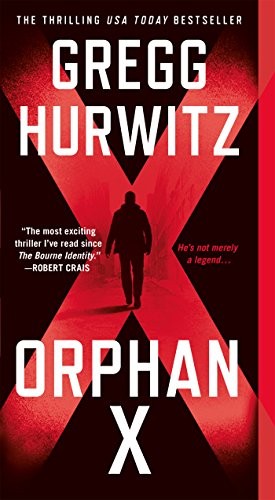
I picked up Orphan X because I was tired of thrillers where the hero is basically a Ken doll with a gun, and I came out the other side with a genuine soft spot for a man who alphabetizes his vodka collection and cries exactly once in the whole book. That’s the trick of this thing. Gregg Hurwitz sells you a superhuman killing machine and then spends four hundred pages quietly making the case that he’s actually just a very sad, very lonely guy who microwaves a single Manhattan-worthy ice cube. I did not expect to get attached. I got attached.
| Author | Gregg Hurwitz |
| Published | 2016 |
| Genre | Action thriller / espionage |
| Format | First book in the Orphan X series, currently ten-plus books deep |
| Reception | Big commercial hit, blurbed hard by the thriller establishment (Lee Child included), beloved by genre fans, occasionally dinged by critics for leaning on familiar tropes |
| Our rating | 4/5 |
| Read it if | You want a Reacher-adjacent hero with more emotional wreckage and a cleaner prose style |
| Skip it if | You need your thrillers to zig instead of zag, or you’re allergic to government conspiracy origin stories |
A Boy, a Program, and a Very Good Closet
Here’s the setup, and I’ll keep it clean because the reveal-by-reveal structure is half the fun. Evan Smoak was plucked out of a group home as a kid and folded into a black ops program called Orphan, which trains abandoned children into deniable government assassins. Nobody above a certain pay grade even admits the program exists. Evan eventually goes rogue, off the books, and reinvents himself as “the Nowhere Man,” a guy regular desperate people can call when the system has failed them completely: cops won’t help, lawyers won’t help, nobody with a badge or a briefcase will help. He shows up, fixes the unfixable problem, and vanishes. No fee. No thanks. Just a phone number passed hand to hand among people with nowhere else to turn.
In present day, Evan is a wealthy recluse in a fortress condo in downtown LA, living a double life as “Evan Smoak, mysterious rich guy who orders too much single-origin coffee,” while his old handlers from the Orphan Program start hunting him down one by one. Meanwhile a woman calls his old hotline, a woman with a genuinely rough situation involving her son and a violent felon, and Evan takes the case even as his past is closing in. It’s a dual-track structure, personal case in the foreground, existential threat in the background, and Hurwitz braids them together without it ever feeling like homework.
Where It Earns Its Keep, and Where It Doesn’t
Look, the premise is not original. Trained-killer-with-a-conscience-goes-rogue is a shelf, not a book. What sold me was the specificity. Evan’s condo, which he calls the Vault, is described down to the biometric locks and the exact brand of vodka he keeps at negative-eighteen degrees, and it becomes a character in its own right. There’s a bit where he explains his personal commandments, the rules the Orphan Program drilled into him, numbered and everything, and by book’s end you realize the whole novel is really about him breaking every single one of them for people who aren’t paying him and never will. That’s good structure. That’s not an accident.
The action sequences are genuinely well built, not the usual thriller mush where you can’t tell who’s shooting at whom. There’s a highway chase and a home-invasion sequence near the end that I read twice because I wanted to see how the mechanics worked. Hurwitz has said in interviews he choreographs fights and consults with actual operators, and it shows on the page in a way it usually doesn’t.
Where it drags: the villain, a fellow Orphan called Jack Johns’s replacement handler and a rival killer named Naomi Templeton chasing Evan through the DOJ side of the plot, never quite gets textured enough to matter. She’s competent and relentless but she’s a device, not a person, and the book knows Evan is the whole show so it doesn’t bother making her one too. And I’ll be honest, there were a solid fifty pages in the middle, all bureaucratic cat and mouse between shadowy government types, where I put the book down and did dishes I did not need to do. Not bad writing. Just a lull.
Here’s my tangent: I read most of this on a red-eye from Denver, the kind of flight where the cabin lights are off and you’re the only one awake with your little seatback light like a confession booth, and there’s a scene where Evan sits with the traumatized kid, Peter, and just talks to him like an actual person instead of a plot problem, and something about reading that at 2 a.m. over Nebraska got me more than it probably should have. Maybe it’s the altitude. Maybe Hurwitz just knows how to write a wounded kid without being maudlin about it. Possibly both.
Am I overrating this because I have a weakness for antisocial men who are secretly gentle. Genuinely possible. I’ve thought about it. I stand by the four stars anyway, because when I flip back through my copy the pages that are dog-eared aren’t the shootouts, they’re the quiet ones.
If you want your own copy to dog-ear, here’s Orphan X on Amazon.
The scariest killers in fiction aren’t the ones who enjoy it. They’re the ones still hoping someone will tell them to stop.
About Gregg Hurwitz
Hurwitz has a Harvard English degree and somehow used it to become one of the more reliable machines in commercial thriller fiction, which is its own kind of impressive. He’s also written comics (Batman, Wolverine), worked in Hollywood, and apparently does his own research into tactical stuff rather than just guessing, which explains why the gunfights in Orphan X read like someone who’s actually held the weapons. He seems to genuinely enjoy building elaborate, ticking-clock machinery and then setting it on fire. Prolific in a way that borders on suspicious. I’d like to know when he sleeps.
If Evan Smoak got under your skin, read these next
- The Killing Floor by Lee Child, for the DNA this book is clearly descended from, a drifter who fixes what the law won’t touch
- The Blacklist’s source material vibes aside, try I Am Pilgrim by Terry Hayes for a bigger, colder, more globe-trotting version of the deniable-operative story
- The Bourne Identity by Robert Ludlum, for the original amnesiac-assassin blueprint Evan is clearly in conversation with
- Gone by Min Kim… actually just keep going in the series, the second book, The Nowhere Man, answers a lot of what this one sets up
For your book club
- Evan follows a strict set of personal commandments drilled into him by his handler. Which one do you think is hardest for him to keep, and which one matters most to who he becomes?
- The book argues that the system, cops, courts, lawyers, fails ordinary people constantly. Do you buy that premise, or does it feel like a convenient excuse for vigilante fiction?
- Evan was taken from a group home as a child with no say in it. How much of his adult isolation do you read as trauma versus training versus just who he’d have been anyway?
- The domestic-violence case running through the book is much smaller in scale than the government conspiracy. Why do you think Hurwitz chose to make the small case, not the big one, the emotional center?
- If you got the Nowhere Man’s number and had one impossible problem to hand him, what would it be?
Want another one that’ll wreck your sleep schedule
If Evan Smoak got his hooks in you, there’s a whole shelf of morally gray operators and impossible rescues waiting. Check out more of our book reviews for what to read next.