
A freshly dog-eared review
The House Ate My Whole Brain and I’d Do It Again
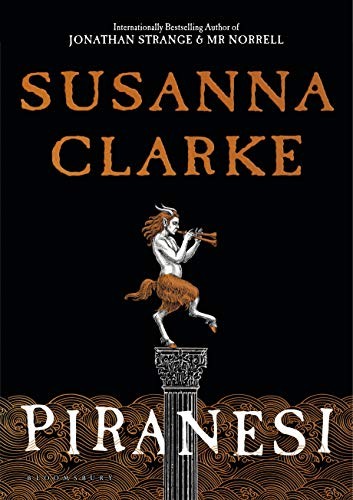
I read the first forty pages of “Piranesi” three separate times before it clicked, and I want to be honest about that right up front because most reviews of this book talk like it grabbed them by the throat on page one. Mine didn’t. It crept. And then somewhere around the part where our narrator describes cataloguing the tides in the Ninth Vestibule like it’s the most reasonable thing in the world, I sat up in bed at one in the morning and said out loud, to an empty room, “oh no, I love this.” Not every book earns that kind of delayed, involuntary devotion. This one did, on its own weird terms, in its own weird time.
| Author | Susanna Clarke |
| Published | 2020 |
| Genre | Literary fantasy / mystery |
| Format | Standalone novel |
| Reception | Widely praised and prize winning, though a vocal chunk of readers find it too slow or too thin on plot |
| Our rating | 4.5/5 |
| Read it if | You liked “The Ten Thousand Doors of January,” you love an unreliable narrator, and you can sit with mystery instead of demanding answers by chapter three |
| Skip it if | You need fast plot momentum, snappy dialogue, or a big cast. This is one voice, one house, and patience |
A man, a house made of endless rooms, and a memory that doesn’t add up
Here’s the setup, and I’m going to keep it clean because half the pleasure of this book is not knowing where it’s headed. Our narrator lives inside a House. Not a house like yours, a House with infinite halls stretching in every direction, lined with thousands of marble statues, its lower floors flooded by tides that rise and fall with a logic he’s spent years learning to predict. He calls himself Piranesi, though he suspects that isn’t really his name, just what a person he calls the Other calls him. He keeps meticulous journals. He feeds the birds. He has mapped, as best he can, everything within his reach, and he seems, genuinely, at peace.
Except something is off from the first page, and Clarke lets you feel it before you can name it. Piranesi refers to “the 13 people who have ever lived,” and lists them like saints. He talks about the House with the kind of reverent, total love you’d expect from someone raised inside a religion, not a building. And the Other, who visits twice a week asking Piranesi to help him search for something called the Great and Secret Knowledge, treats our narrator with a thin, barely concealed condescension that Piranesi doesn’t even register as strange. You register it. That gap, between what Piranesi believes and what you start to suspect, is the entire engine of this book, and it is a gorgeous, unsettling engine once it gets moving.
Why this book lives in my head rent free, and the one place it wobbles
Look, I need to talk about Piranesi’s voice first because it is the whole show. Clarke gives him this flat, devotional, almost childlike prose style, no irony, no self-pity, and it should not work as well as it does. He describes drowning statues and freezing halls and the deaths of albatrosses with the same calm wonder, and that calm is what makes the slow reveal of his situation so devastating. You’re not reading a thriller structure where information gets doled out to build suspense. You’re reading a man’s diary, written by someone who doesn’t know what he doesn’t know, and Clarke trusts you to feel the horror underneath the tranquility without ever underlining it. That restraint is rare and it’s the best thing in the book.
I also have to be honest that the back third moves at a completely different speed than the first two thirds, and depending on your mood that’s either a relief or a letdown. Once the mystery starts unspooling, once names and dates and a very specific real-world flavor of self-help grifter enter the picture, “Piranesi” becomes a more conventional book. Faster, clearer, almost thriller-adjacent. I missed the strangeness a little. I wanted to stay in the tides and the statues longer than Clarke let me, and there’s a version of this novel that trusts its own atmosphere even more and resists the urge to resolve so neatly. That’s my one real complaint. It’s a gentle complaint. But it’s there.
Tangent, because I can’t help it: I read most of this during a week I was sick with a fever that wouldn’t break, half asleep on the couch, and something about being slightly delirious while reading a book about a man who’s been gaslit into believing a flooded mansion is the entire universe felt uncomfortably appropriate. I do not recommend reading it with a 101 fever as a general rule. I do recommend it as an accident that worked out.
The statues deserve their own paragraph. Clarke populates the House with thousands of them, a woman carrying a beehive, a faun, two children laughing, an old man catching a bird, and Piranesi’s affection for each one, his habit of visiting favorites like they’re old friends, becomes almost unbearably moving once you understand what the statues might represent. I won’t say more than that. I will say I got a little wrecked by the elephant scene late in the book, hard to explain why without spoiling it, but if you get there you’ll know.
The House is not a prison. The House is what’s left when a person is erased and made to build a self out of tides and stone instead.
About Susanna Clarke
Susanna Clarke wrote “Jonathan Strange & Mr Norrell” in 2004, a nine-hundred-page doorstop of Regency-era magic and footnotes that made her instantly famous and instantly compared to everyone from Dickens to Austen to Tolkien, which is a lot to survive. Then she basically vanished from publishing for sixteen years, dealing with chronic fatigue syndrome that she’s spoken about candidly, the kind of illness that flattens your ability to work for years at a stretch. “Piranesi” arrived in 2020 as this slim, hushed, completely different animal from her debut, and reading her talk about writing it while barely able to leave the house makes the book’s obsession with confinement, endurance, and finding meaning inside a limited world hit even harder. She’s not prolific. She’s exact.
If the House got its hooks in you, read these next
- “The Ten Thousand Doors of January” by Alix E. Harrow, for the same sense of doors as metaphysics and a narrator slowly waking up to their own erasure
- “Jonathan Strange & Mr Norrell” by Susanna Clarke, if you want to see the maximalist version of her brain before she pared everything down to a single voice
- “The Starless Sea” by Erin Morgenstern, for more underground labyrinths and books-within-books dreaminess, though it’s looser and lusher than Clarke’s precision
- “House of Leaves” by Mark Z. Danielewski, if you want the nightmare version of an impossible house instead of the elegiac one
For your book club
- Piranesi genuinely loves the House, even after you understand what it’s done to him. Is that love real, or is it a symptom?
- Why do you think Clarke chose statues, specifically, as the House’s population, instead of paintings or empty rooms?
- Does the Other ever get a moment of humanity in your eyes, or does the book want you to see him as purely a villain?
- How did your read on Piranesi’s reliability as a narrator shift over the course of the book, and what was the exact moment it changed for you?
- The ending gives Piranesi a choice about who to be going forward. What would you have chosen in his place?
Grab a copy here if you want to fall into the House yourself: Piranesi by Susanna Clarke.
Still thinking about it
I finished this one weeks ago and I still catch myself thinking about the tides on a Tuesday afternoon for no reason at all. If you want more of that feeling, more books that get under the skin instead of just entertaining you for an evening, check out more of our book reviews and let’s find you the next one.