
A freshly dog-eared review
Sharp Objects Will Make You Want a Shower After
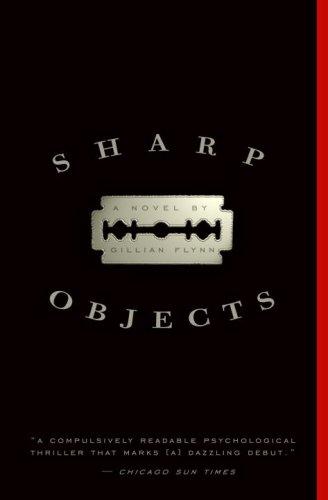
I read this book during a heat wave with a box fan pointed directly at my face, and I still felt grimy afterward, like the Missouri humidity had somehow leaked through the pages. Sharp Objects is not a fun book. It is not a cozy mystery with a body count. It is Gillian Flynn’s angriest, least polished, most upsetting novel, and I think it might also be her best one. Fight me.
| Author | Gillian Flynn |
| Published | 2006 |
| Genre | Psychological thriller / Southern gothic |
| Format | Standalone |
| Reception | Widely respected as a razor sharp debut, adapted into a well regarded HBO miniseries, though some readers find it relentlessly bleak |
| Our rating | 4/5 |
| Read it if | You want your thriller to actually hurt, and you don’t mind a narrator who is falling apart in real time |
| Skip it if | You need a likable protagonist, a tidy resolution, or literally any scenes that aren’t dripping with dread |
A reporter goes home, which is never a good idea
Camille Preaker is a low rent Chicago reporter with a drinking problem and a body covered in scars from words she carved into her own skin as a teenager. Her editor sends her back to her hometown of Wind Gap, Missouri to cover the murder of a young girl, and then a second girl goes missing while Camille is still there, because of course she does. So Camille has to move back into her childhood bedroom, under the roof of her mother Adora, a woman who runs the town’s meatpacking fortune and treats mothering like a performance art piece she’s not sure she wants notes on.
Camille also has to deal with her half sister Amma, thirteen years old, who is somehow simultaneously a Victorian dollhouse obsessive in front of Adora and a roller skating, pill popping menace the second she’s out of the house. That split personality thing Amma does is one of the best character reveals in the whole book, and Flynn plants it early enough that you almost see it coming, which somehow makes it worse when you actually get there.
The mystery itself, who killed these girls and why, matters less than you’d expect for a book marketed as a thriller. Flynn is playing a longer, meaner game about what Wind Gap does to its women, and what Adora’s house specifically has already done to Camille long before any murders started.
Here’s the thing about this book: it’s not comfortable, and I don’t think it wants to be
I want to be honest about something. The pacing in the middle sags a little. Camille wanders around Wind Gap interviewing people, drinking in her car, remembering things, and there’s a stretch in the second act where I found myself checking how many pages were left, wondering when the plot was going to show back up. Flynn’s a genre writer who clearly also wants to write literary fiction about trauma and small town rot, and sometimes those two ambitions are wrestling for control of the same page.
But when the book works, it really works. The word carving conceit could have been a cheap gimmick, a scar is a metaphor, we get it, except Flynn commits so hard to the specifics of it (which words, when, why those particular ones) that it becomes something closer to a nervous system than a symbol. There’s a moment late in the book where you finally understand the full geography of Camille’s scars, and I had to put the book down and just sit there for a minute. Not because it was gross. Because it was sad in a way I wasn’t braced for.
Adora is the character I keep thinking about, honestly, more than Camille. She’s monstrous in a way that never tips into cartoon villainy, because Flynn keeps giving her these small human moments, brushing Camille’s hair, that are somehow more disturbing than if she’d just been evil in a straightforward way. I’ve read a lot of thrillers with bad mothers in them. I haven’t read many that made me feel like I understood exactly how a person becomes Adora, one small justification at a time.
I’ll admit my taste might be a little suspect here, because I love a book that refuses to let anyone off the hook, and this one really doesn’t. Every adult in Wind Gap is complicit in something. The teenage girls are cruel to each other in ways that felt uncomfortably accurate to me, remembering my own middle school. There’s no character to root for in the traditional sense, just people to watch, closely, the way you’d watch a car you already know is going to crash.
The ending, without spoiling it, is bleaker than most thrillers have the guts to be, and some readers genuinely hate it for that. I think it’s the only honest ending the book could have had. Flynn isn’t interested in giving you catharsis. She’s interested in showing you the machine and letting you watch it keep running after the credits roll.
The scariest thing in Sharp Objects isn’t the murders. It’s how normal everyone seems while doing terrible things to each other in broad daylight.
About Gillian Flynn
Before she was the woman who made “cool girl” a phrase people still argue about, Gillian Flynn was a TV critic for Entertainment Weekly, which honestly explains a lot about how visually her books read, like she’s always half directing the scene in her head. Sharp Objects was her first novel, written while she still had the day job, and you can feel a kind of unfiltered fury in it that her later, more commercially massive books smooth out a little. She grew up in Kansas City, not far from the fictional Wind Gap in spirit if not on a map, and has said the book pulled from a real preoccupation with the specific cruelty of women toward women, a theme she’d return to and sharpen even further in Gone Girl. She’s since become one of the few thriller writers whose name alone sells a book, and deservedly so.
If this left a bruise, read these next
- Gone Girl by Gillian Flynn, for more of that ice cold voice but with a plot that clicks together like a trap
- My Sister, the Serial Killer by Oyinkan Braithwaite, for another twisted sister dynamic with pitch black humor
- The Silent Patient by Alex Michaelides, for a psychological thriller that also treats a woman’s silence as the whole mystery
- We Need to Talk About Kevin by Lionel Shriver, for another mother narrator you’re not sure you can trust or forgive
For your book club
- Why do you think Camille carves words instead of just cutting? What does the specificity of language add to her self harm?
- Adora is monstrous, but Flynn keeps giving her tender, almost sympathetic moments. Did that complicate your feelings toward her, or did you resist it?
- Amma performs two totally different personalities depending on who’s watching. Is she a victim of Wind Gap, a product of it, or something else entirely?
- What did you make of the ending? Do you think Camille was better or worse off for going home?
- The book is deeply interested in how women hurt other women, often more than the men do. Did that feel true to you, or did it feel like the book was letting something else off the hook?
Want more books that will absolutely ruin your week in the best way?
Check out more of our book reviews, or go pick up your own copy of Sharp Objects and prepare to feel a little grimy yourself.