
A freshly dog-eared review
Six Magicians, One Spot, and a Lot of Ego
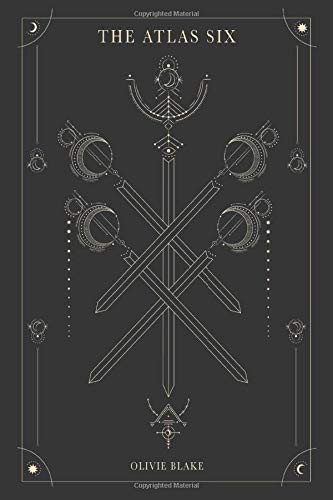
I bought this book because of a TikTok edit set to a Lana Del Rey song, and I want that on the record before I say anything else, because it explains so much about both why I picked it up and why I side-eyed it the entire time. Look, I don’t think The Atlas Six is a bad book. I think it’s a book that got famous for reasons that have almost nothing to do with whether it’s good, and then it had to spend two sequels trying to retroactively earn the hype. Sometimes that works. Here it mostly doesn’t, and I say that as someone who finished all three books anyway.
| Author | Olivie Blake |
| Published | 2020 (self-published), 2022 (Tor trade edition) |
| Genre | Dark academia fantasy |
| Format | Series, three books (The Atlas Six, The Atlas Paradox, The Atlas Complex) |
| Reception | A viral BookTok darling that critics and a lot of longtime fantasy readers found overwritten and underplotted |
| Our rating | 3.2/5 |
| Read it if | you want moody academic elitism, morally gray everyone, and prose you can chew on |
| Skip it if | you need plot momentum or characters who aren’t performing intelligence at you constantly |
Six geniuses walk into a library and nobody leaves for four hundred pages
Here’s the setup, and it’s genuinely a good one: six of the most powerful young magicians alive get recruited into the Alexandrian Society, a secret magical library so old and so hoarding of knowledge that getting in basically means you never have to worry about money, relevance, or mortality again. There’s a catch. Six get invited. Only five will be initiated after a year. The sixth dies, or gets killed, or something, the book is cagey about this on purpose. You’ve got Libby and Nico, exes turned rivals with physics-bending telekinesis and a whole lot of unresolved tension. Reina, who can pull power out of living things and does not care to be liked. Parisa, a telepath who reads minds and sleeps with people mostly as the same activity. Callum, an empath who might be a sociopath, or might just be extremely online about it. And Tristan, who can see through illusion to what’s real, which is thematically about as subtle as a mallet.
I want to be clear that as a premise this is delicious. Secret society, ticking clock, six people who all have reasons to both need and destroy each other. The Hunger Games with library cards and PhDs. And Blake commits to the bit: this book cares more about ideas, physics, medieval philosophy, the nature of consciousness, than it does about, you know, things happening.
The prose is gorgeous. The plot is somewhere else entirely.
Okay so here’s where I have to be honest, because that’s the whole job. I read the first hundred pages of this on a plane to Chicago, the kind of flight where you’ve got nothing else to do and you’re primed to fall in love with whatever’s in your hands, and I remember thinking, this woman can write a sentence. She really can. There’s a chapter early on where Parisa is dissecting exactly how she’s going to manipulate Callum, laid out like a chess problem, and it’s cold and precise and a little thrilling. I dog eared that page, which I never do.
But somewhere around the two hundred page mark I noticed I could not tell you what had actually happened. Characters have long, winding conversations about the nature of power and knowledge and whether morality is a construct, and these conversations are frequently very good on a sentence level, and they also just sit there. Scenes end without resolving anything. People make out or almost make out and then the chapter cuts away. It’s less a plot than an extremely well dressed mood board, and I say that as someone who does like a slow burn.
My real criticism, the one I’ll die on: nobody in this book talks like a person. Every single character, regardless of age, background, or magical specialty, speaks in the exact same register, dense, aphoristic, a little pleased with itself. Reina and Callum should not sound identical and they basically do. That’s a real craft problem, not a taste problem. When I got to a scene near the midpoint where two characters debate the ethics of infinite knowledge while also flirting, I laughed, not because it was bad exactly, but because I could picture Blake herself enjoying writing it more than I was enjoying reading it. That’s the tell of a book that started as fan fiction posted online chapter by chapter (it did, for what it’s worth, before Tor picked it up), where the audience is basically the writer’s own delight and nobody’s in the room saying cut this by a third.
And yet. Reina’s arc, the way her power is tied to living things dying around her, to fertility and decay, is genuinely one of the more interesting magic systems I’ve read in this genre in years. Nico and Libby’s rivalry-that’s-actually-grief is the emotional spine of the whole book and it mostly works. I finished it wanting to know what happened next, which, annoyingly, is the only metric that actually matters.
Am I being too hard on this. Maybe. I know plenty of smart readers who adore this book without reservation, who’ll tell you the ambiguity is the point, that dark academia is supposed to feel like drowning in ideas. I get it. I just don’t think “supposed to be frustrating” fully excuses being frustrating.
You can grab a copy here: The Atlas Six on Amazon.
This is a book about six people who all believe they’re the smartest person in any room, written by someone who clearly believes the same thing about herself, and somehow that confidence is both the whole appeal and the whole problem.
About Olivie Blake
Olivie Blake is the pen name of Alexene Farol Follmuth, who was writing and self-publishing fantasy under this name for years before The Atlas Six exploded on BookTok in 2021 and got scooped up by Tor. She also writes YA romance under her own name (My Mechanical Romance, All’s Fair in Love and Chocolate), which tells you something: she’s genuinely versatile, and she clearly loves a slow-burn rivalry more than almost any other trope in fiction. She has a background that includes actual academic chops (Harvard, then law school), which explains why every character in this series sounds like they’re defending a thesis at all times, for better or worse.
If this wrecked (or intrigued) you, read these next
- Ninth House by Leigh Bardugo, for dark academia that actually has a plot with teeth and consequences that land.
- A Deadly Education by Naomi Novik, for a magic school where the stakes are visceral instead of theoretical.
- The Secret History by Donna Tartt, the ur-text for this whole genre, if you want to see where the “beautiful terrible people at an elite institution” thing was perfected.
- If We Were Villains by M.L. Rio, for the same hothouse ensemble jealousy energy with Shakespeare instead of physics.
For your book club
- Do you think the Alexandrian Society’s culling system, six candidates for five spots, is a meaningful commentary on academic and professional gatekeeping, or just a plot device to force conflict?
- Which of the six would you actually want to be friends with, and does the fact that the answer might be “none of them” say something about the book’s design or its limitations?
- Parisa manipulates people as a matter of course. Does the book ever hold her accountable for that, or does it treat her manipulation as simply a sign of intelligence?
- The prose leans heavily into philosophical tangents about knowledge and power. Did those passages deepen your read of the characters, or did they slow the story down for you?
- Nico and Libby’s relationship is built on old resentment and old love tangled together. Did you buy their dynamic, or did it feel more told than earned?
Craving more dark academia debates
If you’ve got feelings about libraries, secret societies, and morally gray magicians (and clearly you do if you made it this far), go dig through more of more of our book reviews for the next one to argue about.