
A freshly dog-eared review
The Bunker Made Me Distrust My Own Neighbors
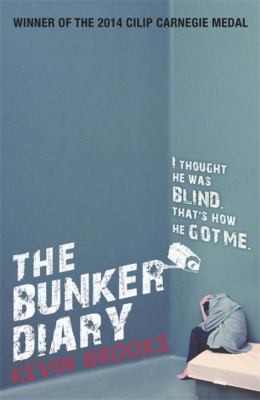
I picked up “The Bunker” expecting another disposable prepper thriller to kill a flight, and instead I sat in a middle seat with my knees jammed against the tray table, completely unwilling to land. Michael Hopf writes the collapse of civilization like he’s clocking in for a job he’s furious about, and somehow that anger is the best part. This is not a comfort read. This is a book that makes you inventory your pantry at 1am and question whether your neighbor with the generator would actually shoot you.
| Author | Michael Hopf |
| Published | 2016 |
| Genre | Post-apocalyptic survival thriller |
| Format | Book one of “The Bugging Out” series, part of Hopf’s larger New World series |
| Reception | A cult favorite in the prepper-fiction world, big fan base, but critics outside that lane find it thin on craft and heavy on ideology |
| Our rating | 3.5/5 |
| Read it if | you want visceral, no-frills collapse fiction and you don’t mind blunt politics baked into your plot |
| Skip it if | you need polished prose, subtlety, or characters who aren’t mouthpieces |
The world ends and everyone’s basement becomes a courtroom
Here’s the setup, and I’ll keep it clean of spoilers because the plot itself isn’t the point. The lights go out. Not flicker-and-come-back-on out, but gone, and it stays gone long enough that the thin varnish of normal life peels off in about seventy-two hours. Hopf drops us into a cast of neighbors, family men, a few opportunists, and lets the grid failure do what these books always do: turn a suburban street into a tiny nation-state with its own laws, its own currency, and its own executioners.
The “bunker” of the title isn’t just a bunker. It’s a metaphor Hopf is not shy about hammering, again and again, until you get it: the walls we build to keep the world out end up defining who we let become the world inside. Subtle it is not. But I’ll admit, the first time the power actually cuts and Hopf describes the silence, no hum of the fridge, no distant traffic, just nothing, I felt that little drop in my stomach you get on a plane hitting turbulence. That’s a real skill. He knows how to make dread physical.
What works, what doesn’t, and the argument I had with myself for two weeks
Look, I need to be honest about something first. Hopf’s prose is not good in the traditional sense. Sentences are short to the point of choppy, dialogue exists mostly to deliver exposition or a political speech, and if you’re the kind of reader who lives for a gorgeous turn of phrase, this book will frustrate you constantly. There’s a scene about a third of the way in where two characters debate government overreach for almost four pages while, presumably, their neighborhood is falling apart around them, and I remember actually saying out loud, alone in my apartment, “okay, we get it.”
And yet. I could not put it down. Bear with me while I try to untangle why, because I went back and forth on this for two full weeks after finishing it.
The action sequences are lean and mean in a way that actually serves the panic. When the first home invasion happens, Hopf doesn’t dress it up. It’s fast, it’s ugly, someone you liked is suddenly not okay, and the book moves on without giving you time to grieve properly, which mirrors exactly what a real breakdown would feel like. There’s no cushioning. That’s effective even when the writing around it is clunky.
The politics are where I have to be straight with you. This book wears its ideology on its sleeve, hard, and if you don’t share Hopf’s worldview about self-reliance, government, and who deserves to survive a collapse, you will feel lectured at more than once. I don’t think that makes it a bad book automatically, plenty of great fiction has an agenda, but I do think it makes it a narrower book than its premise promises. The best collapse fiction lets you sit with moral gray areas. Hopf tends to color the areas in for you before you’ve had a chance to think.
Here’s my tangent, and it’s a real one: I read most of this during a genuinely inconvenient week where my own power went out for two days after a storm, no internet, phone dying, candles rationed. I will tell you that reading a book about societal collapse while sitting in an actually dark apartment is an experience I do not recommend but also cannot forget. Every creak in my building sounded like chapter four.
So where does that leave me. A book with clumsy dialogue, a heavy thumb on the ideological scale, and pacing that occasionally trips over its own speeches, but also a book that produced actual dread in me, that made me think hard about what my own street would do in week one. I think I’m rating the effect it had on me almost as much as the craft, and I’m questioning whether that’s fair. Maybe it isn’t. I’m doing it anyway.
Civilization is four meals deep, and this book wants you to feel every missed one.
About Michael Hopf
Michael Hopf is a Marine Corps and Navy veteran turned author, and it shows on every page, not in a polished MFA way but in a “I have actually thought about logistics and perimeter security” way. He built “The Bunker” into a sprawling New World series that’s become a genuine phenomenon in prepper and survivalist reading circles, the kind of book people pass to their brother-in-law with the generator obsession. He’s not chasing literary prizes. He’s chasing the feeling of being ready, and he’s built a career out of scratching that itch for a very specific, very loyal readership.
If this wrecked you, read these next
- “One Second After” by William R. Forstchen, for a slower-burn, more grounded take on the same EMP-collapse premise, with better prose and just as much dread
- “Lucifer’s Hammer” by Larry Niven and Jerry Pournelle, the granddaddy of the genre, for a more sprawling and less preachy ensemble collapse story
- “The Road” by Cormac McCarthy, if you want the same bleakness with actual literary weight behind every sentence
- The rest of Hopf’s own New World series, if “The Bunker” hooked you and you want to see the world keep breaking
For your book club
- Did the book’s political leanings change how much you trusted the “good” characters, or did it not affect your read at all?
- Which early decision by the neighborhood group do you think was the actual point of no return?
- Does the book earn its bleakness, or does it lean on shock value in places?
- How would your own street, honestly, hold up during the first week of a real blackout?
- Is Hopf’s blunt, unpolished style a weakness here, or does it match the subject matter in a way a more literary style couldn’t?
You can grab a copy here: The Bunker by Michael Hopf.
Still thinking about the end of the world?
If “The Bunker” left you side-eyeing your own emergency supplies, or if you just want another book that’ll ruin your sense of security in the best way, check out more of our book reviews for the rest of our collapse-fiction and survival-thriller picks.