
A freshly dog-eared review
Jude Duarte Would Absolutely Stab You, and I Respect It
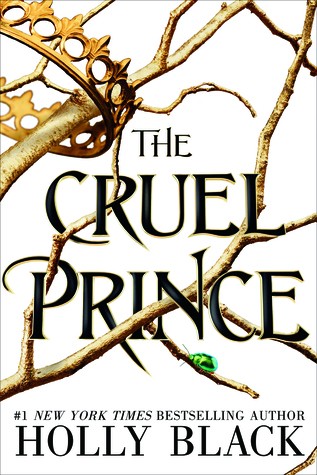
Here’s the thing about Jude Duarte: she is not a nice girl, she does not want to be a nice girl, and I would follow her into a burning faerie palace without asking a single question. I read this book braced to roll my eyes at it. I finished it plotting how to reread it slower. That gap, between what I expected and what I got, is basically the whole review.
| Author | Holly Black |
| Published | 2018 |
| Genre | YA dark fantasy / faerie romantasy |
| Format | Book one of The Folk of the Air trilogy (three books, plus novellas) |
| Reception | A cornerstone of modern romantasy, adored by most, side-eyed by a vocal few over the ages and the cruelty |
| Our rating | 4.5/5 |
| Read it if | You want a mortal girl outscheming immortals, and a love interest you’re allowed to distrust |
| Skip it if | Casual cruelty, humiliation, and morally gray everyone are dealbreakers for you |
A human girl in a world built to eat her
The setup is nasty in the best way. When Jude is seven, a faerie knight named Madoc murders her parents in front of her and her sisters, then takes the three girls to raise in the High Court of Faerie. Because that is how the Folk operate. He killed her mother, and he also tucks her in at night, and both of those things are true at once, and Jude loves him, and that is the kind of moral knot Holly Black ties for fun.
Ten years later Jude is mortal in a court of immortals. She can be glamoured, she can be lied about (she can’t lie back, the Folk can’t lie but they can be cruel with the truth), she can be killed on a whim by a bored prince. The prince in question is Cardan, youngest and most vicious of the High King’s children, who decides early that tormenting Jude is a fun weekend hobby. She responds not by shrinking but by deciding she will earn a place in this world through sheer bloody-minded competence. She wants power. Not acceptance. Power. A teenage girl whose stated goal is “I will make myself impossible to discard,” and the book takes that seriously.
I won’t spoil the turn, but somewhere past the halfway mark the whole thing detonates into court intrigue, and Jude stops being the bullied outsider and becomes a player. That pivot is the book’s real engine, and it’s why I forgive some of the slower early chapters.
What actually makes it sing (and where it wobbles)
Look, the marketing sells you enemies-to-lovers, and I want to be honest about the spice, because you deserve honesty: this is YA and it is not steamy. There’s exactly one kiss that matters and it happens in a moment so loaded and so untrustworthy that I actually said “oh no” out loud on the train. If you’re coming from adult romantasy expecting doors flung open, temper it. The heat here is entirely tension, and the tension is unbelievable.
Cardan is the thing everyone argues about. He is genuinely cruel to Jude for a large chunk of the book, and I respect that the story does not flinch from it or pretend it was flirting the whole time. When the reveal about the roots of his cruelty lands, it recontextualizes him without excusing him, which is a much harder trick than “he was mean because he liked you.” I fully understand the readers who never come around on him. I’m not even sure they’re wrong. That’s the point.
Jude, though. Jude is one of the best-written protagonists in this genre. She’s not spunky, she’s not secretly soft, she is ambitious and vengeful and occasionally makes catastrophically bad choices out of pride, and Black lets her be genuinely unlikable in the specific way that reads as real. There’s a scene involving a faerie fruit and public humiliation early on that made my stomach drop, and the way Jude carries that forward as fuel rather than trauma-to-be-healed is the most interesting thing about her.
Now the tangent, bear with me. I think a lot of what made this book a phenomenon is that it arrived right as everyone was exhausted by the chosen-one heroine who’s Not Like Other Girls but also inexplicably beloved by all. Jude earns nothing by being special. She has no magic. She wins by being smarter, meaner, and more willing to get her hands dirty than immortals who’ve had centuries to get comfortable. That’s a fantasy with actual teeth, and I think it’s why it caught fire on BookTok in a way the marketing team could never have engineered.
Where it wobbles: the middle sags. There’s a stretch of politicking where I lost track of which minor faerie lord wanted what, and the worldbuilding, while gorgeous, sometimes gestures at depth it doesn’t quite fill in (the mortal world barely exists, which is fine, but it makes the stakes feel a touch airless). And I’ll question my own taste here for a second, because I have to: am I grading this on a curve because the ending is so good? The last thirty pages are so sharp that they retroactively made me like chapters I’d been lukewarm on. That’s either great architecture or a magic trick, and I genuinely can’t tell which. Maybe both.
But that ending. Jude makes a move so audacious and so cold that I put the book down, walked to the kitchen, and came back just to read it again. It’s the rare final beat that reframes the entire power dynamic of the series in one page. I bought book two before I’d stopped pacing.
The Folk can’t lie, so this book weaponizes the truth instead, and it turns out an honest court is somehow the most dangerous place a mortal girl could live.
About Holly Black
Holly Black has been writing faeries since before it was a marketing category, and it shows. She co-created The Spiderwick Chronicles (yes, that one, the illustrated middle-grade series that was on every 2000s classroom shelf), and she’s spent a career insisting that the Fair Folk are not glittery Tinker Bell types but old, amoral, genuinely frightening things. The Cruel Prince is her at full strength: she knows exactly how to make the beautiful feel dangerous. She’s also just very good at cruelty as craft, which sounds like an insult and is meant as high praise. Nobody writes a court that would casually ruin you quite like she does.
If this wrecked you, read these next
- The Wicked King by Holly Black. The sequel, and honestly the better book. Everything the first one set up pays off with interest, and the ending is even more of a gut-punch.
- A Court of Thorns and Roses by Sarah J. Maas. If you want the same fae-court energy with the doors kicked wide open on the romance and the spice.
- An Enchantment of Ravens by Margaret Rogerson. A standalone with the same dangerous-beautiful fae aesthetic if you don’t want to commit to a whole trilogy.
- The Serpent and the Wings of Night by Carissa Broadbent. For readers who loved a mortal outscheming immortals and want a grittier, adult-tier tournament to go with it.
For your book club
- Jude wants power, not love or acceptance. Did that make her more compelling to you, or harder to root for?
- Where’s the line between Cardan being a well-written villain and being an irredeemable one? Did the book cross it for you, and does it matter?
- Madoc raised Jude and murdered her parents. How did you make sense of her love for him, and did the book let him off too easy?
- The Folk can’t lie but are endlessly deceptive. How does that single rule shape every relationship in the story?
- The final scene reframes everything. Did it feel earned, or like a twist for its own sake?
Where to go from here
If you want to spend the weekend on this one, you can grab The Cruel Prince here, and then come find your next fix on our romance and romantasy shelf, where I keep track of everything worth losing a night’s sleep over.
I like what I like and I’m not going to explain myself about the murder-court boarding school with the terrible prince. Jude Duarte earned every bit of what she takes, and I would testify to that in any court, mortal or otherwise…