
A freshly dog-eared review
The Unreliable Narrator Who Ruined My Commute
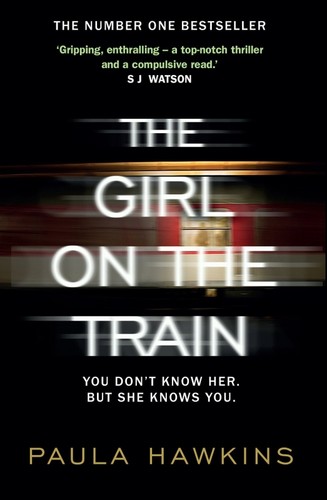
I read this book on an actual commuter train, which felt like either the perfect setting or a genuinely bad decision, and by the third chapter I was so paranoid about the couple in the yard near the tracks that I started making up backstories for strangers out the window. That’s the trick this book pulls on you. It’s not that the mystery is some airtight puzzle box. It’s that Paula Hawkins gets inside your head and makes you as unreliable as her narrator.
| Author | Paula Hawkins |
| Published | 2015 |
| Genre | Psychological thriller / domestic suspense |
| Format | Standalone |
| Reception | Massive commercial hit and a defining book of the domestic-thriller boom, though critical opinion has always been split on whether it’s actually good or just good timing |
| Our rating | 3.6/5 |
| Read it if | You want a fast, twisty, slightly trashy train read (pun intended) and don’t mind three women you might not always like |
| Skip it if | You need a narrator you can root for, or you’ve already read five other “Girl” thrillers and this one will feel like the fourth verse of the same song |
A Woman, a Window, and a Marriage That Isn’t Hers
Here’s the setup, and it’s a genuinely good one even if you’ve had it spoiled by osmosis at this point. Rachel takes the same commuter train into London every day, past the same row of houses, and she’s built an entire fantasy life around one couple she watches from the window. She calls them Jess and Jason. They seem happy. They seem like everything her own life isn’t, because Rachel is a mess: divorced, drinking too much, still obsessed with her ex-husband Tom and the new wife who replaced her, Anna, who lives four doors down from “Jess and Jason” in the same row of houses Rachel used to call home.
Then one day Rachel sees something from the train that doesn’t fit the fantasy. And then the woman she’s been calling Jess, whose real name is Megan, goes missing.
What I love about this setup is that it’s not really a whodunit at first, it’s a “did I actually see anything at all” story, because Rachel is the kind of narrator who blacks out, who calls her ex at 2am, who inserts herself into a police investigation while having zero credibility to offer them. Hawkins structures the book across three women’s voices, Rachel, Megan, and Anna, and lets you sit with how little any of them trust themselves or each other. That’s the real hook, more than the missing-persons plot. It’s a book about how women get told they’re crazy, unstable, hysterical, unreliable, and how sometimes that’s a lie men tell to control them, and sometimes, uncomfortably, it’s just true.
The Drunk Narrator Gambit, and Where It Wears Thin
Look, I need to be straight with you about something. Rachel is one of the most divisive narrators in modern thriller fiction, and I get both sides of the argument. On one hand, her unreliability is the entire engine of the book. You cannot trust her memory, which means you can’t trust the reader’s grip on the plot, which is genuinely clever, and there’s a scene where she tries to reconstruct a night she blacked out through fragments and shame and half-memories that’s some of the tensest writing in the book precisely because nothing is happening except a woman trying to remember. That’s hard to pull off and Hawkins pulls it off.
On the other hand, I spent a solid third of this book wanting to shake her. Not because drunk, sad, obsessive women don’t deserve sympathy on the page, they absolutely do, but because the repetitiveness of her spiraling starts to feel less like characterization and more like the book stalling for time. How many times can we watch Rachel decide not to drink, then drink, then regret it, then show up somewhere she shouldn’t, before it stops feeling revelatory and starts feeling like padding? I noticed myself skimming her sections in the back third, actively looking forward to Anna’s chapters instead, which is a strange thing to admit about the narrator the whole book is named after.
Here’s the tangent, and bear with me. I read this maybe a year after it came out, so I’d already absorbed some of the discourse about it being “Gone Girl but worse,” and I went in defensive on the book’s behalf, ready to prove the haters wrong. And honestly? The comparison isn’t crazy. Gone Girl has a structural nastiness and a sense of humor about its own twist that this book doesn’t quite reach. But I think that comparison also undersold what Hawkins is doing, which is smaller and sadder: this isn’t a book about a genius sociopath running a con, it’s a book about ordinary, damaged people lying to themselves in a very ordinary English suburb. The twist, when it lands, isn’t a magic trick, it’s almost mundane, which I think was the point, even if it makes the ending feel a little deflating after all that tension.
Do I think it’s brilliant. No. Do I think it earns its hook. Yes, mostly. The three-narrator structure occasionally repeats information you already know just to get each woman’s version on record, and the pacing sags hard in the middle stretch before the reveal picks the pace back up. But I still couldn’t put it down on that train, and that has to count for something.
The most unsettling thrillers aren’t the ones with the cleverest killer. They’re the ones that make you doubt the one person telling you the story.
About Paula Hawkins
Paula Hawkins is a Zimbabwe-born, UK-based journalist who spent years writing financial articles and, under a pen name, some romantic comedy novels that apparently went nowhere, before The Girl on the Train turned her into one of the defining thriller writers of the decade almost overnight. There’s something I find genuinely charming about a woman in her forties, with a failed pseudonymous rom-com career behind her, writing a book about a woman everyone underestimates and having it become an enormous phenomenon. She’s written a few thrillers since, none of which hit quite as hard culturally, which happens to a lot of writers who catch lightning once. I don’t hold that against her. Catching it once is rarer than people think.
If This Wrecked Your Commute, Read These Next
Gone Girl by Gillian Flynn, for the sharper, meaner, funnier cousin of this book, the one that started the whole unreliable-domestic-thriller wave in the first place. Big Little Lies by Liane Moriarty, if you want the multiple-women-multiple-secrets structure with more warmth and actual friendship underneath the suspicion. The Silent Patient by Alex Michaelides, if the “can I trust this narrator’s version of events” hook is what you’re really here for. And In the Woods by Tana French, if you want the atmosphere and the psychological unraveling done with actual literary weight behind it.
You can grab a copy here: The Girl on the Train on Amazon.
For your book club
- Do you think Rachel’s drinking makes her more sympathetic or less trustworthy as a narrator, and does the book want you to feel both at once?
- Of the three women, Rachel, Megan, and Anna, whose chapters did you actually look forward to, and what does that say about how Hawkins wrote each of them?
- How much of what happens to these women is about the specific men in their lives, versus something more structural about how women get disbelieved?
- Did the twist feel earned to you, or did it feel like the book had been withholding information rather than building toward something inevitable?
- This book kicked off a wave of “Girl” thrillers. Why do you think that title and that framing hit such a nerve at that exact cultural moment?
Want another train wreck of a narrator to obsess over?
Check out more of our book reviews for the next unreliable, messy, can’t-put-it-down read.