
A freshly dog-eared review
The YA Dystopia That Makes Girls the Monsters
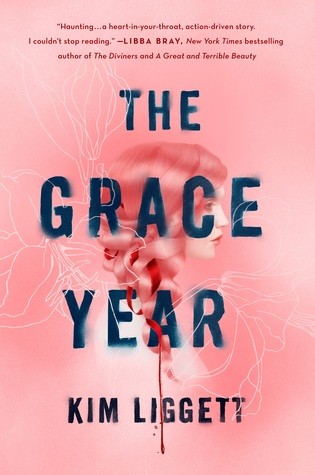
I bought this book because of the cover. Just the cover. A girl’s face half hidden behind flowers, that gold foil title, and a one line pitch about girls being sent into the woods so they don’t hex the men in their town. I did not expect to finish it in two sittings on a Tuesday when I had actual responsibilities. I also did not expect to spend the next week arguing with myself about whether it’s actually good or just really, really good at making me feel something.
| Author | Kim Liggett |
| Published | 2019 |
| Genre | YA dystopian / feminist horror |
| Format | Standalone (though it sure sets up like it wants a sequel) |
| Reception | Big buzzy hit on release, film rights snapped up fast, but readers are genuinely split on the back half |
| Our rating | 3.7/5 |
| Read it if | You want feminist rage wrapped in Hunger Games pacing and don’t mind a messy landing |
| Skip it if | You need your worldbuilding to hold up under any real scrutiny |
The premise: girls get sent to the woods to burn off their magic (or is it just puberty?)
Here’s the setup. In a nameless, vaguely colonial-era town run entirely on the fumes of male fragility, every girl turns sixteen and gets shipped off to a walled encampment for a year. The official reason is that teenage girls develop a dangerous magic that must be released into the wild before they come home to get married off. The real reason, which the book makes clear pretty early if you’re paying attention, is that this is a system built to control women by convincing them their own bodies are the threat.
Our narrator is Tierney James, who doesn’t want a husband, doesn’t believe in the magic, and gets thrown into grace year alongside a girl named Kiersten who has hated her since childhood and Michael Welch’s intended, Gertie, who Tierney is maybe, possibly, definitely in love with the memory of a boy she can never have. There’s also poachers waiting outside the fence to hunt the girls for parts, because their blood and hair supposedly hold power on the black market. So it’s mean girls, survival horror, and a slow burn romance with an outcast guy from the punishment village, all stacked on top of each other in the woods for a year.
It sounds like a lot because it is a lot. But Liggett commits to the premise so hard in the first half that I stopped questioning it and just went along for the ride.
What actually works, and where it falls apart
The first half of this book is genuinely great at what it’s doing. The girl-on-girl violence isn’t just shock value, it’s the whole point: Liggett is showing you what happens when women are raised to see each other as competition for scarce male approval, then locked in a field with no adults and no rules. Watching Tierney get punished by Kiersten and the other girls for the crime of being “different,” watching them turn on each other instead of the actual system that put them there, that’s the sharpest, most upsetting part of the book, and it’s sharp on purpose.
I read the camp chapters mostly on my lunch break, hunched over my phone in the break room at a job I don’t even have anymore, and I remember physically wincing at the scene where the girls tie up one of their own and leave her exposed to the elements as punishment. Not because it was gory. Because it felt true to how teenage girls actually treat each other when survival and status get tangled up.
Then, and here’s my real criticism, the book pivots hard into a romance with Michael Welch’s brother-in-law-to-be (I’m being vague on purpose, no spoilers) and the back half loses a lot of its nerve. The sharpest social commentary gets shelved for a fairly standard forbidden love plot, complete with him nursing her wounds and a slow reveal that he’s Not Like The Other Men. It’s fine. It’s competently done. But it’s not what made me pick this book up, and it’s not what I think about when I think about this book.
Also, and I’ll die on this hill, the ending rushes an entire third act of political upheaval into about forty pages and then just stops. It felt like Liggett ran out of runway. A lot of readers wanted a sequel to fix this. There isn’t one, and I don’t think there needs to be, but I do think the last quarter needed another eighty pages to breathe.
Quick tangent: I kept thinking about this book next to The Handmaid’s Tale, which feels like an unfair comparison to make against a YA novel, but Liggett is clearly working in that lineage, just with teenagers and a body count. It doesn’t hit as hard as Atwood. Very few things do. But it’s doing something adjacent for a younger reader who maybe isn’t ready for Gilead yet, and I respect that.
Am I overrating this because I read it fast and felt things? Maybe. I’ve reread parts of it since and the prose is fine, not remarkable, and some of the internal monologue about magic and blood gets repetitive. But the central metaphor, that women are taught their own power is dangerous and must be contained, stuck with me longer than plenty of books with better sentences.
The scariest thing in this book isn’t the poachers in the woods. It’s how easily the girls do the men’s job for them.
About Kim Liggett
Kim Liggett grew up in Oklahoma, spent time as a working musician in Nashville before she ever published a novel, and has said in interviews that The Grace Year came out of her own anger, watching women get pitted against each other her whole life and finally wanting to write the mechanism of it out loud. She’d written other YA before this (Blood and Salt, The Unfortunates) but this is the one that actually broke through, got optioned for film, and got her compared to Atwood and Collins in the same sentence, which is either a lot of pressure or a pretty good career day.
If this wrecked you, read these next
The Handmaid’s Tale by Margaret Atwood, for the adult, unflinching version of the same nightmare.
The Power by Naomi Alderman, if you want the “what if women actually had the power” flip side.
Vox by Christina Dalcher, for another modern dystopia about controlling women’s voices, literally.
Wilder Girls by Rory Power, for more girls-isolated-together horror with real teeth.
You can grab a copy here: The Grace Year on Amazon.
For your book club
- Do you think the “magic” is meant to be literal, or is it always a metaphor for something else, and does the book ever really decide?
- Why do you think Liggett made the girls turn on each other instead of making the poachers or the council the primary antagonist?
- Did the romance plot strengthen the book’s themes for you, or dilute them?
- Tierney refuses to conform in small ways all book. Which moment of resistance felt the most real to you, and which felt the most performative?
- If you could rewrite the ending, what would you change, and why do you think Liggett chose to end it the way she did?
Still thinking about the woods
If this one got its hooks in you, I’ve got more where that came from. Check out more of our book reviews for other books that made me miss my subway stop.