
A freshly dog-eared review
Fairy Tales Were Never Supposed to Be Nice
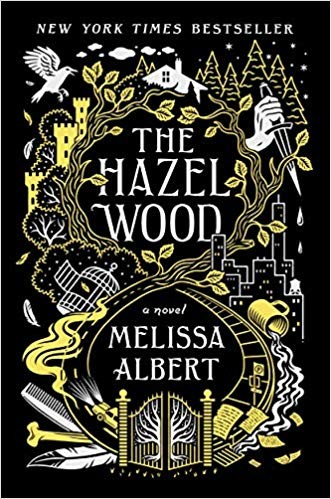
I bought this book because of the cover, which I am aware is a deeply stupid reason to buy a book, and then I stayed up until 2am reading the first hundred pages in a single sitting and hating myself for it because I had work in the morning. Then the middle third happened and I put it down for four days. That whiplash is basically the whole review right there, but bear with me, because the good parts are good enough that I still think about this book more than most things I finished in one clean sitting.
| Author | Melissa Albert |
| Published | 2018 |
| Genre | Dark fantasy / fairy tale horror, YA crossover |
| Format | First in a trilogy (followed by The Night Country and Two Way Back) |
| Reception | Divisive but generally warm: praised for atmosphere and voice, dinged for a sagging middle and a rushed back half |
| Our rating | 3.5/5 |
| Read it if | you want fairy tales with their teeth back in and don’t mind a plot that meanders before it sprints |
| Skip it if | you need every scene to earn its place and get impatient with vibes-first storytelling |
Her Grandmother Wrote the Book Nobody Can Find, and That’s the Problem
Alice Proserpine has spent her whole life being chased by bad luck. Not metaphorical bad luck. Actual, specific, keeps-happening-to-her bad luck, the kind where you and your mother move constantly because something always goes wrong right after you settle somewhere. Her grandmother is Althea Proserpine, author of a cult-classic collection of twisted fairy tales called Tales from the Hinterland, a book so rare that copies sell for absurd money and collectors treat it like scripture. Alice has never read it. Her mother wouldn’t let her.
Then her grandmother dies, off in her reclusive mansion called the Hazel Wood, and almost immediately after, Alice’s mother is taken by something that is very clearly not a normal kidnapper. And Alice realizes the fairy tales aren’t just stories. They’re doors. Or maybe leaks. Something in that world is bleeding into this one, and it wants her.
What got me from page one wasn’t the plot, honestly, it was Alice’s voice. She’s prickly and a little violent in her own head, not a soft, wide-eyed heroine waiting to be told she’s special. When she says something cutting to her only friend Ellery Finch, a rich boy obsessed with her grandmother’s book in a way that’s borderline unhinged, you believe she’s capable of it. Albert doesn’t sand down the edges on her, and I appreciated that more than I expected to.
The Hinterland Is Gorgeous. The Road There Is a Slog.
Here’s the thing about this book: the concept is genuinely one of the best fairy tale premises I’ve read in years. Not retellings, not “what if Cinderella but feminist,” but original tales, invented whole cloth by Albert and stitched into the back of the book and referenced throughout, that feel like they’ve been sitting in some dusty attic for two hundred years. The story of Ilsa, the girl in the tower who marries Death for the second time, or the twins swallowed and reborn wrong, these fragments are doing something Angela Carter and the Grimms were doing: showing you that the original fairy tales were never nice. They were cruel bargains and body horror and mothers who eat their children. Albert nails that register completely.
And then Alice actually gets to New York, teams up with Finch, and the two of them spend a solid chunk of the middle of the book essentially doing research. Talking to people. Following leads. It’s the part where the book stops being a fever dream and starts being a mystery novel, and the mystery novel parts are just… fine. Competent. A little slow. I found myself skimming dialogue tags to get back to anything that smelled like the Hinterland.
Then Alice crosses over into the Hinterland itself in the last third, and the book detonates into something genuinely strange and upsetting in the best way. The logic goes sideways. Characters from the tales show up half real, half symbol, the way people are in dreams you can’t quite explain the next morning. There’s a scene with the Night Country residents that still sits wrong in my stomach, in a good way, the way actual old fairy tales are supposed to sit wrong in your stomach. My personal gripe: this section is the shortest part of the book and deserved to be the longest. Albert builds this incredible cursed dreamscape and then has to wrap the plot up in about sixty pages. It reads rushed because it is rushed.
I’ve gone back and forth on how much to blame the pacing versus how much to just accept that Albert was clearly more interested in atmosphere than plot mechanics, and I’m still not fully sure I’ve landed on a fair verdict. Maybe I wanted a different book. Maybe the meandering middle is actually doing the slow work of making you feel as displaced and directionless as Alice, and I’m just an impatient reader. I don’t fully trust my own frustration here, but I also can’t pretend I wasn’t bored for a solid fifty pages in the New York section, so I’m reporting both.
If you want to grab a copy and see for yourself, it’s easy to find, here’s The Hazel Wood on Amazon.
The old fairy tales were never bedtime stories. They were warnings, and Albert remembers that even when her plot forgets to.
About Melissa Albert
Melissa Albert used to write for Barnes & Noble’s book blog, which tracks, because The Hazel Wood reads like it was written by someone who has spent an unhealthy amount of time thinking about which fairy tales actually hold up versus which ones got Disney-fied into mush. She’s Chicago based, and she’s talked about being drawn to the uncanny and slightly wrong version of childhood stories rather than the sanitized one. This was her debut novel, which makes the confidence of that invented mythology, the Hinterland tales especially, even more impressive. She followed it with The Night Country and closed the trilogy with Two Way Back, and has since put out other work, but The Hazel Wood remains the one that put her on the map, for good reason even with its flaws.
If the Hinterland Got Its Hooks in You, Read These Next
The Bloody Chamber by Angela Carter, for the source code Albert is clearly working from: fairy tales with the danger and sex put back in.
Uprooted by Naomi Novik, if you want that same fairy tale dread but with a plot that doesn’t sag in the middle.
Sorrowland by Rivers Solomon, for more body horror fairy tale energy, much darker, not for the faint of heart.
The Ten Thousand Doors of January by Alix E. Harrow, if what you loved was the idea of doors between worlds and a girl caught between them.
For your book club
- Alice spends the whole book being warned that she’s dangerous. Do you think the book ultimately proves that warning right or wrong, and does it matter?
- What did you make of Ellery Finch as a character? Obsessive fan, genuine friend, something else?
- The invented fairy tales scattered through the book are brutal compared to modern retellings. Why do you think Albert chose to write them that unflinching?
- Did the shift from New York mystery to full Hinterland immersion work for you, or did it feel like two different books stitched together?
- Alice’s mother kept the book from her for her whole childhood. Was that protection or control, and where’s the line between the two?
Still thinking about the Hinterland
If this one left you rattled in a good way, or rattled in a “why was the middle so slow” way, you’re not alone, and you’ll probably like some of our other unpacking. Check out more of our book reviews for other fairy tale retellings that either nail the landing or don’t.