
A freshly dog-eared review
The Cat Cover Book That Made Me Cry on a Plane
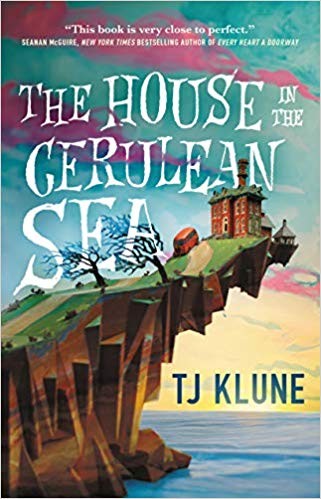
I bought this book because of the cat on the cover. That’s it, that’s the whole reason. I was having the kind of week where I couldn’t read anything with a body count, and this looked soft and dumb and safe, and I needed soft and dumb and safe. What I got instead was a book that made me cry on a Southwest flight next to a man doing a crossword, over a scene involving a child who thinks he’s the antichrist and a birthday party nobody expected to throw him.
| Author | TJ Klune |
| Published | 2020 |
| Genre | Cozy fantasy / found family |
| Format | Standalone (technically the first in the loosely connected Cerulean Chronicles, but reads complete on its own) |
| Reception | Beloved by a huge, devoted readership and side-eyed by a vocal minority who find it saccharine; extremely high average ratings with real detractors |
| Our rating | 4.3/5 |
| Read it if | you want a book that hugs you, you like slow-burn found family, you need a palate cleanser between heavier reads |
| Skip it if | you find whimsy exhausting or you need conflict with actual teeth |
A caseworker, an island, and six children who are technically classified as monsters
Linus Baker is 40 years old, overweight, unmarried, devoted to rules, and works for the Department in Charge of Magical Youth in a gray little house with a gray little cat named Calliope, and I want to be clear that Klune spends a genuinely long first act making sure you understand how beige this man’s life is before he blows it up. Linus is sent by the mysterious upper management of DICOMY to investigate an orphanage on a remote island, run by a man named Arthur Parnassus, that houses six children including a gnome, a wyvern, an unidentifiable green blob named Theodore, and a boy named Lucy, short for Lucifer, who may or may not be the actual literal son of Satan.
Yes. That Lucy. He’s six, he likes death metal, and he is one of the best child characters I’ve read in years, which I’ll get to.
The setup is basically Umbrella Academy crossed with a Hallmark movie, and I mean that as a genuine compliment. Linus arrives skeptical and rule-bound, the kids are feral and hilarious, Arthur is warm in a way that reads as either deeply kind or deeply suspicious depending how cynical you are that week, and the whole book is Linus slowly realizing the system he serves is the actual monster in the story, not the children he was sent to evaluate. No huge spoilers here because the plot isn’t really the point. The point is watching a closed-off man open up one dinner table scene at a time.
Here’s the thing about why this book works, and also why some of you will bounce off it hard
Look, I need to say the obvious criticism first because it’s real and I’d be lying if I pretended otherwise: this book is sweet almost to the point of being a fable. There is very little actual tension. You know within thirty pages that Linus is going to fall for this island and these kids, because the marketing told you, the cover told you, the tone told you. If you need your stakes to feel dangerous, this will feel thin. A friend of mine, who reads almost exclusively grimdark, called it “a Precious Moments figurine with a plot” and honestly, fair. It is a little twee. Some of the “found family” beats hit exactly where you expect them to hit, in the order you expect.
But here’s what I think the twee-ness misses: the softness is the argument. Klune wrote this partly in response to the real history of governments removing Indigenous and marginalized children from their families under the banner of “protection,” and once you know that, the entire book reframes. Linus isn’t just a nice guy having a nice time. He’s a bureaucrat realizing that “following the rules” and “doing the right thing” are not the same sentence, and that realization costs him something. The scene where he finally reads the file on Lucy properly, understands what “extermination” would mean in DICOMY’s other, darker branch offices, that’s not fluffy. That’s the book showing its teeth for exactly one page, and it’s devastating precisely because everything around it has been so gentle.
And Chauncey. I have to talk about Chauncey, the blob-bellhop-in-training who dreams of carrying luggage in a fancy hotel and greeting guests by name. There is a scene near the end where his dream comes true in the smallest, most specific way, and I will fight anyone who says that scene didn’t get them a little. I read it in a hotel lobby, ironically, waiting for a late checkout, and had to stop and stare at a potted plant for a second.
Lucy deserves his own paragraph. A six-year-old who might end the world, who collects kitchen knives, who Arthur handles not with fear but with total steady patience, teaching him piano instead of trying to suppress what he is. It’s the clearest thesis of the book: you don’t fix a kid by telling him he’s broken. I found myself thinking about actual six-year-olds I know while reading his chapters, which is a strange thing to say about a boy who’s canonically the son of Satan, but there it is.
Do I think it’s the best fantasy novel of the last decade? No. Do I think about it more than books I’d objectively rank higher? Also yes, and I’m still not totally sure what to do with that contradiction.
Sometimes, the very things we wish to protect end up shining the most, dust and all.
About TJ Klune
TJ Klune is a gay author out of Oregon who’s been quietly building one of the warmest catalogs in fantasy for years, often writing queer protagonists into genre spaces that historically sidelined them, and doing it with a sense of humor that keeps the books from ever curdling into after-school-special territory. He’s said in interviews that Cerulean Sea was written during a genuinely dark period in his life, which tracks, because you can feel the desperation for comfort underneath all the whimsy. He also seems to really, truly love his side characters, which is rarer than it should be.
If this wrecked you, read these next
- Legends & Lattes by Travis Baldree, for the same cozy-low-stakes-found-family energy but with an orc running a coffee shop instead of an island of monster children
- Under the Whispering Door, Klune’s follow-up, if you want the same warmth but with a ferryman for the dead and a tea shop
- A Psalm for the Wild-Built by Becky Chambers, for gentle sci-fi that asks similarly big questions in a similarly small, tender voice
- The Ocean at the End of the Lane by Neil Gaiman, if you want the found-family-versus-institutional-cruelty theme with sharper edges
You can grab a copy here: The House In The Cerulean Sea on Amazon.
For your book club
- Linus spends most of his career enforcing a system he’s never questioned. What’s the moment you think he actually starts to see it differently, and what specifically triggers it?
- Do you think the book’s sweetness undercuts its message, or is the softness actually doing the political work the story needs?
- Which of the six children got the least development, and what would you have wanted to know about them?
- Arthur withholds a pretty major piece of information from Linus for most of the book. Did that bother you, or did it feel earned given who Arthur is?
- The book was written with real historical child removal policies in mind. Did knowing that change how you read it, or would you have picked up on that theme without being told?
Still thinking about that island
Same, honestly. If you want more books that will quietly rearrange your furniture on the inside, check out more of our book reviews and find your next one.