
A freshly dog-eared review
A Girl the World Forgot and the Devil Who Didn’t
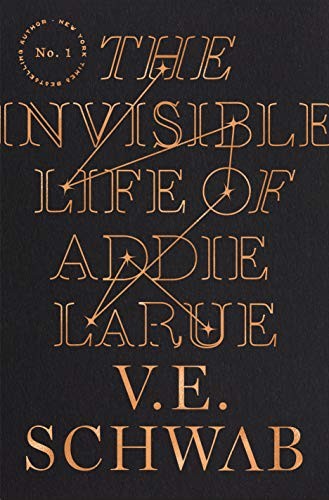
I bought this book twice. Not because I lost it, but because I forgot I already owned it, which, if you have read it, is the kind of cosmic joke that made me put the paperback down and stare at the wall for a second. Addie LaRue is a book about being forgotten, and I forgot I had it. Look, I don’t believe in signs. But I did buy it twice.
| Author | V.E. Schwab |
| Published | 2020 |
| Genre | Literary fantasy with a slow-burn romance spine (romantasy-adjacent, more melancholy than spicy) |
| Format | Standalone (one glorious 400-plus-page book) |
| Reception | A genuine phenomenon and a genuine divider: half of readers call it their whole personality, the other half find it repetitive and slow |
| Our rating | 4/5 |
| Read it if | you love atmosphere, aching prose, and a deal-with-the-devil premise turned inside out |
| Skip it if | you need a fast plot and get twitchy when a book lingers |
Three hundred years of nobody remembering your name
Here’s the setup, and it’s a good one. It’s 1714, rural France, and Adeline LaRue does not want the small life that’s been arranged for her. So she prays. She prays to the old gods, the ones that answer after dark, and she prays too late, past sundown, which is exactly the mistake everyone warns you about. Something answers. It wears the face of the man she’s been doodling in her imagination her whole life, all green eyes and easy menace, and it grants her freedom. She wants to belong to no one and to live forever, so it gives her exactly that, with a catch it doesn’t bother to explain: no one she meets will remember her. She walks out of a room and she’s gone. She tells you her name and it evaporates from your head the second you turn away. She can’t say her own name aloud. She can’t be photographed, can’t leave a mark, can’t hold a job or a friendship or a lover for longer than a single conversation.
And then, three hundred years later, in a New York bookshop, a boy named Henry says the four words that break the whole curse open: “I remember you.”
That’s the hook, and it is a great hook. Schwab is playing with the Faustian bargain, the deal with the devil, but she twists the knife in a way I hadn’t seen before: the devil, who Addie eventually names Luc, keeps coming back. Every year, on the anniversary, he returns to ask if she’s ready to surrender her soul. And what starts as loathing curdles into something a lot more complicated, because when you are the only person in the universe who remembers a girl, you become the only person who really knows her. Even if you’re the reason she’s alone.
What it does beautifully, and the thing I have to be honest about
The prose is the reason to read this. I’ll say that flat out. Schwab writes loneliness like she’s lived three centuries of it. There’s a running motif of seven freckles across Addie’s face arranged like a constellation, the one thing about her that stays constant while everything else washes away, and it becomes this quiet devastating anchor. There’s the idea that Addie learns to leave marks on the world sideways, whispering an idea to an artist, becoming the muse in a painting she can’t sign, haunting history through the back door because the front door is locked to her forever. That concept alone kept me up. The book is obsessed with what it means to leave a trace, whether a life counts if no one records it, and for a story that could have been mopey, it’s shockingly stubborn about survival. Addie is not a victim. She’s a con artist, a thief, a woman who has learned to steal a coat and a warm bed and a single perfect night, over and over, forever. I loved her for it.
Now here’s the thing I have to say, because I promised myself I would.
It’s repetitive. And I don’t mean that as a lazy dig, I mean the structure itself is built on repetition (three hundred years of the same loop, the same loss, the same Luc showing up to gloat) and about halfway through I felt it. There’s a stretch in the middle, mostly Henry’s present-day chapters, where I checked how many pages were left. Henry is meant to be the ordinary human counterweight to Addie’s impossible life, and he has his own bargain, his own sadness, but he’s just less interesting than a woman who’s been alive since Louis the Fourteenth, and the book asks you to spend a lot of time with him. I get why. I understand the architecture of it. But understanding why a slow part is slow doesn’t make it faster.
And the romance, if you’re coming here for heat: this is not that book. The real love story is Addie and Luc, and it’s all tension and power and centuries of resentment turning into something like devotion, which is my exact catnip, morally gray immortal who is technically the villain, sign me up. But it’s a slow, cerebral burn. The dubious-consent shadow is baked into the premise (he cursed her, he owns the terms, the imbalance never fully goes away), and the book knows that and sits in the discomfort on purpose rather than pretending it’s clean. I respect that. If you want a spicy romantasy with a swoony love interest and a happily ever after, you will feel catfished. This is a sad book wearing a gorgeous coat.
Do I sometimes wonder if I love it because it’s genuinely great or because it flattered exactly the kind of reader I am, the one who romanticizes solitude and thinks being unforgettable would be a curse worth having? Yeah. I do wonder that. I’m not sure I trust myself on this one. But the ending, that final move Addie makes against Luc, the way she turns her own curse into the leash, I did not see it coming and I put the book down and said something out loud in an empty room. That’s not nothing.
A story about a woman who cannot leave a mark, told so well it leaves one on you. That’s the whole trick, and it works.
About V.E. Schwab
Victoria Schwab writes fantasy that never quite behaves. She’s the person behind the Shades of Magic books (parallel Londons, elemental magic, a bisexual pirate queen who fans would follow into a burning building) and the Villains series, which asks whether the superhero was ever the good guy. She’s talked openly about writing queer characters and about being a queer author, and Addie’s bisexuality is just part of who she is on the page, no fanfare, which I appreciated. Schwab reportedly carried the idea for Addie around for years before she felt ready to write it, and it shows. This is not a book someone dashed off. It’s the one she was scared to get wrong.
If this one got under your skin, read these next
- The Ten Thousand Doors of January by Alix E. Harrow, for the same lush lonely prose and a heroine slipping between worlds and words.
- The Night Circus by Erin Morgenstern, if the atmosphere was the thing you loved most, all velvet and moonlight and a romance that takes its sweet time.
- A History of Wild Places by Shea Ernshaw, for memory, loss, and the ache of being unable to hold onto the people you love.
- Piranesi by Susanna Clarke, if you want another quiet, strange, devastating book about a person alone in a world that doesn’t work like ours.
Grab a copy here: The Invisible Life of Addie LaRue on Amazon.
For your book club
- Addie asks to belong to no one and live forever, and Luc grants it with a cruel loophole. Was the curse a punishment, or did he simply give her exactly what she asked for?
- The book argues you can leave a mark on the world sideways, through art and ideas, even if no one remembers you. Do you buy that? Does an unrecorded life still count?
- Henry’s bargain and Addie’s are mirror images. Whose deal did you find more tragic, and why?
- By the end, is Addie and Luc’s relationship love, obsession, mutual captivity, or something we don’t have a word for? Can it be love given how it started?
- If you were offered Addie’s exact deal at eighteen, freedom and immortality at the cost of being forgotten, do you take it? Be honest.
Want more books that ruin you in the best way?
If slow-burn immortals and morally gray love interests are your thing, come browse our romance and romantasy shelf. I keep a running list of the ones worth the ache.