
A freshly dog-eared review
The Book That Made Me Rethink What Gender Even Is on a Glacier
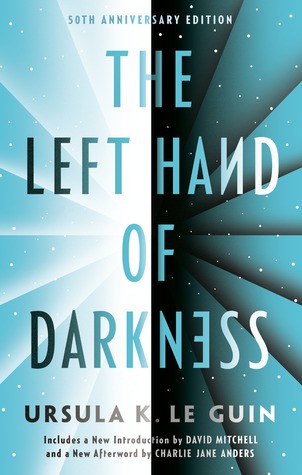
I bounced off this book the first time. Hard. I put it down around page 40 thinking it was cold, professorial, and smug, and then I picked it up again two years later and it rearranged something in my head that has not gone back. That is the whole review, really. Everything below is me trying to explain the gap between those two experiences.
| Author | Ursula K. Le Guin |
| Published | 1969 |
| Genre | Science fiction (anthropological / social SF) |
| Format | Standalone, part of the loosely connected Hainish Cycle. Reads perfectly on its own. |
| Reception | Won both the Hugo and the Nebula. Widely called one of the most important SF novels ever written. Also genuinely divisive: some readers find it a slog. |
| Our rating | 4.5/5 |
| Read it if | You want a novel of ideas that also, eventually, breaks your heart. |
| Skip it if | You need momentum from page one and have zero patience for invented vocabulary. |
A cold planet, a lonely envoy, and one very bad idea about who to trust
Here’s the setup. Genly Ai is an envoy sent alone to a planet called Gethen, also called Winter, because it is locked in a permanent ice age. His job is to convince its nations to join the Ekumen, a loose federation of worlds. He is a single man carrying an invitation to civilization, which is either the most peaceful form of first contact ever imagined or the most naive, and the book knows it is both.
The catch, the thing everyone remembers: the people of Gethen have no fixed sex. Most of the month they are androgynous, and then once a month they enter a phase called kemmer and become, temporarily, male or female depending on circumstance and their partner. So the same person can mother one child and father another. Nobody is “a man” or “a woman” in the way Genly understands it, and he cannot stop understanding it that way, and that failure is the engine of the whole story.
He gets tangled up with Estraven, a Gethen politician who Genly reads as slippery, effeminate, untrustworthy, and vaguely disgusting. Reader, Genly is wrong about almost everything. That is not a spoiler. That is the point.
The first half made me want to quit. The second half made me forgive it.
Let me be honest about the flaw, because pretending it isn’t there is how you end up with reviews nobody believes. The opening third of this book is genuinely hard going. Le Guin drops you into Karhide, one of Gethen’s nations, with its own words (shifgrethor, which is roughly prestige or face or the art of indirect social maneuvering) and its own politics, and she does not hold your hand. There are chapters that are basically transcribed myths and folk tales from Gethen, printed as documents, and the first time through I found them airless. I remember reading one on a train, realizing I had read the same paragraph three times, and just staring out the window at actual scenery instead. That was my first attempt. I did not go back for two years.
And here is where I have to question my own taste, because plenty of smart people say those early myth-chapters are the best part, that they seed everything the plot later pays off, and on my second read I could see it. The myth about two brothers, about light and darkness, about vows and betrayal, it is the whole novel in miniature. So was I too impatient the first time, or is the book genuinely front-loaded with homework? I lean toward: both. It asks a lot before it gives you anything to hold onto emotionally.
Then the second half happens, and the second half is one of the greatest sustained sequences in science fiction.
Estraven and Genly end up crossing a glacier together. On foot. Hauling a sledge across roughly eight hundred miles of ice, in the cold of a planet whose entire personality is cold, with barely enough food, escaping something I won’t name. And in that white nothing, stripped of politics and prestige and everyone watching, the two of them finally, slowly, learn to actually see each other. It is a survival story and a love story and it is barely either, because Le Guin refuses to make it simple. There is a night in the tent where Genly finally understands Estraven as a whole person rather than a puzzle, and it landed on me like a physical thing. I read that stretch in one sitting, past midnight, on my couch, and I remember putting the book on my chest and just lying there for a minute. That does not happen to me often anymore. I have read a lot of books. Most of them do not do that.
The tangent I can’t skip: Le Guin famously used “he” for all the Gethenians, and she later said she regretted it, that the default masculine pronoun quietly undermined the androgyny she was trying to build. She was right to worry. Reading it now, you feel Genly’s default assumptions bleeding into your own, which is either a subtle formal masterstroke or an accidental limitation she rationalized after the fact. I go back and forth. I think it’s mostly the former and partly the latter, and I think it’s fine to hold both.
What genuinely doesn’t work, for me, is the cool distance of the prose in the political first act. Le Guin is doing anthropology, and anthropology is observation, and observation keeps you at arm’s length. When the book wants to keep you out, it succeeds a little too well. If it had opened on the ice and flashed back, I think it would be a flat five. But it didn’t, and I have to review the book that exists.
“Light is the left hand of darkness, and darkness the right hand of light.” A whole worldview in one line: opposites are not enemies, they are the same hand.
About Ursula K. Le Guin
Le Guin (1929 to 2018) was the daughter of two anthropologists, which explains an enormous amount, because she wrote about invented cultures the way her parents studied real ones: from the inside, with respect, watching how belief shapes a people. She wrote the Earthsea books for younger readers and the Hainish novels for everyone, and she spent decades being quietly, ferociously smarter than the genre she was working in. She was funny in interviews, allergic to pretension, and she once stood up at a book awards ceremony and torched the publishing industry to its face for treating writers like content mills. She meant it. She was not a comfortable person to have around if you were selling something cheap, and the field is much better for it.
If this one got under your skin, read these next
- The Dispossessed by Ursula K. Le Guin: her other masterpiece, about an anarchist physicist torn between two worlds. If Left Hand is about gender, this one is about politics and freedom, and it is arguably even better constructed.
- A Wizard of Earthsea by Ursula K. Le Guin: shorter, warmer, a coming of age story that will remind you she could break your heart with far fewer pages.
- Solaris by Stanisław Lem: another first-contact novel where the alien mostly reflects the human back at us, and communication keeps failing in fascinating ways.
- Ancillary Justice by Ann Leckie: a direct descendant, playing similar games with gender and pronouns and empire, sharper and faster on its feet.
Grab a copy on Amazon here if you want to have this argument with yourself.
For your book club
- Genly is our narrator and he is wrong about Estraven for most of the book. How much did his blind spots become yours while reading?
- Le Guin used “he” for the Gethenians and later regretted it. Did the pronoun choice affect how you pictured them? Would a different choice have changed the novel?
- Did the early myth-and-folklore chapters pull you in or push you out? Be honest.
- The relationship on the ice is intimate but never quite resolves into anything we have a name for. Why do you think Le Guin left it there?
- Gethen has no war in its history when Genly arrives. The book suggests this might connect to their lack of fixed gender. Do you buy that, or is it too neat?
Where to go from here
If this lit up the part of your brain that loves big ideas wrapped in real feeling, it belongs on any serious shelf. We put it near the top of our best sci-fi books list, and honestly, it earned the spot the hard way, by making me come back after I’d already written it off.
I still think about that tent on the ice. Two people, finally seeing each other, in the last place either of them wanted to be.