
A freshly dog-eared review
The Book That Made Me Root for a Guy and Some Potatoes
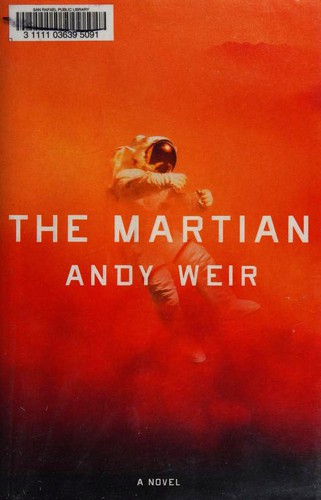
I did not expect to care this much about a man growing potatoes in his own poop. I picked up The Martian expecting a slog of engineering jargon, the kind of book that makes you feel dumb on purpose. Instead I stayed up past 2am because I genuinely needed to know if a spreadsheet-brained astronaut could keep himself alive with duct tape and spite. Look, this book has real flaws, and I’ll get to them. But it also does one thing better than almost anything I’ve read: it makes competence feel like a thrill ride.
| Author | Andy Weir |
| Published | 2011 (self-published), 2014 (Crown) |
| Genre | Hard science fiction, survival |
| Format | Standalone, 1 book |
| Reception | Beloved by most readers and critics; the rare “science-heavy” novel that broke mainstream |
| Our rating | 4/5 |
| Read it if | You like problem-solving, dry humor, and rooting for a smart-aleck underdog |
| Skip it if | You need lush prose, deep characters, or emotional interiority |
One bad day on Mars, then a lot of math
Here’s the setup, and I’ll keep it clean. Mark Watney is a botanist and mechanical engineer on the third crewed mission to Mars. A dust storm goes bad, the crew evacuates, and in the chaos Watney gets impaled by an antenna and left for dead. He is not dead. He wakes up alone on an entire planet with a finite amount of food, no way to contact Earth, and the next mission not scheduled to arrive for years at a landing site he has no way to reach.
So he does the only thing a person like Watney can do. He starts doing math.
The whole book is basically one long chain of “here is a problem that will kill me, here is how I might not die, here is the thing I forgot that means I’m going to die anyway.” Food, water, heat, air, communication, transportation. Each one is a puzzle. Weir tells most of it through Watney’s mission logs, which is a smart move, because it lets Watney narrate his own near-death experiences with the gallows humor of a guy who has decided that if he’s going down, he’s going down cracking jokes about disco music.
The competence is the plot, and mostly that’s enough
What works, and works absurdly well, is the pacing of the problems. This book has a rhythm to it. Calm, disaster, improvised fix, false hope, new disaster. Weir is ruthless about not letting Watney win for long. Every time I thought “okay, he’s stable now,” something exploded. The Hab breach. The rover battery arithmetic that had me, a person who avoids fractions, actually doing the mental math along with him. The potato farm, which I will defend as one of the most weirdly moving agricultural subplots in fiction, because it is the first moment Watney turns Mars from a death trap into something that can, briefly, sustain a life.
And Watney himself carries it. His voice is the engine. He’s a wiseass, he’s relentlessly upbeat in a way that reads as a coping mechanism rather than plot armor, and the very first log entry sets the tone with a cheerful profanity that basically tells you: this guy is going to narrate his own possible death like he’s live-tweeting a bad camping trip. I laughed out loud more than once. On a book about slow starvation on another planet. That’s a real trick.
Now the criticism, because I promised.
The prose is functional at best. Weir writes like an engineer, which is fitting, but it means there is basically zero atmosphere. Mars, one of the most awe-inspiring settings imaginable, mostly comes across as a series of technical constraints. I never once felt the loneliness of being the only human on a planet. Watney is too busy being fine. And that’s the deeper issue: he has almost no interior life. He doesn’t grieve, doesn’t spiral, doesn’t have a dark night of the soul that lasts more than a paragraph before he’s back to joking. It’s fun. It’s also emotionally thin. A more literary writer would have wrecked me with the isolation. Weir just wants to solve the next problem, and he assumes you do too.
And the side characters back on Earth? Cardboard. The NASA and JPL crew exist to explain things and occasionally quip. I struggled to tell some of them apart. When the book cuts away from Mars to Earth, the energy drops, because on Mars there’s a man dying and on Earth there’s a meeting.
Here’s the tangent, bear with me. I keep wondering if I’m grading this book on a curve because it surprised me. I went in braced for tedium and got entertainment, and gratitude can inflate a rating. If a “real” literary novelist had written a survival story this emotionally flat, I might have called it hollow. But Weir isn’t trying to write that book. He’s trying to write the most gripping engineering puzzle possible, and by that standard he nailed it. So do I dock points for the book not being something it never wanted to be? I went back and forth. I landed on: the flatness is a real limit, not just a genre choice, and it keeps this from being a five.
I read most of it on a couple of long flights, which turned out to be the perfect venue. Strapped into a metal tube, recycled air, trusting that a lot of engineering was keeping me alive. Somewhere over the middle of the country I hit the sequence where a plan Watney has poured weeks into fails in a way that resets him almost to zero, and I actually said “oh no” out loud, and the guy next to me gave me a look. That’s when I knew the book had me, flaws and all.
Watney’s whole survival philosophy comes down to one idea: you solve the problem in front of you, and then the next one, and then the next, and you don’t get to quit until you’re actually dead.
About Andy Weir
Weir is the ultimate “self-published guy makes good” story, and honestly it shows in the best way. He was a software engineer and a lifelong space nerd who started posting The Martian for free on his website, chapter by chapter, for an audience of fellow science obsessives. Readers kept asking him to fact-check the orbital mechanics, so he did. When people wanted an e-book version, he put it on Amazon for almost nothing, and it took off, got picked up by a real publisher, and then Ridley Scott turned it into a Matt Damon movie. He writes the kind of science fiction where he’ll do the actual physics rather than hand-wave it, which is his whole brand. His later books (Artemis, Project Hail Mary) lean into the same hyper-competent, wisecracking-narrator formula, with mixed results, though a lot of people, me included, think Project Hail Mary is where the formula really clicks.
If Watney’s stubbornness got you, read these next
- Project Hail Mary by Andy Weir. Same DNA (lone problem-solver, ticking clock, jokes) but with a genuine emotional core Weir hadn’t found yet in The Martian. If you liked the puzzle but wanted more heart, start here.
- The Long Way to a Small, Angry Planet by Becky Chambers. The opposite of Weir in the best way: warm, character-first, low on technical crisis and high on people you’ll love. A palate cleanser.
- Seveneves by Neal Stephenson. If you want your survival-engineering scaled up to the entire human species and don’t mind a much denser, chewier read.
If you want to grab a copy, you can find The Martian on Amazon here.
For your book club
- Watney almost never breaks down emotionally. Did that make him more heroic, or did it cost the book something real?
- The story is told mostly through mission logs. How would it change if it were written in close third person, inside Watney’s head in the moment?
- Did the Earth-side chapters add tension for you, or drain it? Would you have cut them?
- The book assumes readers will find math and engineering exciting rather than tedious. Where did that land for you, and where did it lose you?
- By the end, do you think Watney survives because of who he is as a person, or simply because he happens to have the right skills? Does the distinction matter?
Where to go from here
If a smart, stubborn human refusing to die on a hostile world is your idea of a good time, you are going to want more where that came from. We rounded up the whole genre in our best sci-fi books list, from the cozy to the mind-bending to the ones that will keep you up doing orbital math at 2am. Go get lost in it.