
A freshly dog-eared review
The Glade Made Me Nuts and I Read It in One Sitting Anyway
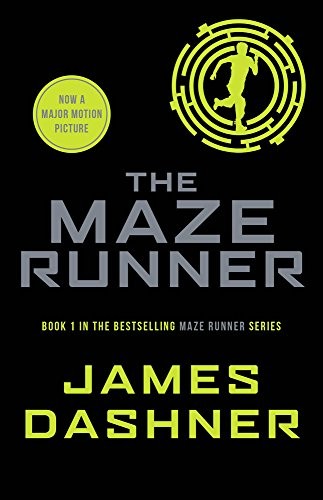
Here’s the thing about The Maze Runner: it is one of the most efficient hooks I have ever read, and also one of the most frustrating books I have ever finished. I stayed up until 2am with it and woke up kind of annoyed at myself. Both of those things are true. That tension is basically the whole review.
| Author | James Dashner |
| Published | 2009 |
| Genre | YA dystopian sci-fi / survival thriller |
| Format | Series: book 1 of the main Maze Runner trilogy, plus prequels |
| Reception | Broadly loved by teen readers, hugely successful, but genuinely split among adults on the ending and the made-up slang |
| Our rating | 3.5/5 |
| Read it if | You want pure momentum and a mystery box you cannot put down |
| Skip it if | You need lyrical prose, deep characters, or answers that arrive on time |
A boy wakes up in a box and so do you
Thomas comes up in a metal elevator with no memory except his own first name. The box opens onto the Glade, a walled patch of grass and dorms and gardens run entirely by teenage boys, and beyond the walls is the Maze: enormous stone corridors that rearrange themselves every night, patrolled by mechanical monster-slug things called Grievers that you really do not want to meet after dark. The boys have been trapped here for years. Nobody knows why. And the morning after Thomas arrives, for the first time ever, the box delivers a girl.
That is the setup, and I want to be fair to it, because as a setup it is close to perfect. Dashner drops you into total confusion right alongside Thomas, and your ignorance and his are the same thing. You are figuring out the rules of this world in real time. I found the book at an airport, of all places, one of those spinner racks of movie tie-in paperbacks, and I bought it purely because I liked the cover and had four hours to kill. By the time we boarded I was already lying to myself that I would stop after the next chapter.
Momentum is a real skill and Dashner has it. Prose, less so.
Look, I need to be honest about the writing, because this is where the book loses people and I understand why. The prose is functional at best. It is a lot of short declarative sentences doing short declarative work. Nobody is coming to The Maze Runner for a sentence they will tattoo on their arm.
And then there is the slang. Dashner invents this whole in-world vocabulary for the Gladers: “shuck,” “klunk,” “shank,” “slinthead.” I get the impulse, it is a clever way to signal these kids have built their own culture in isolation, but by chapter three I was reading “shuck-face” and physically wincing. It is the fictional equivalent of a swear-jar workaround, and it dates the book in a way that has nothing to do with 2009. Some readers find it charming. I found it like a pebble in my shoe for 370 pages.
Here is my confession though, and this is where I have to question my own taste. I criticize the prose and the slang, I roll my eyes at “slinthead,” and then I look up and it is 2am and I have somehow read a hundred and forty pages without moving. So what do I actually know? Maybe “good prose” is not the only axis a book can win on. The Maze Runner is proof that pure structural momentum, chapter after chapter ending on a small hard cliff, can carry a reader straight past every literary objection they think they have. I was the objection. I lost.
The characters are thinner than I wanted. Thomas is more a camera than a person for long stretches, defined mostly by curiosity and stubbornness. Teresa, the girl from the box, has a genuinely eerie introduction and then spends a big chunk of the book sidelined in a way that frustrated me. But Newt I liked, quietly steady and sad underneath. And Chuck, the younger kid who latches onto Thomas, is the emotional engine of the whole thing. If you have read it, you know exactly which scene near the end I mean, and you know that scene is the reason the book lands at all. It is doing heavy lifting that the rest of the cast could not do.
The best pure sequence for me is Thomas’s first night trapped in the Maze after the doors close, which is the one thing no Glader is ever supposed to let happen. It is genuinely tense. The Maze goes from a puzzle to a predator, the walls start grinding shut, and you feel the size of the thing pressing down. That is the book at full power, and it is very good.
A mystery box only works if the box is eventually worth opening, and The Maze Runner spends this whole book betting you will forgive a shaky answer for a spectacular question.
Which brings me to the ending, and the reason my rating is a 3.5 and not higher. When the explanations finally arrive, they arrive in a rush, delivered largely through exposition rather than earned discovery, and they raise more questions than they resolve. For some readers that is the hook that guarantees they grab book two. For me it felt like the magician showing you the trick was actually a second, bigger trick, and I was tired. The reason this book is divisive among grown-up readers is right here. If you need a satisfying answer, you will feel a little cheated. If you just want to be flung into the sequel, you will be delighted. I was somewhere in the middle, arms crossed, already ordering book two.
About James Dashner
Dashner is a Georgia-born, Utah-based writer who quietly built middle-grade fantasy (the 13th Reality books) before The Maze Runner turned him into a fixture of the post-Hunger-Games YA dystopia boom. He is very open about being a plotter who chases the propulsive what-happens-next feeling above almost everything else, which honestly explains both this book’s superpower and its weaknesses in one sentence. The film adaptation in 2014 made the franchise huge. I will note plainly that Dashner faced serious misconduct allegations in 2018 and was dropped by his agent and publisher at the time; you can decide for yourself how that sits with you, and I would rather tell you than pretend I did not know.
If the Glade got its hooks in you, read these next
- The Hunger Games by Suzanne Collins: the book Maze Runner is always standing next to, but sharper, angrier, and with a heroine who is an actual full person.
- Lord of the Flies by William Golding: the original boys-alone-building-a-brutal-society story, and the ghost hovering behind the Glade.
- Legend by Marie Lu: cleaner prose, tighter world, if the YA dystopia machinery is what you are here for.
- The Long Walk by Stephen King (as Bachman): if it is the pure survival-dread you want, distilled and merciless.
Grab the book here if you want to see the Glade for yourself: The Maze Runner on Amazon.
For your book club
- Does starting with total amnesia genuinely serve the story, or is it a shortcut to hand you a mystery without doing the harder work of a real setup?
- The invented slang: world-building win or constant distraction? Did it pull you in or push you out?
- The Glade is run entirely by boys until Teresa arrives. What is the book actually saying, if anything, with that choice, and does Teresa get a fair deal?
- Chuck carries most of the book’s real emotion. Is that clever design or a sign the other characters are underwritten?
- The ending explains a lot in a hurry and leaves plenty open. Did that make you desperate for book two or feel a little cheated, and where is the line for you?
Where to wander next
If the walled-in, rules-of-a-strange-world feeling is your thing, you will find a lot more of it on our best sci-fi books list, where the mystery boxes come in every size.
Anyway. I finished it at 2am, annoyed, unsatisfied, muttering about slinthead… and then I bought The Scorch Trials before I turned off the light. Make of that what you will.