
A freshly dog-eared review
Oak Was Playing Everyone the Whole Time
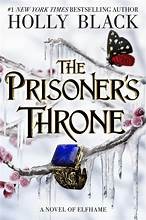
I read the last hundred pages of The Prisoner’s Throne standing up in my kitchen because I could not physically make myself sit down and be calm about it. Rice was burning. I let it burn. Look, I have complicated feelings about Oak as a protagonist and even more complicated feelings about how Holly Black resolved this whole saga, but I could not put it down, and that has to count for something.
| Author | Holly Black |
| Published | 2024 |
| Genre | YA Fantasy / Faerie Romance |
| Format | Book 2 of The Stolen Heir duology (set in the world of The Folk of the Air) |
| Reception | Solid, divisive among longtime fans: widely called the weakest Elfhame book by the fandom, yet plenty of readers say it’s their favorite because Oak finally gets interesting |
| Our rating | 3.5/5 |
| Read it if | you finished The Stolen Heir and need to know what happens to Oak and Wren, or you like your fae princes morally slippery and a little pathetic |
| Skip it if | you want The Cruel Prince energy again, or you haven’t read the first three Folk of the Air books (this will spoil you badly) |
A prince, a curse, and a throne nobody actually wants
Here’s the setup, and I’ll keep the spoilers to the stuff that’s on the back of the book. Oak, the golden boy prince we watched grow up across the original trilogy, has followed Wren (his fellow captive, his maybe-something-more, the girl cursed to be monstrous and murderous by her own family) into her new kingdom. She’s just become queen of a land that hates her. He’s supposed to be securing an alliance for Elfhame. Instead he ends up a hostage in a moldering, half-collapsed palace, surrounded by nobles who’d love to see him dead, married to a queen who doesn’t trust him and has every reason not to.
What I love about this premise, and what I think a lot of readers undersell, is that it flips the power dynamic of the entire series. Oak has spent three books being underestimated: the pretty, charming, harmless little prince nobody worries about. Now he’s the one stuck playing a long game in someone else’s court, and we finally get inside his head enough to realize he’s been playing everyone, the whole time, including us. That reveal, slow and creeping across the book, is the best trick Black pulls off here.
The good, the frustrating, and the thing I still can’t decide about
The politics of Elfhame have always been the actual engine of these books, more than the romance, and this one leans hard into court intrigue: who’s poisoning whom, which noble wants Wren dead, what Oak’s mother Oriana is really up to back home. If you like that kind of scheming, chapter after chapter of characters lying to each other with excellent posture, this delivers.
Wren, though, is where I get stuck. I adored her in The Stolen Heir, prickly and feral and genuinely dangerous. Here she spends long stretches being suspicious of Oak in a way that is completely justified by the plot and also, if I’m honest, a little exhausting to read a hundred pages of. I found myself wanting her to just be smart about it faster. Maybe that’s me being impatient. Maybe it’s Black stretching a two-book arc a little further than it wants to go. I’ve gone back and forth on this and I still don’t have a clean answer.
The other real criticism, and I think it’s a fair one even from people who liked the book: this is not a story that welcomes new readers. If you haven’t read The Cruel Prince, The Wicked King, The Queen of Nothing, and The Stolen Heir, you will be completely lost within twenty pages. There’s no reintroduction, no mercy. That’s a defensible choice for a series finale aimed at existing fans, but it does mean this book lives or dies entirely on your goodwill toward Oak as a character, and not everyone has that goodwill.
Here’s the thing that got me, though: there’s a scene where Oak, cornered and out of options, basically confesses to being exactly as manipulative as everyone always suspected, and instead of it feeling like a betrayal, it plays like relief. Like he’s been performing a version of himself for three whole books and finally gets to stop. I did not expect a YA fae romance to make me feel something about the exhaustion of being underestimated on purpose, but there I was, standing in my kitchen, rice burning, a little wrecked.
I will say the ending resolves things a bit too neatly for a series that spent four books being gleefully brutal to its characters. After the body count and betrayals of the earlier books, this one pulls its punches at the exact moment I expected it to go for the throat. That’s my actual, real disappointment. Not everything needs a tidy political solution.
The most dangerous person in any room of liars is the one everyone assumes is too pretty to be dangerous.
About Holly Black
Holly Black basically built modern YA faerie fiction out of spite and glitter. She’s been writing about cruel, gorgeous, morally bankrupt fae since Tithe came out in 2002, back before “dark fae romance” was a marketing category instead of just her whole personality. She co-created the Spiderwick Chronicles, she writes horror and adult fantasy too, and she has this reputation, earned, for refusing to let her teenage protagonists be safe. She lives in New England in a house that reportedly has a secret door, which honestly tracks.
If this wrecked you, read these next
- The Cruel Prince by Holly Black, for where Oak’s whole story actually starts and why Jude is the queen you need to meet first
- A Study in Drowning by Ava Reid, for another fae-adjacent world dripping in gothic academic dread
- The Bone Season by Samantha Shannon, if you want political scheming with actual teeth and a slower burn
- An Enchantment of Ravens by Margaret Rogerson, for a shorter, sharper fae bargain story if you want the vibe without the four-book commitment
For your book club
- Does Oak earn his redemption arc, or does the book let him off too easy for years of manipulation?
- Is Wren’s suspicion of Oak reasonable given everything, or does it slow the story down too much?
- How does this book change your read of Oak’s behavior in the earlier Folk of the Air books, now that you know what he was hiding?
- Did the ending feel earned, or did Black soften a series that built its reputation on brutality?
- Would this book work as a standalone, or does it only function as the back half of a much longer story?
If you want your own copy to argue with me about, here’s The Prisoner’s Throne on Amazon.
Not done with fae courts and bad decisions
If Elfhame got its hooks in you the way it got into me, standing in a burning-rice kitchen at midnight, go dig through more of our book reviews for what to read while you wait to see what Black does next.