
A freshly dog-eared review
Why I Still Miss People Who Committed Murder
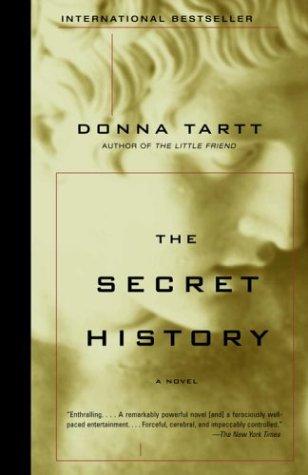
I read the first fifty pages of this book on a Greyhound bus at twenty-two and got so absorbed I missed my stop by eleven miles. I want to be clear that I am not a person who misses bus stops. I am a person who checks the window every four minutes like a nervous parakeet. Donna Tartt did that to me, and I have never fully forgiven her, or thanked her enough, and both feelings are still true at once.
| Author | Donna Tartt |
| Published | 1992 |
| Genre | Literary fiction / dark academia (basically its patient zero) |
| Format | Standalone, one very thick book |
| Reception | Widely loved, occasionally called overwritten and self-indulgent, still influential thirty-plus years later |
| Our rating | 4.4/5 |
| Read it if | You want atmosphere and dread over plot twists, and you don’t mind a narrator who is kind of a coward |
| Skip it if | You need like or relatable characters, or you’re allergic to long paragraphs about Greek grammar |
A murder confessed on page one, then the slow walk backward
Here’s the thing about the setup that I think gets undersold: Tartt tells you in the prologue that these kids kill their friend Bunny. Not might. Do. Then she spends the next five hundred pages showing you exactly how a group of clever, vain, lonely college students talked themselves into it, and somehow that structure makes it scarier, not less. You’re not waiting to find out who did it. You’re waiting to watch people you’ve started to like become people who can do that.
Richard Papen, our narrator, is a broke California kid who transfers to a small Vermont college (very obviously modeled on Bennington, where Tartt actually went) and gets pulled into an ultra-exclusive Greek class taught by a professor named Julian Morrow, who only takes a handful of students and treats them like a cult he’s flattered to be running. The other five are Henry, cold and brilliant and terrifyingly competent, Bunny, loud and broke and mean in a jokey way that curdles, Francis, nervous and gay and rich, and the twins Charles and Camilla, who are just a little too close for comfort. Richard wants in so badly he lies about his background to fit their money and manners. That desire, the wanting to belong to beautiful ruinous people, is the actual engine of the book. The murder is just where it leads.
What actually works, and the one thing I think everyone’s too polite to say
What works is the atmosphere, and I don’t say that as a consolation prize. Tartt builds a Vermont autumn so specific, so full of frost and old sweaters and cheap red wine and dead leaves, that I have genuinely felt cold reading this book in July. The bacchanal scene, where the group describes (to Richard, and to us, secondhand and unreliable) the drug-fueled ritual that led to an earlier, accidental death, is one of the best pieces of controlled hysteria I’ve read. You don’t know how much to believe and it doesn’t matter. The dread is the point.
Henry is the character everyone remembers, and rightly. He’s not charming in the way villains are usually written charming. He’s just competent, and utterly without normal human static, and that’s somehow more chilling than charisma. The scene where he calmly plans the actual murder, discussing logistics like he’s organizing a dinner party, still gets me.
Now here’s my heresy, and I’ve made peace with saying it: the back half sags. Bad. After the murder happens, the book becomes four hundred pages of guilt, drinking, more drinking, paranoia, and characters having the same conversation about whether they’ll get caught, dressed up in slightly different clothes each time. I remember reading a chunk of that back half on a rainy Sunday, determined to push through, and catching myself rereading the same page because my eyes had glazed over without me noticing. That’s not me being dumb, that’s the prose doing what overwritten prose does. Tartt is capable of trimming. She chose not to, here. The book would lose nothing and maybe gain tension if seventy pages of it were cut.
And Richard himself, the narrator, is a weirdly passive vessel for five hundred pages. He mostly watches. He rarely acts. Some readers find that a deliberate and clever choice (he’s an outsider narrating other people’s tragedy, so of course he’s peripheral) and some readers just find him boring. I go back and forth. Today, writing this, I lean toward thinking it’s intentional and a little bit of a cop-out at the same time. Both things.
It is easy to see things in retrospect, but that particular morning I was blind, or at least I have chosen to remember it that way.
About Donna Tartt
Donna Tartt writes a novel roughly once a decade, which by modern publishing standards is either monkish discipline or the world’s best negotiating leverage, possibly both. She’s from Mississippi, she went to Bennington in the eighties alongside a strange, brilliant cohort of writers, and she reportedly wrote parts of this very book while she was still a student there, workshopping it with people who apparently already knew they were watching something happen. She almost never does interviews, wears men’s suits, and has cultivated exactly the kind of mystique that made this book’s fans start half-jokingly forming their own secret societies. You get the sense she’d find that both flattering and slightly repulsive, which tracks with everything she writes.
If this wrecked you, read these next
- If We Were Villains by M.L. Rio: Shakespeare students, a death, and a group bound by guilt. The most direct spiritual descendant of this book.
- The Likeness by Tana French: Not academia exactly, but the same intoxicating, doomed group-house dynamic and a narrator who wants to belong too badly.
- Bunny by Mona Awad: Same setting, same cultish clique, but funnier and weirder, almost a satire of this whole genre it helped invent.
You can grab a copy here: The Secret History on Amazon.
For your book club
- Richard lies about his background to fit in with the group. How much of the tragedy traces back to that first small lie?
- Julian Morrow shapes these students profoundly but disappears when things get hard. Is he complicit, or just oblivious?
- Does telling you the murder upfront make the book scarier or does it drain the tension?
- Henry is written as almost inhumanly controlled. Did you ever feel sympathy for him, and if so, when?
- Do you think Camilla and Charles’s relationship is meant to horrify us, or just to mark how insulated and rule-free this group has become?
Still thinking about Vermont, sweaters, and bad decisions in Greek class
Same. Go find something else that scratches the same itch in more of our book reviews, or reread the bacchanal chapter, I won’t judge you.