
A freshly dog-eared review
Evelyn Hugo Told Me Everything and I Still Feel Lied To
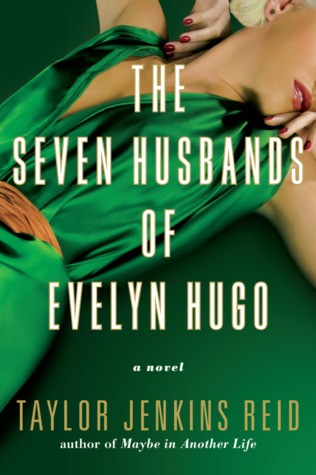
I went in ready to hate this book. Everyone I knew had already read it, cried about it, texted me in all caps about it, and I have a petty little reflex where the more people scream at me to love something, the harder my arms cross. So I want you to understand the weight of what I’m about to say: I finished this in two sittings and the second one ended at 2am with me sitting on my kitchen floor, genuinely upset, holding a book about a fictional movie star like it owed me money.
| Author | Taylor Jenkins Reid |
| Published | 2017 |
| Genre | Historical fiction, literary romance, LGBTQ love story |
| Format | Standalone (one glorious book) |
| Reception | A word-of-mouth juggernaut that became a modern classic; beloved, occasionally called overhyped, rarely called bad |
| Our rating | 4.5/5 |
| Read it if | You want a love story with teeth, an unreliable icon of a narrator, and a gut-punch you’ll see coming and still not survive |
| Skip it if | You need a purely likable heroine, or you came for spice (this is emotional devastation, not steam) |
An old Hollywood legend picks a nobody to spill her secrets, and nobody knows why
Here’s the setup. Evelyn Hugo is a reclusive, ruthless, ridiculously glamorous former film star in her late seventies, the kind of woman who married seven husbands and buried most of her reputation on purpose. Out of nowhere she summons Monique Grant, a struggling magazine journalist who is very much a nobody, and announces she’ll grant her the tell-all interview of the century. Monique’s confused. Her editor’s confused. I was confused, and that confusion is the whole engine of the book, because you spend 350 pages asking the same question Monique asks: why me?
What follows is Evelyn narrating her life from a dirt-poor girl in Hell’s Kitchen to the top of the studio system, husband by husband, lie by lie. And the thing Reid does that’s genuinely clever: she frames the seven husbands as the hook, the marketing, the shiny thing on the cover, when the actual love story of Evelyn’s life is a woman. That’s not a spoiler, the book tells you early. The husbands are the cover story. The person she’d have burned Hollywood down for is Celia St. James.
Evelyn is a monster and I would die for her
Look, the reason this book works is Evelyn herself, and Reid was brave enough to make her not nice. She’s manipulative. She uses people. She does a genuinely cold-blooded thing near the end that I won’t spoil, but I put the book down and said “Evelyn, NO” out loud to my empty apartment. She’s bisexual in an era that would have ended her career for it, and she treats her own sexuality as a strategic asset one minute and a wound the next, and Reid never flattens that contradiction into something tidy.
The morally gray thing that romance readers say they want? This is the real version. Not a hot guy who’s rude for two chapters and then reveals a soft center. An actual woman who does actual damage and asks you to love her anyway.
And I did. That’s the uncomfortable part.
The romance with Celia is where the book earns every tear it wrings out of you. The scene at the Beach Ball, the green dress, the slow terrible understanding of what they can and can’t have in public: Reid writes longing better than she writes almost anything else. There’s a moment where Evelyn describes loving Celia as the thing she was actually alive for, and I had to reread it three times because it undid me.
Now the honest criticism, because I promised you that. The framing device is the weak link. Monique’s own subplot (a divorce, a career glow-up, a mysterious connection to Evelyn) is thinner than the main story and reads like the book knows it needs a present-day anchor and isn’t quite sure why. When the big twist about their connection lands, it works emotionally but it’s also a touch too neat, the kind of coincidence that only exists because a novel needs it to. I bought it in the moment. I got a little skeptical afterward. Both things are true.
Also, and let me question my own taste for a second, part of me wonders if I loved this so hard because it’s engineered to be loved. Reid is a commercial writer at the top of her craft, and this book is built. The chapter breaks are perfectly placed cliffhangers. The prose is clean and quotable and never gets in its own way. Is that a flaw? No. But there were moments I felt the machinery humming under the emotion, felt myself being played like a slot machine, and I couldn’t decide if that made me a mark. I think I’m okay being a mark for this one.
Small tangent: I keep seeing this shelved as “romantasy” and it absolutely is not, there is not a single dragon or fae court in sight. It’s a Hollywood historical with a queer love story at its heart. If you came for spice, this is barely a whisper. What it delivers instead is the ache. If you’ve ever loved someone you couldn’t be public about, or made an ugly choice to protect yourself, or built a whole life as armor, this book knows your name.
The husbands are the magic trick. The whole point of a magic trick is that you’re looking at the wrong hand, and Evelyn spends her entire life making sure everyone looks at the wrong hand, including herself.
About Taylor Jenkins Reid
Reid spent years as a solidly successful contemporary-romance author before this book detonated and turned her into a household name. What’s interesting about her is that she’s not a “literary” writer in the snobby sense and doesn’t pretend to be; she writes big, emotional, propulsive stories about famous women (rock stars, tennis players, movie legends) and she’s gotten scary good at the specific trick of making you feel like you’re reading a real memoir. Her books share a loose universe (Evelyn name-drops around the edges of her other novels), and she has a genuine gift for the unreliable narrator who’s lying to you and to herself at the same time. She writes the kind of book people press into each other’s hands, which is the rarest thing in publishing, and she does it on purpose.
If this one hollowed you out, read these next
- Daisy Jones & The Six by Taylor Jenkins Reid, the oral-history rock band saga, for when you want that same “this fictional icon is real, right?” feeling.
- Malibu Rising by Taylor Jenkins Reid, messier and beachier, if you want to stay in her sun-soaked celebrity universe.
- Carrie Soto Is Back by Taylor Jenkins Reid, for another ruthless, unlikable, unforgettable woman who refuses to apologize.
- The Song of Achilles by Madeline Miller, if it was specifically the doomed, tender queer love that wrecked you and you want to be wrecked again.
You can grab The Seven Husbands of Evelyn Hugo here if you somehow haven’t yet, though I suspect a friend has already threatened you into it.
For your book club
- Evelyn insists she did terrible things for good reasons. Where’s the line, for you, between survival and cruelty? Did she ever cross it?
- The book argues that the “wrong hand” (the seven husbands) is what makes people comfortable enough to look. Do you think Evelyn owed the public the truth, or was her whole life a justified deception?
- Celia and Evelyn hurt each other constantly. Is theirs a great love story or a cautionary one, and can it be both?
- Monique’s arc runs parallel to Evelyn’s. Did the present-day frame add to the book for you, or did you want more Evelyn and less Monique?
- Evelyn is bisexual and spends her career hiding it to survive the studio system. How does the book handle the cost of the closet, and does the ending honor that cost or soften it?
Where to go from here
If you’re building a shelf of love stories that don’t flinch, morally gray leads, doomed romance, the kind of book that lives in your chest for a week, come dig through our romance and romantasy shelf. I keep it stocked with the ones worth the emotional damage.
Anyway. It’s 2am again as I write this and I’m thinking about the green dress and the Beach Ball and the choice Evelyn makes at the very end, and I still don’t know if I forgive her, which I think is exactly the point…