
A freshly dog-eared review
Two Weeks of Fake Dating and I’m Not Sorry
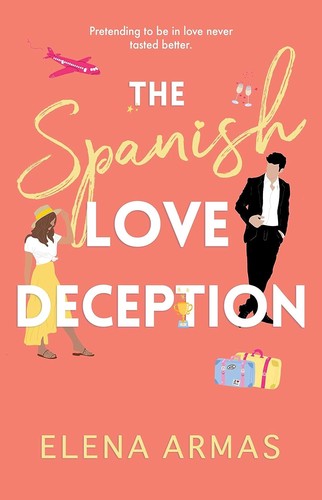
Here’s the thing about this book: I picked it up specifically to hate it. Everyone on my feed had turned it into a personality trait, and I have a reflexive, ugly little urge to resist whatever the algorithm shoves at me. Then I read it in two sittings, made a weird noise out loud on a Tuesday, and had to sit with the fact that my taste is not as elevated as I pretend it is. So. Let’s talk.
| Author | Elena Armas |
| Published | 2021 (self-published; trade reissue same year) |
| Genre | Contemporary romance, slow-burn, fake dating |
| Format | Standalone (loosely tied to the follow-up, The American Roommate Experiment) |
| Reception | Massively popular, genuinely divisive. People either inhale it or throw it. |
| Our rating | 3.5/5 |
| Read it if | You want a grumpy-sunshine (reversed) slow burn and you have patience for a very long build |
| Skip it if | You need tight pacing, or first-person over-narration makes you itch |
A wedding in Spain and one very tall, very rude man
The setup is almost aggressively simple, and honestly that’s part of why it works. Lina Martin needs a date for her sister’s wedding in Spain. Her ex is going to be there, the family is going to ask questions, and she cannot show up alone and radiating single. Enter Aaron Blackford, her coworker, the man she has spent two years actively despising, who volunteers himself for the job before she can stop him. Two weeks. Fake relationship. A trip across the ocean to a place where everyone’s watching. You already know how this ends. That is not a criticism. Nobody reads fake-dating for the twist.
What Armas does well from the jump is commit to Lina’s voice. This whole book lives inside her head, and Lina is a specific kind of narrator: defensive, quick, prone to spiraling, convinced Aaron is a monster because it is safer than considering the alternative. The enemies part of the equation is her story about him, not a fact of the plot, and watching that story crack is the actual engine of the book.
And look, I need to be honest about the “enemies” of it all. This is not a knives-out rivalry. Aaron is not cruel. He is closed off and terrible at words, and Lina reads every single one of his silences as an insult. So the hate is a little lopsided, which some people find infuriating and which I, personally, found kind of true to life. Sometimes you decide to hate somebody and then have to reverse-engineer why.
The slow burn is real, and so is the slog
I’ll give it the biggest thing first: when this book connects, it really connects. The Spain section is where it comes alive. There’s a whole sequence around a bee (yes, a bee) that turned Aaron from a smirking coworker into an actual person for me, because it’s the first time you see him just take care of her without commentary. And the fake affection curdling into the real thing, that slow horror-realization on Lina’s part that she is not pretending anymore, Armas nails that. The “sunshine” reversal, where the grumpy one is actually the woman and the man is the one quietly, patiently in love the entire time, is genuinely satisfying once you clock it.
Now the criticism, because I promised myself I’d be straight with you. This book is too long. Not a little too long. Meaningfully too long. There is a stretch in the back half, after the wedding, where the plot invents a workplace-conflict obstacle to keep the two of them apart, and I could feel the author padding. The miscommunication engine that runs the whole thing is powered almost entirely by Lina refusing to ask one direct question, and by the fourth time she assumes the worst instead of just talking, I wanted to reach into the page.
She over-narrates. Every feeling gets described, then re-described, then examined from a third angle. In the good scenes that interiority is the whole appeal. In the slow scenes it reads like the book is stalling for time. If you cut maybe eighty pages this is a tighter, better novel, and I say that as someone who liked it.
Tangent, bear with me: I read a big chunk of this at a laundromat, which is possibly the least romantic environment on earth, fluorescent lights and someone’s forgotten sock and the industrial hum. And there’s a moment near the end, the airport, where Aaron finally says the thing, and I genuinely forgot where I was for a second. A book that can do that to me under fluorescent lights while my delicates spin has earned something, even if I spent the middle third checking how many pages were left.
On spice: it’s a slow burn in the truest sense, so the heat lands late and it is not the point of the book. If you’re coming for wall-to-wall spice you’ll be tapping your foot for a long while. There’s no dubious-consent situation here to flag, which is worth saying plainly given how loosely the “dark romance” label gets thrown around. Aaron is grumpy and guarded, not a red-flag hero. This is a soft book wearing an enemies-to-lovers coat.
Do I think it’s overrated? A little, if I’m being a person of integrity about it. The prose is functional, not beautiful. The conflict is thin. But “overrated” and “I had a good time” can share a room, and I’ve decided to stop pretending otherwise. I like what I like.
Fake dating only works as a trope because it gives two people permission to be honest while both of them insist they’re acting. This book knows that, even when it forgets to trust it.
About Elena Armas
Elena Armas is a Spanish author who wrote her way into the romance conversation the modern way: she self-published this, the internet did the rest, and the trade world came running after. English is not her first language, which occasionally shows in the prose and which I find kind of charming rather than damning, given she built a phenomenon in her second tongue. She followed this with The American Roommate Experiment (Lina’s friend Rosie gets her turn) and later The Long Game. She writes long, she writes internal, she writes women who talk themselves into and out of things constantly. You can feel her having a good time, and it’s contagious even when the pacing isn’t.
If this one got under your skin, read these next
- The Hating Game by Sally Thorne — the tighter, meaner cousin of this exact dynamic; if you wanted less wandering and more crackle, start here.
- The American Roommate Experiment by Elena Armas — same voice, same universe, Rosie’s book; obvious next step if you just want more of the feeling.
- The Deal by Elle Kennedy — fake-arrangement-to-real, sharper banter, a hero who’s actually sunshine; a good palate contrast.
- Beach Read by Emily Henry — if what you loved was the slow emotional unclenching more than the trope machinery.
Grab The Spanish Love Deception on Amazon if you want to argue with me about the middle section, which is a thing I now welcome.
For your book club
- Lina’s hatred of Aaron is basically a story she tells herself. What was she protecting herself from, and when did you first suspect she was wrong?
- The “grumpy woman, patient man” reversal is central here. Did it change how you read Aaron’s silences the second time around?
- Almost every obstacle in this book comes from Lina not asking a direct question. Is that realistic, frustrating, both? Where’s your line with miscommunication plots?
- The Spain setting does a lot of emotional work. Would this book survive being set in an ordinary office in an ordinary city?
- Be honest: is this book great, or is it just very good at giving you a feeling? And does the difference matter to you?
Where to wander next
If fake dating and slow burns are your love language, we’ve got a whole shelf of them (plus the darker, spicier, more dangerous end of things) over on our romance and romantasy shelf. Go on. Nobody’s judging you. Certainly not me, laundromat girl.