
A freshly dog-eared review
A Book That’s All Vibes and No Map
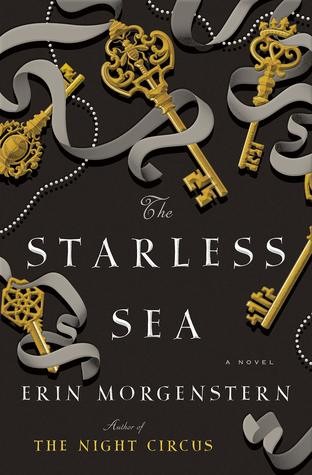
I bought this book because of how it felt in my hands before I’d read a single page, and that is exactly the problem with it, and also exactly the point. I finished it not sure if I’d read a masterpiece or a very beautiful 500 page fog machine. Both things are true. I’ve never had a harder time deciding what to say about a book I loved reading and can barely explain.
| Author | Erin Morgenstern |
| Published | 2019 |
| Genre | Literary fantasy |
| Format | Standalone novel |
| Reception | Deeply divisive: adored for its atmosphere, criticized for its meandering plot |
| Our rating | 3.5/5 |
| Read it if | You love mood, myth, and books about books more than you need a tight plot |
| Skip it if | You need forward momentum and a protagonist who actually does things |
A Door, a Book, and a Man Who Follows Both
Zachary Ezra Rawlins is a grad student who finds a book in his university library that describes, in exact detail, a moment from his own childhood. Not a similar moment. The moment. A door painted on a wall, that he found and didn’t open, and has regretted for years. That’s the hook, and it’s a genuinely great one. The book he’s reading is an anthology of strange fairy tales, unattributed, water damaged, and somehow about him specifically.
From there Zachary follows a trail (a masquerade party, a mysterious man in a bee costume, a locked door under New York) down into the Starless Sea itself, a subterranean library-slash-world of tunnels and ballrooms and abandoned cities built entirely around the act of storytelling. There’s Mirabel, who might be older than she looks. There’s Dorian, an ex-guardian of the place who becomes Zachary’s something (lover, tether, mirror, the book is cagey about the word). There’s a Keeper, a Kitchen, an ocean of honey with no wind, a painted door that means everything.
I’m being vague on purpose because the actual pleasure of the first third is not knowing what any of it means yet, and that not-knowing is the best part of the book. It gets harder to defend later.
Gorgeous, Slow, and Occasionally Lost
Here’s the thing about Morgenstern’s prose: it is stunning at the sentence level in a way that almost nobody else in commercial fantasy is doing. She writes rooms and objects like a set designer, honey seas, cocktails that taste like specific memories, a bar made entirely of stories you can drink. The Night Circus proved she could do atmosphere. This book proves she can do it for 500 pages without running out of ideas for what a room could look like.
But I have to be honest, because that’s the whole job here: the plot does not hold together the way the prose promises it will.
The book is structured with fairy tale interludes dropped between the main chapters, self-contained little myths about a keeper of bees, an owl king, a moon-related tragedy I won’t spoil, and they are lovely on their own but they take up a genuinely large chunk of the page count, and for a long stretch you’re not sure how or if they connect to Zachary at all. Some readers find that meditative. I found it, around page 250, a little maddening. I remember sitting in a coffee shop rereading the same page three times because I’d lost the thread of who Mirabel actually was in relation to Zachary, and realizing the book didn’t seem especially worried about whether I kept up.
That’s not automatically a flaw. Some books are moods, not machines. But when the ending arrives and tries to tie the mythic interludes to the “real” plot in one big emotional swing, it works less as a revelation and more as an assertion. I wanted to feel the click. Mostly I felt the intention behind the click.
Where it does land, it lands hard. The relationship between Zachary and Dorian, unhurried and tender and refreshingly not built on conflict for conflict’s sake, is one of the better romantic threads I’ve read in this kind of book. And the sheer love of stories-about-stories, the idea that a place can exist purely because people keep telling tales about it, is the kind of conceit that will genuinely rearrange how some readers think about books for weeks afterward. It rearranged mine, a little, even while I was frustrated with it.
Tangent: I think this is a book best read in one deep sitting, ideally somewhere overly cozy, because if you read it in fifteen minute subway chunks like I foolishly did for the middle third, the fairy tale digressions stop feeling dreamy and start feeling like homework. Context matters enormously here. I suspect half the “I loved it” and “I couldn’t finish it” split online comes down to reading conditions as much as taste.
You can find it here if you want to judge for yourself: The Starless Sea on Amazon.
This is a book that loves stories more than it loves telling one clearly, and whether that’s a flaw or the entire point depends on what you came for.
About Erin Morgenstern
Morgenstern is a former visual artist, which explains everything about her writing. She built The Night Circus for years as a NaNoWriMo project before it became a genuine phenomenon, and by her own account she takes her time between books because she’d rather get the atmosphere exactly right than hit a deadline. She lives in Massachusetts, is famously private about her process, and seems entirely unbothered by the fact that her books are more beloved for their vibes than their plotting. Honestly, fair enough. Nobody else is building rooms like this.
If You Loved the Atmosphere, Read These Next
The Night Circus by Erin Morgenstern herself, if you somehow read this one first, it’s tighter and I’d argue the better entry point. Piranesi by Susanna Clarke, for a similarly dreamlike world built around a single strange structure, but with a much more disciplined narrative engine underneath the mystery. The Ten Thousand Doors of January by Alix E. Harrow, for another book obsessed with doors as portals and stories as power, with a clearer emotional throughline. And Ninth House by Leigh Bardugo if you want secret societies and old libraries but with actual stakes and violence driving the plot forward.
For your book club
- Did the fairy tale interludes work for you, or did you find yourself skimming to get back to Zachary?
- Do you think the ending successfully ties the mythic stories to the main plot, or does it just assert that it does?
- What did you make of the Zachary and Dorian relationship, does its slowness feel earned or does it stall the book?
- Would this book have worked better as a shorter, tighter novel, or does its sprawl serve the theme of stories being endless?
- If you’d read The Night Circus first, did that change your expectations here, for better or worse?
Still thinking about it?
That’s kind of the whole review, honestly. If you want more books that split us down the middle just as hard, check out more of our book reviews and see where you land.