
A freshly dog-eared review
A Grieving SEAL, a Kill List, and No Brakes
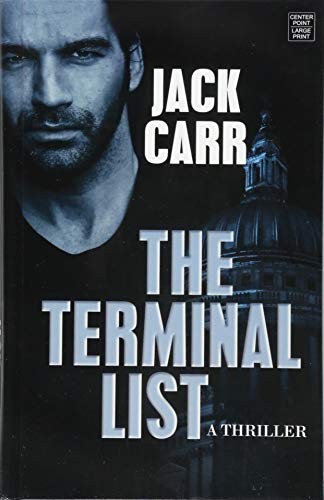
I read most of this book in a dentist’s waiting room and then in the actual dentist’s chair, which tells you something about how The Terminal List operates. It doesn’t care where you are. It just wants you to keep turning pages while a man methodically ruins the lives of everyone who wronged him. I went in expecting a forgettable airport thriller and came out white knuckled, a little disturbed by how much I enjoyed watching someone plan murders with a whiteboard.
| Author | Jack Carr |
| Published | 2018 |
| Genre | Military thriller / revenge thriller |
| Format | First book in the James Reece series (several sequels, plus the Amazon Prime adaptation) |
| Reception | Beloved by thriller and military fiction readers, especially anyone who wants their fiction technically accurate; some readers find the prose flat and the conspiracy overcooked |
| Our rating | 3.8/5 |
| Read it if | you want a competent, angry, weapons-literate revenge story that doesn’t pretend to be literature and doesn’t need to |
| Skip it if | you need lyrical sentences, subtle villains, or women who are more than plot devices |
A dead platoon, a dying son, and a very long to-do list
Here’s the setup, and it’s brutal in the way only a former Navy SEAL author can make it brutal: James Reece leads a platoon into an ambush that was supposed to be routine and comes home the only survivor. Then his family starts dying too, in ways that look accidental but obviously aren’t, and Reece gets a brain tumor diagnosis that may or may not be real, may or may not be connected, and may or may not be making him lose his mind right as he needs it most.
That last part is the smartest structural choice in the book. For a solid stretch you genuinely don’t know if Reece is uncovering a conspiracy or hallucinating one, and Carr lets that ambiguity sit uncomfortably long before he tips his hand. Once he does tip it, the plot becomes what it was always going to become: a list, literally named in the title, of the men responsible, and Reece working his way down it with a precision that would make a hitman blush. Pharmaceutical companies, defense contractors, a senator, CIA higher ups. It’s Jason Bourne with a body count and a grudge instead of amnesia.
What actually works, and what made me put the book down and stare at the wall
What works is the texture. Carr was a SEAL for close to two decades and it shows in every gun, every breach, every piece of gear mentioned by brand name. This isn’t research, it’s muscle memory turned into prose. When Reece assembles a rifle or clears a room, you believe every beat of it because the guy writing it has actually done it. That authenticity is the entire engine of the book. Strip it out and you have a fairly standard revenge plot. Leave it in and you have something that feels dangerous in a way most thrillers, written by people who learned tactics from other thrillers, simply don’t.
The rage is the other thing that works. Reece’s grief isn’t decorative. There’s a scene early on, after he loses his wife and daughter, where the prose goes flat and clipped, almost bureaucratic, like Reece has to process the horror in checklist form or he’ll come apart completely. I remember reading that section on my couch at like eleven at night and actually feeling my chest tighten, which is not a sentence I expected to write about a book with this much gun-brand-dropping in it.
Now the part where I have to be honest, because a review that only compliments a book isn’t a review. The prose is workmanlike at best. Nobody’s turning to Carr for a beautiful sentence, and he knows it, which is fine, except it means long stretches of the book read like a briefing document. The women exist almost entirely to be killed, threatened, or to admire Reece, and by book’s end you could not tell me one interesting thing about his wife beyond the fact that she loved him and then died to motivate him. That’s a real problem, not a nitpick. And the conspiracy itself, once fully unspooled, gets a little cartoonish. Corrupt pharma executives colluding with corrupt senators and corrupt CIA officers to cover up a corrupt drug trial is the thriller equivalent of a greatest hits album. Nothing here surprised me structurally. It’s the execution and the granular detail that kept me reading, not the plot architecture.
Tangent, but stick with me: I kept thinking about how this book would read completely differently if Reece were sloppier, if even one of his kills went wrong in a way that stuck with him. The book flirts with that idea through the brain tumor plotline and then mostly drops it once the shooting starts in earnest. I wanted the moral cost to matter more than it ultimately does. Reece feels grief, sure, but he never feels doubt about what he’s doing, and a story about a man becoming an efficient killing machine might have hit harder if it let him flinch even once.
Am I grading this on a curve because I like competence porn? Probably. I’m aware that a more literary reader would find this thin. I don’t fully disagree with them. I just don’t care as much as I probably should.
This isn’t a book about justice. It’s a book about what’s left of a man once justice stops being the point.
About Jack Carr
Jack Carr spent almost two decades as a Navy SEAL, doing multiple deployments and eventually commanding a Special Operations Task Unit, before he retired and decided the next battlefield would be the page. That background is the whole reason this book works as well as it does: he’s not imagining what special operations feels like, he’s transcribing it. Since The Terminal List he’s built out the Reece universe across several more novels, consulted on the Amazon Prime adaptation starring Chris Pratt, and become something like the current standard bearer for the modern military thriller. He also hosts a podcast where he talks guns, history, and books with the kind of specificity that makes it clear the technical detail in his novels isn’t an act.
If this wrecked you, read these next
- Vince Flynn’s Mitch Rapp series, starting with American Assassin, for the same righteous-fury energy with a slightly older-school politics-thriller flavor.
- Brad Thor’s Scot Harvath books if you want the globe-trotting version of this same revenge-thriller machinery.
- Daniel Silva’s Gabriel Allon series if you want the tradecraft and moral weight turned up and the body count turned down slightly.
- Carr’s own sequel, True Believer, if you just want more Reece, angrier and further from home.
You can grab a copy here: The Terminal List by Jack Carr.
For your book club
- Does the ambiguity around Reece’s brain tumor change how you read his actions, even after the truth comes out?
- Is Reece a hero, a vigilante, or something the book refuses to let you cleanly categorize?
- What does the book gain, and lose, by giving its women so little interiority?
- Does the technical detail (weapons, tactics, procedure) ever get in the way of the emotional story, or does it serve it?
- Would this story hit differently if even one of Reece’s targets turned out to be innocent, or wrongly placed on the list?
Want more where that came from
If revenge thrillers with a body count and a conscience are your thing, or even if they’re not and you just want to argue with me about it, check out more of our book reviews for the next one to pick a fight over.