
A freshly dog-eared review
The Time Traveler’s Wife Made Me Question My Own Taste
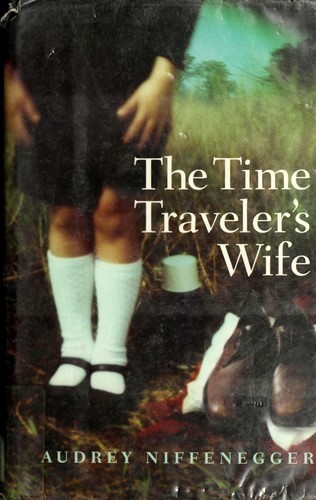
I have recommended this book to exactly one person in my life and then spent the next two weeks anxious about it, the way you feel after you set someone up on a date. It’s not because the book is bad. It’s because it’s a lot, and I needed to know if she’d see what I saw or if she’d just see a man who keeps showing up naked in a woman’s life on a schedule he doesn’t control. Both readings are correct, honestly, which is the whole problem and the whole point.
| Author | Audrey Niffenegger |
| Published | 2003 |
| Genre | Literary fiction / speculative romance |
| Format | Standalone novel |
| Reception | Beloved book club pick and bestseller for two decades, but increasingly picked apart by readers who find the age-gap stuff hard to sit with |
| Our rating | 3.7/5 |
| Read it if | you want a love story that actually costs the characters something, and you can tolerate structural chaos and a deeply uncomfortable subplot |
| Skip it if | the idea of a grown man knowing a little girl since she was six and marrying her as an adult is a hard no for you (valid, it should be) |
A man who can’t stay in his own timeline, and the woman who waits for him anyway
Here’s the setup, and it’s a genuinely great one. Henry DeTamble has a genetic disorder, basically, that yanks him out of the present without warning and drops him somewhere else in his own life, sometimes decades away, always naked because clothes don’t travel with him. Clare Abshire meets him when she’s six years old and he’s an adult, appearing in the meadow behind her house because that’s where his time traveling keeps sending him during a specific stretch of his life. He knows her for years before she ever meets the “present tense” version of him, the one living forward through time like the rest of us, at which point he’s twenty-eight and has no idea who she is yet, because for him none of this has happened.
Got that? Good, because the book does not care if you keep up. Niffenegger tells this thing out of order, jumping between Henry’s chronological age and Clare’s, so you’re constantly doing math to figure out which Henry you’re getting: the one who’s met her a hundred times or the one meeting her for the first time. It’s disorienting on purpose. The whole book is built on the horror and romance of a relationship where one person remembers everything and the other is catching up in real time, and structurally, making the reader do that same disorientation is kind of brilliant. It’s also, I won’t lie, exhausting for the first hundred pages.
The part where I have to be honest with you
Look, I read this the summer after college, on a friend’s porch in July, sweating through the pages because I refused to go inside for the AC, and I remember physically feeling it when Henry describes disappearing mid conversation, mid meal, mid everything, and his clothes just crumpling to the floor where he used to be standing. That image never left me. There’s something about a man who can vanish out of his own wedding, his own child’s birth, that turns “unreliable partner” into a literal medical condition, and Niffenegger uses that so well as a metaphor for every relationship where one person is just not there enough, where you build a life around someone’s absences.
Here’s the thing though. I need to talk about the meadow.
Adult Henry meets child Clare when she’s six. He continues seeing her, alone, in a meadow, for years, as she grows up, before she’s ever met him as a stranger would. Niffenegger frames it as fated, as sweet even, and gives Clare agency as an adult narrator looking back fondly on those visits. I understand the sci-fi logic: he can’t help where he lands, he doesn’t choose to meet her as a child, the timeline is fixed and this is just what happened. But logic isn’t the same as comfort, and no amount of time travel physics changes the fact that a grown man spent years of a little girl’s childhood alone with her before eventually marrying her. The book asks you to read this as romantic destiny. A lot of readers, me included on a bad day, read it as something closer to grooming with a sci-fi alibi. This is the single biggest reason people bounce off this book hard, and I think they’re right to flag it even if I still love parts of the rest.
Beyond that, the prose itself is gorgeous in places and overwrought in others. Clare’s sections, especially her longing as a teenager for a man who exists mostly as absence, are aching and specific: the way she marks time by his visits, the way she describes wanting something so long it becomes identity. But some of Henry’s chapters lean into a kind of self-satisfied literariness, all opera references and gallery openings, that started to feel like Niffenegger showing off rather than Henry being a person. And structurally, once you accept the time jumps, the back half sags. The miscarriages Clare endures, trying to have a child with a man whose genetic condition might not survive gestation, are genuinely devastating and underused as the emotional core they should have been. Instead we get more scenes of Henry meeting himself, which is a neat trick once, and diminishing every time after.
I think I love this book and am embarrassed by it in equal measure, and I’m not totally sure which feeling is the correct one anymore.
The whole conceit works because it turns romantic devotion into a disability, and then asks whether you’d still choose the person who keeps leaving.
About Audrey Niffenegger
Niffenegger is a visual artist first, which explains why this book reads like someone building a collage instead of following a plot outline, cutting up chronology and reassembling it by feel. She wrote most of it while working day jobs in Chicago, in the print and book arts world, and she’s talked about the book coming out of thinking about relationships where one person is always leaving. She followed it up with “Her Fearful Symmetry,” a much stranger, colder ghost story set in London, which tells you she was never interested in repeating herself, for better and worse.
If this messed with your sense of time, read these next
“Kindred” by Octavia Butler, for time travel that actually reckons with what it costs the person being yanked through history, no romantic haze included. “One Day” by David Nicholls, if what you wanted was the slow motion tragedy of two people almost getting the timing right. “The Midnight Library” by Matt Haig for a gentler, more hopeful spin on the multiple lives idea. And if the age gap stuff bothered you as much as it bothered me, “Life After Life” by Kate Atkinson does the looping time structure with none of that baggage.
For your book club
- Does Henry’s lack of choice in when he time travels excuse the meadow relationship with young Clare, or does the sci-fi framing let the book avoid a harder conversation?
- Clare spends most of her life waiting. Is the book critiquing that, or romanticizing it?
- How would this story change if Clare could time travel too, and Henry was the one waiting?
- Which loss hit you harder: the miscarriages, or Henry’s eventual fate? Why do you think Niffenegger gave one more page time than the other?
- Is this fundamentally an optimistic book about love surviving anything, or a bleak one about a relationship built on absence and inevitability?
Still thinking about the meadow, aren’t you
Yeah, me too, and not in a good way half the time. If you want the physical copy to argue with in the margins, here’s The Time Traveler’s Wife on Amazon. And if you want more books that will make you feel a specific, complicated way, check out more of our book reviews, we’ve got opinions on all of them.