
A freshly dog-eared review
Three Sisters, One Crown, Zero Chill
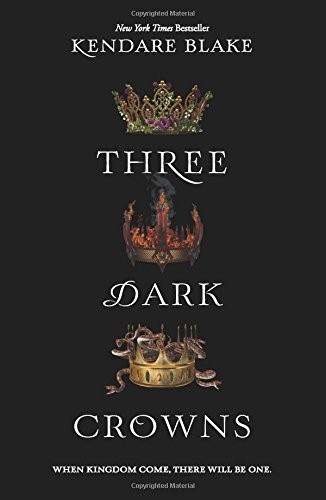
I bought Three Dark Crowns because of the premise alone, three sisters, one of them has to kill the other two, and I remember thinking “finally, a YA fantasy with some teeth.” Then I spent two hundred pages waiting for anyone to actually use those teeth. Look, I still think about this book more than books I liked better, which either means it’s smarter than I gave it credit for, or it just really knows how to leave a hook in you and walk away.
| Author | Kendare Blake |
| Published | 2016 |
| Genre | Young Adult Fantasy |
| Format | Series (Three Dark Crowns Quartet), book 1 of 4 |
| Reception | Well loved for its premise and atmosphere, frequently criticized for pacing that takes a while to earn the setup |
| Our rating | 3.5/5 |
| Read it if | you want dark, witchy, slow-burn political fantasy and don’t mind a book that’s basically one long chess opening |
| Skip it if | you need action in chapter one or you’re allergic to books that end without resolving anything |
An Island, Three Queens, and a Deadline Nobody Wants
Here’s the setup, and it’s a genuinely great one. On the island of Fennbirn, every generation produces a set of triplet queens, each born with a different kind of magic. One is a poisoner, immune to every toxin and skilled at making them. One is a naturalist, able to talk to animals and grow anything. One is an elemental, able to control fire and water and wind. They’re separated at birth, raised by different factions who each want their queen to win, and by the time they turn sixteen, one of them has to be the last one standing. Not metaphorically. Actually standing. The other two are dead.
Katharine is the poisoner, except she can barely keep down a thimble of nightshade without vomiting, which is a real problem when your entire political and magical legitimacy depends on being immune to poison. Mirabella is the elemental, and she’s terrifyingly strong, maybe the strongest queen the island has seen in generations, and everyone around her is quietly horrified because power like that usually means she’ll have to kill her sisters outright instead of waiting for the ritualized poisoning or drowning to do it. And then there’s Arsinoe, the naturalist, who can’t seem to do anything with plants or animals at all, and who has a low-magic friend, Jules, whose familiar mountain lion Camden is doing more heavy lifting than Arsinoe’s actual gift.
What I love about this setup is that Blake doesn’t make it simple. You’d think “sisters forced to murder each other” sets up an obvious villain and an obvious hero. It doesn’t. Katharine is being groomed and drugged by the people supposedly protecting her. Arsinoe might be faking her lack of power, or might not even really be the naturalist queen at all (I’m not going to spoil where that goes, but it recontextualizes a lot). Mirabella, the one with all the power, is the one who least wants to use it. Nobody here is simply evil. They’re all just trapped in a system that was built centuries before they were born and never once asked if they consented to it.
The Good, the Slow, and the “Wait, That’s It?”
The atmosphere in this book is the best thing about it. Fennbirn feels real, damp and green and a little rotten underneath, like a place that’s been quietly poisoning itself (literally, in Katharine’s case) for so long that nobody remembers it could be different. Blake writes the poisoner faction’s court, the Arrons, with a specific kind of oily menace, all silk dresses and slow-acting toxins slipped into wine, and I found myself dreading every scene set there in the best way.
Here’s the thing though. This book is slow. Not “atmospheric and deliberate” slow in the way some fantasy earns, but genuinely slow in the sense that very little happens across four hundred pages beyond people walking around being suspicious of each other. I read most of this on a plane, the kind of flight where you want either total escapism or something to actively chew on, and about sixty percent through I remember checking how many pages were left and being a little dismayed at the answer. The three-queens structure means you’re constantly cutting between storylines, and Arsinoe’s plotline in particular drags, partly because her power is a mystery even to her, which is a fine narrative choice but means her chapters spend a lot of time on “nothing is happening, and we don’t know why.”
And then the ending. I won’t spoil it, but I will say this book does not resolve. At all. It sets up the board and then just stops, mid-game, which I understand is the point of a series opener, but it still left me feeling like I’d read a three hundred page prologue. That’s a real criticism, not a nitpick. A lot of readers bounce off this book specifically because the payoff you’re promised on page one (someone is going to have to kill her sisters) doesn’t happen anywhere near book one, and if you go in expecting Hunger Games speed you will be frustrated.
Where the book does earn its keep is in the character work, especially Katharine’s. Watching her get slowly poisoned by her own guardians, treated as a tool rather than a girl, and start to harden into something colder and more dangerous by the end, that’s genuinely great character work, and it’s the plotline I’d point to if someone asked me why this book is worth the slow burn. Jules and Camden are also, unexpectedly, some of the most compelling material in the whole book, the mountain lion familiar bond hitting harder emotionally than most of the romance subplots that get more page time.
I’ll admit I went back and forth on how much I actually liked this versus how much I liked the idea of it. That’s the tangent I keep circling: is a great premise enough to carry a book that structurally underdelivers on pacing? I don’t think it fully is, but I also haven’t stopped thinking about Katharine’s arc in months, so maybe the slow burn did its job on me even while I was complaining about it.
A crown that requires you to murder your own sisters to wear it was never going to produce anyone who deserved to rule.
About Kendare Blake
Kendare Blake also wrote the Anna Dressed in Blood duology, which tells you she’s been doing “beautiful and unsettling” for a while before this series. She’s got a background that includes an MA in creative writing, and a clear love of horror-adjacent YA that isn’t afraid to let bad things happen to young women, which is rarer in this genre than it should be. She finished the Three Dark Crowns Quartet across four books, and reportedly had the whole shape of the story planned before she wrote page one, which explains why the individual pieces (the poison, the familiars, the specific politics of each faction) feel so deliberately placed even when the pacing doesn’t always cooperate with that plan.
If the Slow Burn Got You, Read These Next
If you finished this and need more, or if you want something that scratches the same itch with a different pace, try:
- Wilder Girls by Rory Power, for more girls-on-an-island body horror with an even more feral atmosphere
- The Cruel Prince by Holly Black, for court intrigue and morally messy protagonists who actually get to be ruthless on the page
- Furyborn by Claire Legrand, for dual timelines and prophecy-bound queens with real teeth
- Six of Crows by Leigh Bardugo, if what you actually wanted was the plotting and scheming to pay off faster
You can grab a copy here: Three Dark Crowns on Amazon.
For your book club
- If you’d been born a triplet queen on Fennbirn, which gift would you actually want, and would you want to know your sisters before the killing started?
- Is the island’s ritual a form of meritocracy, or just violence dressed up as tradition? Does it matter which, if the outcome is the same?
- Katharine spends the book being poisoned and manipulated by the people meant to protect her. Did you sympathize with her, or did you start to distrust her the way the island does?
- Mirabella is the most powerful queen and also the most reluctant. What does the book seem to be saying about power and the people who don’t want to use it?
- The book ends without resolving the central conflict. Did that feel like a cliffhanger that earned your patience, or did it feel like being left on read?
Want another one that’s actually worth your time?
If you want more books picked apart honestly, no fake five-star ratings, no vague hype, check out more of our book reviews and find your next read.