
A freshly dog-eared review
The Broke Guy in Slip F-18 Who Ruined Me for Other Heroes
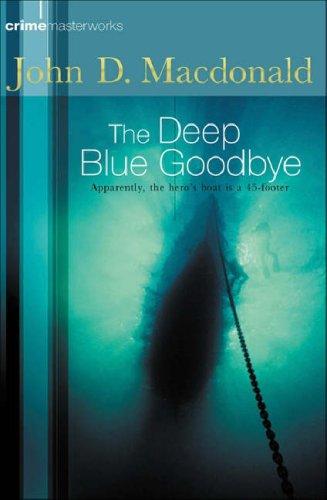
I found Travis McGee the way you find most things worth finding: secondhand, water damaged, and completely by accident. A guy at a used bookstore in Florida (where else) practically shoved a stack of these paperbacks at me and said “you’re not from here, you need to understand this state.” He was right, and he was also wrong, because what I actually needed was to understand this specific kind of broke, battered, philosophizing beach bum who somehow became the template for every “morally gray guy who lives on a boat and only takes cases he believes in” character that came after him. Travis McGee did it first. Travis McGee did it better than most of his imitators. And Travis McGee also says some stuff about women that made me put the book down and stare at a wall.
| Author | John D. MacDonald |
| Published | 1964 to 1984 (The Deep Blue Good-By, the first, came out in 1964) |
| Genre | Hardboiled crime / detective fiction |
| Format | Series, 21 novels, all titled with a color |
| Reception | Beloved by crime fiction die-hards and writers (Stephen King and John Sandford have both sung its praises), less known to casual readers, aging unevenly on gender and race |
| Our rating | 4/5 |
| Read it if | you love Florida noir, morally complicated antiheroes, and prose that can turn a boat repair into a meditation on decay |
| Skip it if | you can’t tolerate dated attitudes toward women even when the writing around them is sharp |
A Broke Knight in a Houseboat Called the Busted Flush
Here’s the setup, and it barely changes across all twenty one books, which is either a comfort or a rut depending on your mood: Travis McGee lives on a houseboat in Fort Lauderdale that he won in a poker game, he calls himself a “salvage consultant,” and what that actually means is he gets a chunk of whatever he recovers for people who’ve been cheated, robbed, or conned out of something and can’t go to the cops. He takes his retirement “in installments,” working just enough to fund long stretches of doing absolutely nothing, which as a life philosophy I find deeply, deeply appealing.
The first book, The Deep Blue Good-By, has McGee going after a war criminal type named Junior Allen who’s been sweet talking women out of their inheritances and worse. It’s a slim, mean little book, and it sets the template: a woman in trouble, a bad man who’s gotten away with something, McGee inserting himself into the mess half for the money and half because he can’t stand watching people get steamrolled. Later books send him after cult leaders, drug smugglers, land swindlers, and one absolutely bananas storyline in The Scarlet Ruse involving stamp collecting fraud that I did not expect to be tense but somehow was.
What MacDonald Gets Right, and Where It Curdles
Look, the prose is the reason to read these. MacDonald writes about Florida, about heat and money and rot, in a way that made me understand the state better than any travel piece ever has. There’s a recurring thing he does where McGee will go on a page long riff about American consumerism or suburban conformity or the way development is eating the coastline, and it should feel like a lecture, but it doesn’t, because MacDonald earns it with specificity. He notices things. A particular kind of sunburn. The exact sound a bad marriage makes at a dinner party. I remember reading Nightmare in Pink on a plane, stuck in a middle seat, completely checked out of my actual surroundings because McGee was walking through a mental institution and I could feel the fluorescent lighting.
Here’s the thing though. I have to be honest about the part that doesn’t work, because pretending it’s not there would be its own kind of dishonesty. McGee’s relationship to women is rough. He’s tender with them in a way that was probably progressive for 1964, he genuinely seems to like women as people, but there’s also a paternalism running through every book, this sense that women need saving and healing (often via McGee himself, personally, in bed) more than they need agency. Some books handle this better than others. Some books, particularly the later ones, lean into it in ways that made me wince. I don’t think you can hand this series to someone without that caveat attached, and I don’t think it’s fair to pretend the caveat is small.
A tangent, because I can’t help it: I went down a rabbit hole after finishing book three trying to figure out why MacDonald titled every single book with a color, and the answer is basically nothing, it was a gimmick his publisher liked because it made the series instantly recognizable on a spinner rack, and once he started he couldn’t stop because readers expected it. There’s something very McGee about that, honestly. Committing to a bit because walking away seems like more trouble than it’s worth.
Am I overrating this because I read it in the right mood, on the right beach, at the right point in my life when I wanted a fictional friend who owned nothing and answered to no one? Maybe. I’ve gone back to a couple of these and found them slower than I remembered, more digressive, McGee’s self justifying monologues wearing thin the second time through. That’s worth knowing going in.
McGee doesn’t fight crime. He fights the specific, personal unfairness of watching a good person get taken apart by a bad one, and that’s a much smaller, much more human kind of justice than most detective fiction bothers with.
About John D. MacDonald
MacDonald was a Harvard MBA who came back from World War Two, sat down, and started churning out pulp fiction at a pace that should be illegal, hundreds of short stories and dozens of novels before McGee ever showed up. He wrote fast, he wrote for money, and he was completely unsentimental about it, calling himself a “storyteller” rather than anything grander. Kurt Vonnegut called him one of the best American novelists of his generation, which is the kind of endorsement that should embarrass every literary snob who’s never picked up a paperback with a lurid cover. He died in 1986, mid series in spirit if not in fact, and left behind a body of work that quietly shaped how three generations of thriller writers built their heroes.
If McGee Got Under Your Skin, Read These Next
Robert B. Parker’s Spenser novels, for the wisecracking code of honor wrapped around a similarly self employed tough guy. Ross Macdonald’s Lew Archer books, for the same California and Florida rot but with a colder, more literary eye. Carl Hiaasen’s Florida crime comedies, if you want the same setting turned absurdist and furious about development instead of melancholy about it. And if you want to see the direct descendant, John Sandford’s Lucas Davenport books wear their McGee influence openly.
You can find the whole series, in whatever order the used bookstore gods deliver it to you, right here, and honestly starting with The Deep Blue Good-By is the right call even though MacDonald himself said you could jump in anywhere.
For your book club
- Does McGee’s code of “only helping people who deserve it” hold up across the series, or does it start to feel like self serving justification for a guy who just likes danger?
- How do you separate the quality of MacDonald’s prose about Florida and American excess from the dated gender politics running through the same pages?
- Why do you think the “broke antihero who lives outside the system” archetype has had such staying power in American crime fiction?
- Does the repetitive structure (woman in trouble, bad man, McGee intervenes) start to feel comforting or tedious the more books you read?
- What does the houseboat, the Busted Flush, tell you about McGee that the plots themselves don’t?
Want another one like this?
If you’re circling this era of hardboiled fiction, there’s a whole world of it worth digging into, and you can find more of our book reviews here to keep the trail going.