
A freshly dog-eared review
Miles Archer Ruined Me and I Have Notes
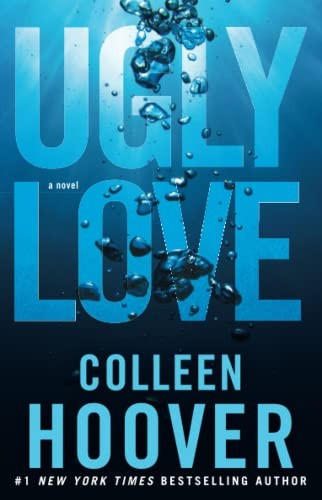
I read this one on a Tuesday night, told myself I’d do a chapter, and looked up at 2am with a wet face and mild resentment toward a fictional pilot. Look, I know what Ugly Love is. It is manipulative in the way a really good sad song is manipulative. I let it work on me anyway, and I would do it again.
| Author | Colleen Hoover |
| Published | 2014 |
| Genre | Contemporary romance, angst-forward, low-key emotionally destructive |
| Format | Standalone, one book |
| Reception | Wildly popular and just as wildly divisive: adored by fans, side-eyed for its hero and its ending |
| Our rating | 3.5/5 |
| Read it if | You want the emotional equivalent of pressing a bruise on purpose |
| Skip it if | A cold, closed-off love interest and a big tragic backstory reveal make you roll your eyes |
The setup: two people and one very bad idea
Tate Collins is a nurse, sensible, moving to San Francisco to share her brother Corbin’s apartment and get her life sorted. Miles Archer is Corbin’s friend, a pilot, and the first thing she meets of him is his body passed out drunk in the hallway. Great start. He is beautiful and he is a wreck, and those two facts do not cancel out the way we all wish they would.
They want each other. Neither of them wants the mess of actually wanting each other. So Miles offers her a deal with two rules: don’t ask about his past, and don’t expect a future. Physical, no strings, no questions. Tate, being a smart woman who is about to make a series of decisions no smart woman would defend in daylight, says yes.
Here’s the structural trick that makes the book more than a garden-variety no-strings fantasy. Hoover splits it into two voices. Present-day chapters are Tate, watching herself fall for a man who has bricked himself up. Past chapters are Miles at eighteen, told in this stripped, fractured, almost prose-poem cadence, and those chapters are slowly explaining why present-day Miles is the way he is. You spend the whole book knowing there is a wound. You just don’t know how deep.
What actually got me, and the part where I argue with myself
The Miles-at-eighteen chapters are the reason to read this. They shouldn’t work. They’re written in these short, breathless fragments, the “poetic” style that in lesser hands reads like a screensaver quote. Here it earns it, because young Miles is so open and so in love with a girl named Rachel that the contrast with cold present-day Miles becomes the entire engine of the book. You are essentially reading a before-and-after of a person, and the “after” is standing in a hallway drunk. That is a genuinely good idea for a novel.
And then there’s the word. If you’ve read this book you know the word. I won’t spoil the mechanics, but Miles has a name he will not say, and the moment the book finally lets him say it wrecked me in a way I felt slightly embarrassed about on the train the next morning. That is the whole Hoover magic trick: she withholds one emotional beat for two hundred pages and then detonates it in a single line.
Now let me be a person with standards for a second.
Miles is a problem. Not in the fun morally-gray-hero way the genre likes to advertise, but in a “sir, you are being genuinely cruel to a woman who has done nothing but be kind to you” way. There is a scene where he says something to Tate in bed, mid-intimacy, that is meant to be devastating and mostly made me want to help her pack. The book frames his coldness as tragic and reclaimable. I spent a good chunk of it unconvinced that Tate was getting anything back that resembled a relationship, as opposed to a very handsome renovation project.
And here is where I question my own taste, because I ate it up anyway. Why? I think it’s because the book is honest about the fantasy it’s selling. It is not pretending Miles is a healthy choice. Tate herself keeps narrating, essentially, I know this is a bad idea, I am doing it, and that self-awareness bought a lot of my goodwill. Ugly Love, the title, is not a lie. It’s the terms and conditions.
The ending is the real fault line. The big reveal about Miles’s past, the tragedy that made him, lands for a lot of readers as gutting and for a lot of others as a soap-opera swerve that leans a bit hard on a very specific kind of grief to earn its tears. I’m somewhere in the middle. It moved me in the moment and then I woke up the next day and thought, was that earned, or was I just tired and it was 2am. Both things can be true. A book can get you fair and square and still have you side-eyeing the mechanics afterward.
Small tangent: I read a good stretch of this at a laundromat, which is the perfect Ugly Love venue, fluorescent and a little sad and forcing you to sit still with your feelings and a spin cycle. Ten out of ten setting. Do not read the last forty pages anywhere you can’t cry in peace.
This is a book that tells you upfront it’s going to hurt you, and the wild part is that the honesty is what makes you trust it.
About Colleen Hoover
Colleen Hoover is the reason a whole generation of readers has a specific facial expression for “I’m fine, I’m just at the end of a CoHo book.” She started out self-publishing, built her whole readership from the ground up, and then years later BookTok reached back and turned her into one of the biggest-selling novelists on the planet, sometimes for books she wrote before the app existed. She is genuinely divisive: people either credit her with getting them reading again or find her books emotionally manipulative and thin on craft. My honest take is that she is not a beautiful sentence-level writer, and she doesn’t need to be, because she has an almost unfair instinct for the exact emotional beat that will take your legs out. Ugly Love is one of her cleanest demonstrations of that instinct.
If this wrecked you, read these next
- It Ends With Us by Colleen Hoover, for when you want CoHo doing something heavier and more serious, with a real weight to the subject matter.
- November 9 by Colleen Hoover, if the “one big reveal reframes everything” structure is what hooked you here.
- Archer’s Voice by Mia Sheridan, for another wounded, closed-off hero and a slow thaw that earns its softness.
- The Deal by Elle Kennedy, if you want the no-strings-turns-into-feelings setup but lighter, funnier, and less likely to leave a mark.
You can grab Ugly Love here if you want to find out about the word yourself.
For your book club
- Did Miles’s backstory earn the way he treated Tate, or does explaining cruelty just dress it up as tragedy?
- Tate says yes to the rules knowing exactly what she’s agreeing to. Is her self-awareness empowering, or is it the book letting itself off the hook?
- The past-tense Miles chapters are written in a completely different, fragmented style. Did that choice work on you, or did it feel like a gimmick?
- Where is the line between an emotionally powerful ending and an emotionally manipulative one, and which side does this land on for you?
- If a friend told you about a relationship exactly like Tate and Miles’s, what would you actually say to her?
More books that leave a bruise
If you like your romance with a little damage on it, come dig through our romance and romantasy shelf, where I keep the ones I couldn’t stop thinking about at 2am…