
A freshly dog-eared review
The Book That Made Me Ignore Boiling Water
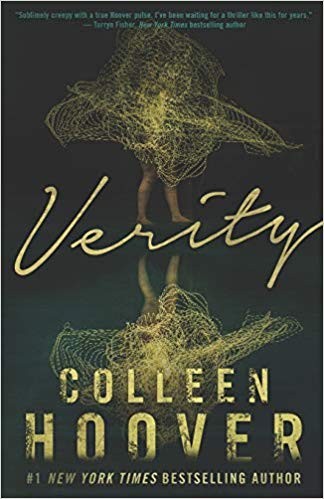
I read the last 40 pages of Verity standing up in my kitchen because I could not physically sit back down. Water boiling over on the stove, I ignored it. That does not happen to me often anymore, not since I started reading professionally and got a little numb to twists. Colleen Hoover got me anyway, and I am still a little annoyed about it.
| Author | Colleen Hoover |
| Published | 2018 |
| Genre | Psychological thriller with a romance/suspense engine |
| Format | Standalone novel |
| Reception | Hoover’s most divisive book: thriller readers rank it her best, some literary readers call it exploitative pulp |
| Our rating | 3.5/5 |
| Read it if | you want a fast, mean, one-sitting thriller and don’t need your narrators to be trustworthy or your prose to be elegant |
| Skip it if | you’re sensitive to child death and infant harm on the page, or you need your endings to resolve cleanly |
A dead woman’s memoir and the writer who shouldn’t be reading it
Here’s the setup, and it’s a good one. Lowen Ashleigh is a struggling novelist, broke and grieving, who gets hired by Jeremy Crawford to finish the remaining books in his wife’s bestselling series. The wife is Verity Crawford, and Verity is not dead, technically. She’s in a vegetative state after an accident, unresponsive, unreachable, essentially a body in a hospital bed inside her own house. Lowen moves into that house to go through Verity’s notes and research. And in a box of manuscript pages, she finds what looks like an unfinished autobiography. Except this autobiography reads less like a memoir and more like a confession, written in a voice so cold it doesn’t feel like the same woman who wrote bestselling family dramas.
I want to be clear about what kind of book this is before I say anything else: it’s a hybrid, half slow-burn gothic thriller, half romance, and the romance part is the part I have complaints about, which I’ll get to. But that setup, a writer snooping through a dead-but-not-dead woman’s private pages while living in her house and falling for her husband, is genuinely great haunted-house-without-a-ghost material. Hoover knows how to load a gun early and make you wait.
What works, what doesn’t, and the manuscript-within-the-manuscript problem
The autobiography chapters are the reason this book works at all. They’re told in first person, in Verity’s voice, describing her marriage, her children, her resentments, in a tone so flat and unbothered that it becomes genuinely disturbing. There’s a passage about one of her daughters dying that a lot of readers, myself included, had to put the book down after. Not because it’s gratuitous exactly, but because Hoover writes it with zero sentimentality, like Verity is filing a report. That’s the best writing choice in the whole book. It makes you distrust every warm, grieving version of Verity that Jeremy describes to Lowen later, and it makes you distrust yourself for believing any of it too fast.
Here’s the thing though. The frame story, the Lowen and Jeremy romance, is where I started rolling my eyes. There’s a sex scene that happens in a house where a woman is lying comatose down the hall, and it’s staged less like a moral crisis and more like a beat the plot needed to hit. I don’t need my thriller protagonists to be good people. I do need the book to seem aware of how bad they’re being, and for a stretch in the middle, Verity forgets it’s supposed to be a thriller and tries to be a romance novel, and the two modes fight each other. The prose outside the manuscript pages is also just weaker, more functional, more CoHo-house-style than the ice-cold voice she gives fake-memoir Verity. It’s a real tonal seam and I don’t think it fully closes.
And then there’s the ending. I won’t spoil the specifics, but I will say this: Hoover ends the book on ambiguity that some readers find delicious and other readers find like a cheat, like she wrote herself into a corner and threw a grenade instead of an answer. I’ve gone back and forth on which camp I’m in. The first time I read it, on a plane, I thought it was a gut-punch of a final page. The second time, months later, rereading it for a piece I was writing, I thought it felt more like a trick than an ending. Maybe that’s the point. Maybe an unreliable narrator book should leave you exactly this unsettled about whether you got played. I still don’t fully know, and I’ve read this book twice.
Am I the right person to review this one? Genuinely asking. I like my thrillers colder and less horny, and Verity is both cold and horny at the same time in a way that shouldn’t work and mostly does anyway, which annoys me on principle.
The scariest unreliable narrator isn’t the one who’s clearly lying to you. It’s the one who might be telling the truth and you wish she weren’t.
About Colleen Hoover
Colleen Hoover was a social worker in Texas who started self-publishing romance novels almost as a side hustle and ended up becoming one of the biggest fiction phenomena of the last decade, largely on the strength of word-of-mouth and, later, BookTok turning her into a full-blown cultural event. She writes fast, she writes prolifically, and she writes books that people either defend with their whole chest or roll their eyes at, sometimes both at once about the same title. Verity sits in an odd spot in her catalog: less romance-forward than It Ends With Us, meaner and stranger than most of her other work, and probably the book that converts thriller readers who otherwise wouldn’t touch her.
If this messed with your head, read these next
- The Wife Upstairs by Rachel Hawkins, for another unreliable domestic thriller playing with a classic gothic setup and a narrator you shouldn’t trust
- Gone Girl by Gillian Flynn, the gold standard for the “the wife’s account is the whole trap” structure, colder and sharper than Verity
- The Silent Patient by Alex Michaelides, if you want another unresponsive-woman-with-secrets premise and a twist built the same way
- Behind Closed Doors by B.A. Paris, for the same slow dread of realizing the person hosting you might be a monster
You can grab a copy here: Verity by Colleen Hoover.
For your book club
- Do you believe the autobiography is a true account, a manipulation, or something in between, and did your answer change by the last page?
- Lowen sleeps with Jeremy while Verity is still alive in the house. Does the book ask you to judge her for that, or does it want you rooting for them anyway?
- Why do you think Hoover chose to make the “confession” chapters colder in tone than the rest of the book?
- What does Verity’s account of her children reveal about how she saw motherhood, and do you think Hoover wants you to sympathize with her at all?
- Talk about the ending. Cheap twist, or the only honest way this story could end?
Still thinking about this one?
Good. That’s the whole point of a book like Verity, it’s supposed to sit with you a while after you close it. If you want more messy, honest takes like this one, check out more of our book reviews and find your next obsession.