
A freshly dog-eared review
The Best Gothic Romance Novels: 17 Books for People Who Want Their Love Stories Haunted
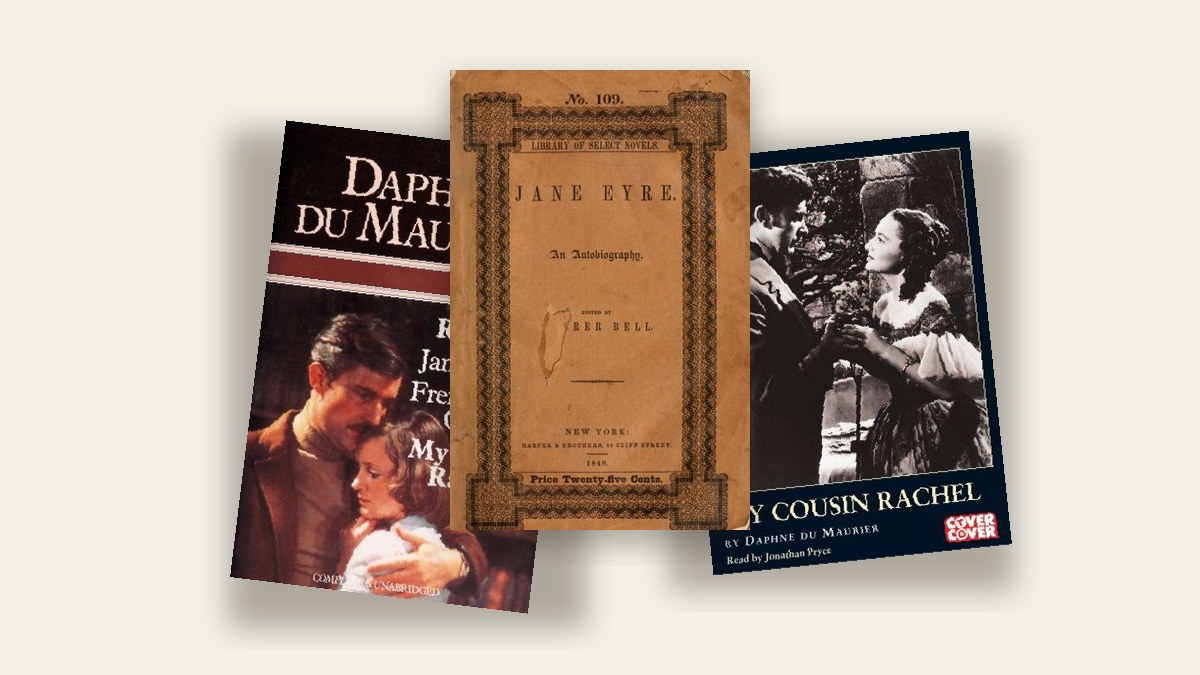
The winter I was nineteen I sublet a room in a drafty house where the radiators clanked like something was trapped inside them, and my landlady, instead of fixing the heat, lent me her paperback of Rebecca. I want it on record that this was the correct decision, and also that it ruined me.
I read it in two nights under three blankets, and then I did the thing you do, which is stand in a used bookstore a week later going: okay, what else feels like that. What else has a house that hates me, a man I shouldn’t trust, and a dead woman running the whole show from offstage. The answer, it turns out, is an entire genre, and I have spent an embarrassing number of years reading my way to the bottom of it.
So this is that list. Not the list you get when a content farm scrapes Goodreads and reorders the top twenty results. I have read every book here. Some of them twice. One of them five times, and I’ll tell you which one, and I’m not sorry about it.
Here’s the thing about gothic romance right now: publishers figured out that “gothic” sells, so they stamp it on any thriller with a big house on the cover and a marriage in trouble inside. Half of what got marketed as gothic in the last five years is domestic suspense wearing a cape. I’ve been burned enough that I now read the word “atmospheric” in cover copy the way you read “cozy” in an apartment listing. It means small. It means dark. It does not mean anyone involved has read Daphne du Maurier.
Which is why I’m doing this properly. Tiers. The books that earn their reputations, the older and weirder stuff nobody hands you anymore, and a whole section for books I have complicated feelings about. Because not everything beloved is good, not everything good is a romance, and I’d rather say that up front than have you show up in my inbox later, betrayed.
One more confession before we start. I keep falling for the governess plot. Every time. Young woman, remote house, employer with a jawline and a locked wing, and my critical faculties simply leave the building. I have asked myself what this says about me and I’ve decided not to pursue the question. Anyway. Let’s go.
What gothic romance actually is (because the label lies half the time)
Strip the marketing off and gothic romance is a love story where the setting is complicit. That’s the whole engine. A house, a moor, a crumbling hacienda, and the crucial part: the place knows something the heroine doesn’t. Nearly every great gothic romance is a woman doing archaeology on her own life while falling for someone who might turn out to be one of the artifacts.
What it feels like, when it’s done right, is dread and desire running on the same track. You read with your shoulders slightly up. The love interest and the threat share a silhouette, sometimes literally, and the book refuses to tell you which instinct to trust until the final thirty pages. The best ones make you complicit too: you know she should leave the house. You would riot if she left the house.
What it is not: it is not horror with a kiss in it (that’s gothic horror, a different and equally great thing), and it is not a thriller where the twist is that the husband did it (that’s domestic suspense, and no, Verity is not gothic romance, I will die on this hill). The gothic requires seduction. The danger has to be something you, the reader, are at least a little in love with. If you’re only scared, it’s horror. If you’re only swooning, it’s a Regency with the lights off. Gothic romance lives in the overlap, the overlap is narrow, and that’s why the real ones matter.
Tier one: the ones that earn the hype
Rebecca by Daphne du Maurier
This is the five-reads one. Every time I come back I find something new to be upset about, in the best way. The narrator never gets a first name. Rebecca never appears alive on a single page and still runs every dinner, every hallway, every monogrammed handkerchief in that house. Mrs. Danvers is the greatest villain in the genre and she achieves it mostly by standing very still in rooms. What gets me on rereads is how mean the book is about class: the narrator isn’t just haunted, she’s underdressed, and du Maurier makes those the same wound. People call this a romance and I understand why, but it’s really a book about marrying a stranger and furnishing the silence yourself. If you read one book off this list, it’s this one, and I’m annoyed at how obvious that is, and it’s still true.
Jane Eyre by Charlotte Brontë
The template. Governess, house, brooding employer, secret so structural it’s load-bearing. Look, Rochester is a walking red flag and the book knows it; that’s the point people miss when they either swoon uncritically or write him off. Jane spends the whole novel refusing to be absorbed by a man who absorbs everything, and the famous line about being a free human being with an independent will is the actual romance. The wife in the attic is a horror the text only half reckons with, which is why Wide Sargasso Sea exists and why you should read that too. But the bones here are so good that the entire genre is still living in this house, nearly two centuries later, arguing about the furniture.
My Cousin Rachel by Daphne du Maurier
Quietly better than Rebecca and I’ll say it louder for the people in the back. I reread it last year fully expecting to have outgrown it, sitting in an airport during a four-hour delay, and instead I missed my boarding call. Philip Ashley is a fool in love with a widow who either murdered his cousin or didn’t, and du Maurier walks that ambiguity across the entire novel without ever once losing her balance. You finish the book, you put it down, you realize you still don’t know, and then you realize the not-knowing was the whole point: this is what obsession actually feels like from the inside. No ghosts. No attic. Just a teacup you can’t stop staring at.
The Thirteenth Tale by Diane Setterfield
A dying novelist finally tells the truth about her life to a bookish biographer, and the truth involves twins, a rotting estate called Angelfield, and a fire. This is gothic romance where the love object is storytelling itself, which sounds precious and somehow isn’t. It reads like it was written by someone who mainlined the Brontës and then decided to build them a shrine with a trapdoor in it. The twist is guessable if you’re paying attention. Read it anyway; the getting there is the point.
A Dowry of Blood by S.T. Gibson
Dracula’s first bride writes a long letter to her dead maker, and the “you” of it is a knife that never stops turning. This is the lushest prose on the list, second person and drenched in velvet, and underneath the velvet it’s a startlingly clear-eyed anatomy of an abusive relationship: the love-bombing, the isolation, the way devotion curdles into surveillance. Short enough to read in a night. Heavy enough that you won’t. Go in blind if you can.
Mexican Gothic by Silvia Moreno-Garcia
Honesty time, because this book gets recommended like it’s flawless and it isn’t. The first half is as good as modern gothic gets: Noemí, a glamorous socialite with actual spine, arrives at High Place, a moldering English-style mansion in the Mexican mountains, to check on a cousin who wrote a letter that reads like a scream. The house is wrong, the family is worse, the colonialism is the rot in the walls, literally. Then the back half swerves hard into mushroom body horror and the romance thins out to a suggestion. I know people who threw the book across the room and people who think the swerve is the best part. I’m somewhere in the middle: glad I read it, wish it had held its nerve as a gothic instead of becoming a creature feature. Still comfortably tier one, because those first two hundred pages are that good.
Tier two: deep cuts and dollar-bin paperbacks
Nine Coaches Waiting by Mary Stewart
The best governess gothic ever written that isn’t Jane Eyre, and on certain rainy Tuesdays I’d argue the ranking. English girl takes a job at a château in the French Alps, realizes someone is trying to kill the nine-year-old heir in her care, and has to figure out whether the man she’s falling for is in on it. Stewart wrote suspense with an elegance nobody’s matched since; her heroines are competent, funny, and scared in believable proportions. This one’s been in and out of print forever, which is a crime. Track it down.
Mistress of Mellyn by Victoria Holt
I found my copy on the dollar cart outside a used bookstore, cover half detached, previous owner’s name in pencil inside, and it turned out to be the book that kicked off the entire paperback gothic boom of the sixties. Published in 1960, openly wearing its Jane Eyre and Rebecca influences like costume jewelry, and completely shameless about delivering exactly what you came for: Cornwall, a governess, a widower, a dead wife who won’t stay filed away. Is it deep? No. Is it the platonic ideal of reading in the bath while it rains? Completely.
Dragonwyck by Anya Seton
A Connecticut farm girl marries into a Hudson Valley manor and its magnetic, opium-eyed patroon, and Seton lets you enjoy him for just long enough that his unraveling feels like your fault too. Written in 1944 and still genuinely unnerving. One punchy warning: this is the tier-two book most likely to actually scare you.
Carmilla by J. Sheridan Le Fanu
The original, and I mean original: this languid lesbian vampire novella beat Dracula to print by a quarter century, and Stoker took notes. A lonely girl in a remote Styrian castle, a beautiful stranger who arrives by carriage accident, an intimacy that grows teeth. It’s barely a hundred pages and it contains the entire DNA of every dangerous-love story that came after. The Victorian prose takes ten pages to warm up. Push through.
The Hacienda by Isabel Cañas
Pitched everywhere as Rebecca in post-independence Mexico, which undersells it, because the haunting here is real and furious from chapter one. Beatriz marries a widower for safety and inherits a house that wants her gone; her only ally is a young priest who moonlights in the kind of witchcraft the Church would burn him for. The priest romance is the transgressive engine of the book and Cañas commits to it. The middle sags a little. The ending pays.
Starling House by Alix E. Harrow
Modern gothic romance done right, and proof the genre doesn’t need a corset to function. Opal is a broke, prickly, motel-dwelling heroine in a dying Kentucky town, and Starling House is a sulking, half-sentient pile that has eaten its share of caretakers. The romance is two feral people learning to be less feral at each other, and Harrow writes class rage better than almost anyone currently doing gothics. The house has opinions. I loved every one of them.
Within These Wicked Walls by Lauren Blackwood
A Jane Eyre retelling where the governess is an unlicensed exorcist and the house is cursed by the Evil Eye, set in an Ethiopia-inspired world. Andromeda burns manifestations of the curse room by room while her employer, a Rochester figure who’s more wounded boy than brooding menace, falls apart charmingly. Retellings usually flatten their source. This one argues with it, which is the only good reason to do a retelling at all.
The Widow of Rose House by Diana Biller
The palate cleanser. A scandal-wrecked widow in Gilded Age New York buys a haunted house to renovate, and the man who shows up to investigate the ghost is a cheerful genius inventor with a family full of lunatics who adore her on sight. Low dread, high charm, actual ghost. Sometimes you want the gothic where the house gets fixed and so does everyone in it. This is that, and it’s funnier than it has any right to be.
Tier three: proceed with caution
Wuthering Heights by Emily Brontë
Here’s where I lose some of you. Wuthering Heights is a masterpiece and it is not a romance, and every listicle that files Heathcliff under book boyfriends is lying to your face. He digs up a grave. He hangs a dog. The love story dies at the midpoint and the back half is a multigenerational revenge scheme conducted against children. What it actually is: the greatest ghost story about love ever written, a book about two people who wreck three families because they’d rather haunt each other than be happy. Read it, absolutely. Read it at the right moment and it will rearrange you. Just don’t come to it wanting what the Kate Bush song promised, because Emily Brontë has no interest in your comfort and never did.
The Death of Jane Lawrence by Caitlin Starling
The most frustrating book on this list because the first half is nearly perfect: Jane proposes a marriage of convenience to a haunted-looking surgeon, the one condition is that she never stays past dark at his crumbling manor, and then, of course, the storm, the stranded carriage, the night at Lindridge Hall. Delicious. And then the back half dissolves into ritual magic and recursive fever logic, and I watched the gothic romance I was loving get eaten by a much stranger book. Some readers think the strange book is the better one. I think Starling had the best setup of the decade and burned it for fuel. Divisive means divisive; you might land on the other side.
The Wife Upstairs by Rachel Hawkins
Mid, and I say that with some affection. It’s Jane Eyre rebuilt as a domestic thriller in an Alabama McMansion subdivision, with Jane as a dog walker with a past. As a beach thriller it moves fine. As a gothic it’s a rental: nothing haunts, nothing seduces, the house is just square footage. The problem with transplanting Jane Eyre into a gated community is that the gothic dies without the isolation, and a neighborhood with an HOA is the least isolated place on earth. Read it on a plane. Expect a plane read.
If the house doesn’t want you there, it’s gothic. If you stay anyway because of him, it’s gothic romance.
Where to start
Short version, no hedging:
If you’ve somehow never read any of these, start with Rebecca. It’s the load-bearing wall. If you want the romance turned up and the dread turned down, The Widow of Rose House, then Starling House. If you want to be genuinely unsettled, My Cousin Rachel or Dragonwyck. If you want vampires with feelings and consequences, Carmilla first because it’s short and foundational, then A Dowry of Blood because it’s what Carmilla grew up into. If you want one perfect rainy weekend and zero homework, Nine Coaches Waiting. And if you insist on starting with Wuthering Heights, fine, but do it in winter, and don’t say I didn’t warn you about the dog.
Keep reading
If this list hit, you’ll probably want my roundup of the best haunted house novels, where the houses stop flirting and start biting, or the dark academia list for when you want your doomed longing with a syllabus attached. I’ve also got a longer love letter to Daphne du Maurier’s whole backlist in the works, because two entries on this list wasn’t enough and we both know it.