
A freshly dog-eared review
BookCraft: The art and science of writing a bestselling book
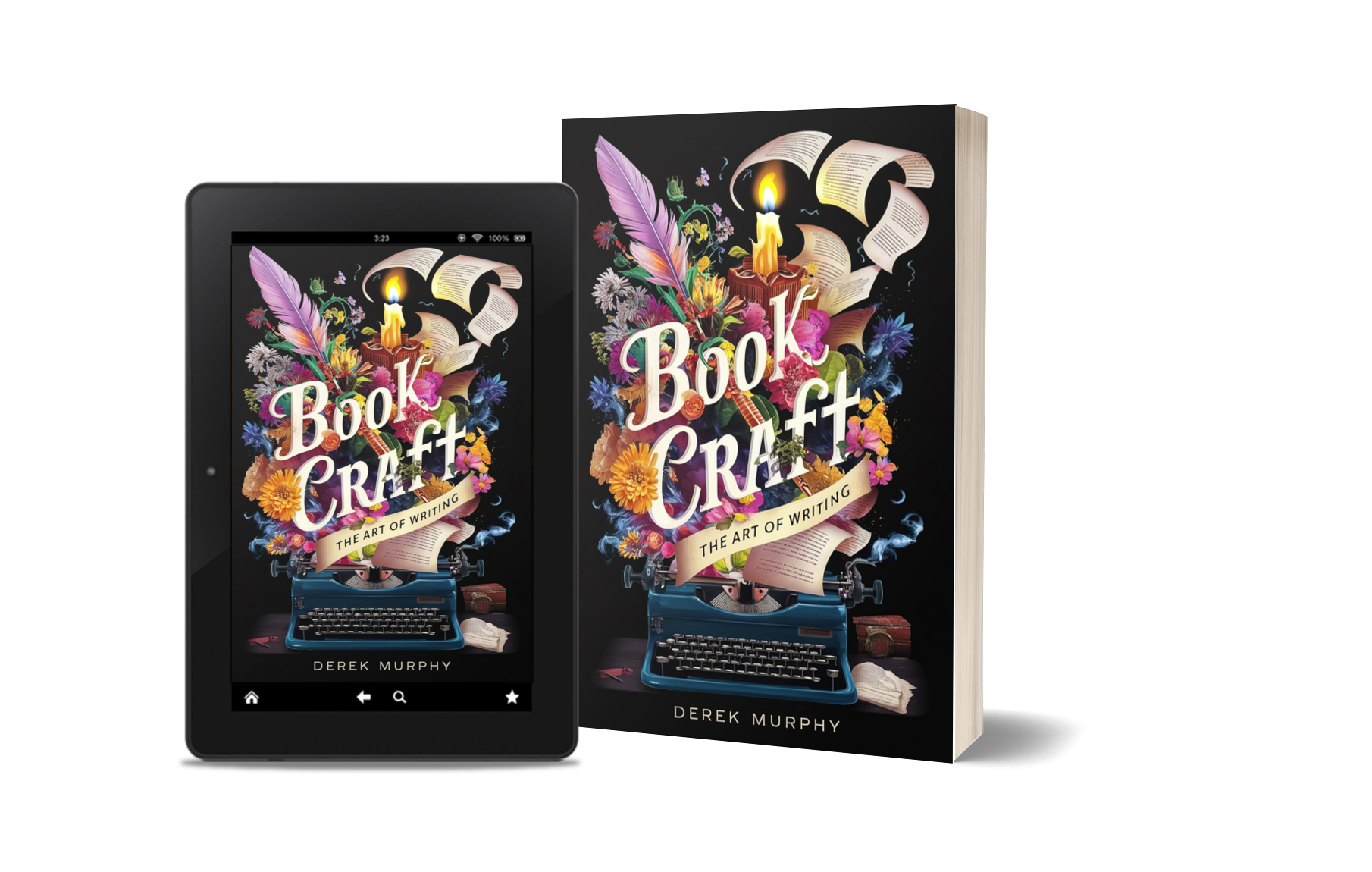
I first wrote this post several years ago, when my chapter plotting templates were taking off. After finishing my PhD in Literature and getting 5 million views on my YouTube channel, I tried to put it all together in One BIG Book on Writing. It’s a little too fanciful, I tried to stick on the “magical” theme of writing, but there’s a lot of solid writing tips in there too even if you skip the extended stories and metaphors.
Unlock the deep magic of storytelling with Book Craft, your ultimate guide to mastering the art and craft of writing fiction that resonates, captivates, and endures.
This isn’t just another writing guide—it’s a transformative journey that equips you with powerful story structures and advanced techniques to craft emotionally resonant drama that grips readers from the first page to the last. Whether you’re writing your debut novel or your tenth, Book Craft provides the blueprint to create fiction that not only engages but enthralls.
Writing is more than just an art—it’s a powerful spell that you can learn to cast with precision. Book Craft will teach you the craft behind the magic, providing the tools to transform your inspiration into mastery.
In Book Craft, you’ll discover:
- Advanced techniques to inject intrigue, suspense, and irresistible tension into your stories.
- Essential tools to craft dynamic characters, engaging scenes, and captivating narratives.
- Proven strategies to construct compelling narratives that draw readers in and keep them hooked.
- A clear, structured approach to plotting that allows your creativity to flourish while maintaining control.
- Methods for crafting characters with depth and authenticity, bringing them to life on the page.
- Tactics to enhance emotional impact, ensuring your stories resonate on a profound level.
- Insights on scene construction and pacing, building the momentum needed to keep readers—and agents—engaged.
- Methods to polish your manuscript, saving you thousands in editing costs.
Book Craft is your key to unlocking the secret alchemy of storytelling—where art meets craft to create fiction that captivates, resonates, and lingers long after the final page. Dive into a world where powerful structure and emotional depth come together, where your words don’t just tell a story—they cast a spell. Whether you’re aiming to capture the attention of readers, agents, or publishers, this book will arm you with the tools you need to succeed.
Written by a seasoned developmental editor with a PhD in literature, this book distills decades of experience into a comprehensive toolkit for writers ready to elevate their craft to new heights.
Ready to become a sorcerer of words, to wield the deep magic of storytelling with skill and intention? The secrets are within—if you’re willing to do the work.
Reviews For Book Craft
Reviews have been mixed for good reason, but I recently uploaded a new edition that is tamer and smoother than the original, so it should be easier to read and digest. That said… I’m pleased to have hit my mark in at least some cases, with reviews like these:
More Writing & Publishing Resources for Authors
Writing a book is a challenging feat, for anybody. I have a PhD in Literature and sometimes feel my current novel is more difficult than my thesis. Nonfiction can be easier, but it’s still sometimes hard to find the way to start. How do you start writing? How do you keep writing until the book is finished? What if you get stuck in the middle?
In this article I’ll share some of my experiences as a full-time author. I’m not making amazing money from my books yet, but I have received over a thousand reviews and they keep selling with no marketing – much of that has nothing to do with “quality” however, it’s more about content and story, and how well your material satisfies the established market demand.
Of course you can write anything you want, any way you want to.
But if you want people to pay for your book, you need to understand your audience, read the competition, figure out what people are searching for and what they like. There are tools for this kind of research, but I prefer KDPRocket for keyword research. It’s nice to know, for example, that wolves sell better than mermaids or angels, and that dragons are all the rage right now.
Traditional publishing often takes several years, so it may seem impossible to time the market – but most trends last longer than you’d think, and it’s pretty easy to determine whether you want to write something that hits more popular terms (the more you can match what people are actively looking for, the more free, organic visibility your book will get, and the easier it will be to sell.
How to write fiction
Personally, I’m a fan of plotting. I use a simplified hero’s journey for all my commercial fiction. As long as you get these main points roughly right, in regular intervals, your book should have a satisfying story arch. I’ve created a custom built, 9-step plotting cheatsheet that’s a bit simpler than my more advanced 24chapter outline. But I updated my free book to include both, so you should be able to grab them here: Free Novel Plotting Guide.
You also need to include:
- A likeable protagonist with a goal
- An imminent danger or threat
- A worthy antagonist
- A love interest and/or best friend
- A frenemy
- Captivating settings
Every scene should move the story forward and be full of conflict.
Each scene should start JUST before the moment of action or change.
Don’t worry about the writing – writing doesn’t get good until the 3rd or 4th revision.
Just try to get the story down. Don’t make it fancy.
Smoothen the transitions between scenes.
Increase the conflict by adding personal backstories to each character.
Improve the detail of the setting.
Make sure each character’s action is properly motivated, and not random.
Eventually, the hero should discover something new (a skill, weapon or history), gain powers and confidence, have something worth fighting for and new allies, and with all this, overcome the antagonist (for now).
I have a free video series on writing fiction that sells, you can watch is here.
PS. If you’re a pantser and hate outlining, that’s fine too – just focus on the excitement, tension between characters and descriptive settings.
The Plot Dot (a visual guide to story plotting and writing unforgettable fiction)
How to write nonfiction
The important thing to remember about writing a non-fiction book, is not to just cram it full of practical information. You need to make it easy for readers to enjoy and remember the information, with stories. You need to balance scene and setting and characterization with evidence and research and quotes.
Don’t just make it all about you and your experiences – include interesting stories and supporting quotes by more famous writers. Personal biography rarely does well unless you’re already famous. Why should people care about you and your experiences? What will they get out of reading your book?
Make sure it’s organized. Try to come up with a process or flow. If you’re teaching something, break it into a #of main topics that come in a rational order. Then illustrate each lesson with a personal story.
Start each chapter with a story hook. Instead of “Chapter two is about X” say “The first time I was in Mexico I almost drowned in Margaritas.” (Not a great example, but something surprising and interesting that paints a picture. Hook their intrigue, tell a story, then show them why it matters, reveal the lesson, and tie it all together).
It shouldn’t be just a bunch of random blog posts or unrelated episodes. Find a way to guide readers through the material, even if you only add a few paragraphs at the beginning and end of each chapter, plus and introduction and conclusion for the book.
Most nonfiction authors have trouble focusing, but there needs to be a momentum and clear path through the book – it needs to have a point. It needs to draw lessons and insights in a practical way, so readers can apply them to their own lives.
For nonfiction, it’s useful to write the title, subtitle and back copy first – get very clear on what exactly your book does, and what it offers readers. Make an outline of the structure with main benefits of each chapter. Tell readers exactly what they’re going to get. Use that promise and outline to begin writing.
PS. If you need help getting started, check out this post on how to write a non-fiction book in a week.
It has a sample chapter outline that might be useful.
The writing process + what about editing?
If you get stuck, you may want to hire help – a copy editor or manuscript review expert might be able to help organize your content and provide some structure. Writing can be like pulling teeth. You need to sit down and do the work. There is no easy way to do it, it’s all about consistency. Show up, sit down, start where you left off. 500 to 1000 words a day should take about an hour. Start a daily habit, and make sure you stick with it. If you get stuck in the middle, it’s probably because you don’t know what to do next (or you think it sucks and you’re stuck). If you have a story flaw or problem, you may need to take a few days off and FIX it by restructuring. There’s no point writing something that’s going to get cut out anyway, so if you feel like something is off, it probably is.
Focus on the bare-bones first and get a rough draft finished, even if it isn’t pretty. You might have placeholder dialogues you know are terrible, but you can fix those later, or skip boring sections. Just leave notes so you can remember to clean up things in the second draft. Fill in the blanks until it’s almost readable – so someone other than you could read through it and it would make sense.
Then start improving it – avoid typos, grammar issues, repetition, poor word choice or overused plot devices (like if your character leans against the wall seductively too many times). Add conflict, tension, action, and detailed description. Do the best you can before you get outside help, and avoid common signs of weak or amateur writing. Here’s a guide to self-editing your book that might be useful.
PS here’s some of our favorite books about writing to help authors level up fast:
Best Books On Writing