
A freshly dog-eared review
The Alien Invasion Book That Ruins Trust Forever
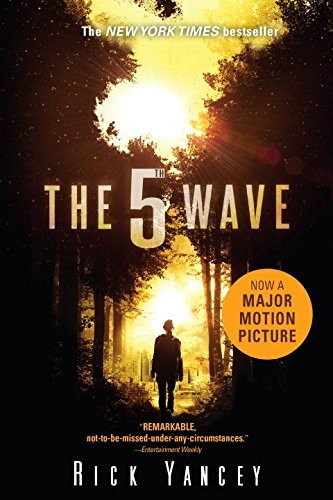
I read the first hundred pages of The 5th Wave on a Greyhound bus at 1am and had to stop looking out the window because every light in the distance suddenly felt like a countdown. That is the specific, physical effect this book had on me before I even knew if I liked it. It rewires how you look at silence.
| Author | Rick Yancey |
| Published | 2013 |
| Genre | Young Adult Science Fiction / Alien Invasion |
| Format | Series, book one of three (The 5th Wave trilogy) |
| Reception | Big commercial hit that split readers hard, loved for its dread and pacing, criticized for a rushed back half and the movie killed some of the goodwill |
| Our rating | 3.8/5 |
| Read it if | you want an invasion story that actually understands how paranoia works on a person |
| Skip it if | you need every POV to feel equally essential, or you already rolled your eyes at the movie |
Nobody Is Coming, and That’s the Whole Point
Here’s the setup, and I’m going to be careful with it because the way this information gets doled out is half the pleasure. Aliens show up. Not with lasers, not with a big speech, just ships hanging silent over the world for days while everyone loses their minds waiting. Then the waves start. First the power goes out, everywhere, permanently. Then the coastlines get wiped by something that isn’t quite an earthquake and isn’t quite a tsunami. Then a plague, engineered, quiet, patient. By the time we meet Cassie Sullivan, she’s one of the only people left who hasn’t died from waves one through three, and she’s hiding in a tent in the woods with a rifle and a countdown in her head because the fourth wave taught everyone the worst lesson possible: the aliens look like us now. Or they’ve taken us over. Or maybe they haven’t, and you just shot your neighbor for nothing.
That’s the trick of the book, and it’s a genuinely good one. Yancey isn’t interested in the spectacle of invasion, he’s interested in what happens to trust when you can’t verify another human being is human. Cassie can’t approach a stranded soldier for water without running the math on whether he’s infested. She can’t sleep near another person without wondering if she’ll wake up. The book calls this “the others,” and it becomes less a monster and more a psychological condition that the entire species has caught.
Where It Earns It, and Where It Doesn’t
Look, the Cassie sections are the book. I’ll die on this. Her voice is sharp, funny in the way people get funny when they’re two breaths from falling apart, and genuinely paranoid in a way that made me paranoid reading it in my own apartment. There’s a stretch where she’s crawling through grass to avoid a sniper that’s some of the tensest survival writing I’ve read in YA, full stop. The rifle. The girl. The math problem of “do I trust the only other living person I’ve seen in weeks.” It’s lean and mean and it works.
Then the book hands the wheel to Ben Parish, aka Zombie, at the military training camp, and here’s where I have to be honest with you: I found that section slower. It’s not bad, the camp stuff is doing real work setting up the trilogy’s bigger reveal, and the twist about who’s actually training these kids is a gut punch when it lands. But structurally it breaks the spell Cassie built. You spend a hundred pages white-knuckled in the woods with her, then you’re dropped into a fairly standard military training narrative with a new cast you haven’t earned feelings for yet. I remember actively wanting to get back to Cassie, flipping ahead a little to see how many pages until her name showed up again, which is not usually how I read.
And then there’s Evan Walker, and I need to admit something: I am not sure my taste is trustworthy here, because I know exactly how manufactured his whole arc is, the mysterious farm boy who’s a little too perfect, a little too convenient, and I fell for it anyway. Yancey plays that reveal well. It recontextualizes scenes you already read, which is a hard trick to pull off without it feeling cheap.
The ending, though. It resolves less than it sets up, clearly built to launch you into book two, and I know that’s a fair criticism because I felt the letdown myself, closing the book on my kitchen counter at like 2am and just sitting there going “wait, that’s it?” It’s not a cliffhanger exactly, it’s more like the story stops right when the real story starts.
The scariest thing isn’t the alien in the sky. It’s the person standing next to you who might not be a person anymore, and you’ll never be sure until it’s too late.
About Rick Yancey
Rick Yancey was a tax collector before he was a novelist, which honestly explains a lot about a man who understands institutional dread and the slow bureaucratic horror of watching something take everything from you piece by piece. He wrote the darkly funny Alfred Kropp books before this, then swerved hard into bleak, which tells you he’s not a one-note writer, he just picked the note that made him famous. He’s talked about wanting The 5th Wave to feel like an invasion could actually happen, grounded in real physics and real military logic rather than ray guns, and you can feel that research in the wave mechanics even when the emotional plotting gets soapier.
If This Wrecked Your Trust in Strangers, Read These Next
- The Passage by Justin Cronin, for the same slow-motion apocalypse dread but stretched over a much bigger, bloodier canvas.
- Wool by Hugh Howey, if you want the paranoia turned inward, toward a closed system instead of an open sky.
- The Chaos Walking trilogy by Patrick Ness, for YA that does “can I trust the person next to me” even better and meaner.
- Illuminae by Amie Kaufman and Jay Kristoff, for a different format but the same nerve-shredding claustrophobia.
You can grab a copy here if you want to see for yourself: The 5th Wave by Rick Yancey.
For your book club
- Cassie survives largely by trusting almost no one. Does the book think that instinct is correct, or is it also mourning what it costs her?
- Why split the story between Cassie’s first-person intensity and Ben’s third-person distance? Did the shift work for you or against you?
- The aliens never look alien. What does that choice do to the horror versus a more traditional invasion story?
- Evan Walker’s reveal recontextualizes earlier chapters. Did you see it coming, and does knowing change how you’d read the book a second time?
- The ending launches straight into a sequel rather than resolving. Does that feel earned as a structural choice, or like the story got cut off before it finished?
Still thinking about the woods, the rifle, the countdown
If The 5th Wave got its hooks in you, there’s more where that came from. Check out more of our book reviews for other stories that mess with your sense of who to trust.