
A freshly dog-eared review
The YA Dystopia That Made Me Sit on My Kitchen Floor
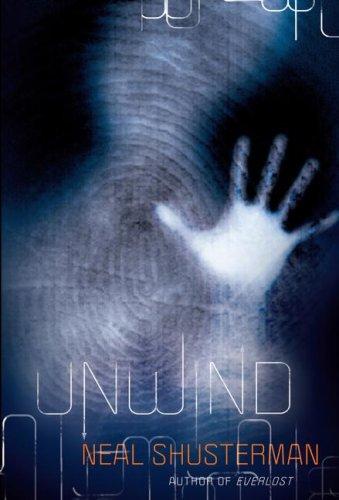
I have handed this book to exactly four people and taken it back from exactly zero of them still talking to me normally. There’s a scene about halfway through, the one everyone who’s read this book knows by name even if they won’t say it out loud, that rewired something in my chest and left it there. I don’t say that lightly. I read a lot of YA dystopian stuff in the mid 2000s wave and most of it has faded into a gray paste of Chosen Ones and love triangles. This one didn’t fade. It calcified.
| Author | Neal Shusterman |
| Published | 2007 |
| Genre | Young Adult Dystopian / Speculative Fiction |
| Format | First book in the Unwind Dystology, four books total |
| Reception | Widely loved by teachers, librarians, and readers who found it young; frequently called one of the most quietly disturbing YA books ever written, with a devoted but not universal fanbase |
| Our rating | 4.3/5 |
| Read it if | you can handle a premise so upsetting you’ll want to argue with someone about it immediately after |
| Skip it if | you need your dystopias to have sleek worldbuilding logic instead of blunt moral horror |
The Bill of Life, and Other Things I Wish Weren’t Plausible
Here’s the premise, and I want you to actually sit with it instead of skimming past it like it’s just another YA hook. In this future America, a war was fought between pro-life and pro-choice factions so devastating that the compromise everyone landed on was this: abortion is illegal, full stop, from conception onward. But. Parents can choose, between the ages of thirteen and eighteen, to have their kid “unwound.” Which means the kid gets disassembled, organ by organ, tissue by tissue, while fully conscious under anesthesia, and every piece of them gets transplanted into someone else. Since 99.44% of the body survives in some form, the law calls this “not death.” The kid isn’t dying. They’re just living in a divided state.
Shusterman doesn’t spend eighty pages world-building this. He just drops you in with three teenagers on a collision course with their own unwinding: Connor, a kid whose parents are done with him and sign the order like they’re returning a bad appliance; Risa, a ward of the state who gets unwound simply because state homes are over budget and she’s a mediocre pianist, not a great one; and Lev, who is the gut punch of the trio, a tithe, raised his whole life by devout parents to believe that being unwound for religious donation is his purpose, his honor, his calling. Lev doesn’t want to run. That’s the horror of him. He has to be talked out of his own execution.
The three of them end up on the run together, dodging Juvey-cops, hiding in a sort of underground railroad for unwinds called the Graveyard (an airplane boneyard, which is such a good image I’m annoyed I didn’t think of it first), and the plot mechanics of the escape are honestly the least interesting part of the book. What’s interesting is what it does to your stomach the whole time.
Why This One Actually Works (And the One Place It Doesn’t)
Look, the premise alone would be enough to make this book memorable, but premise isn’t the same as craft, and Shusterman has the craft to back it up. The single best decision in this book is the unwinding scene itself, told from the perspective of a kid named Roland, on the table, awake, as the surgical team works from the extremities inward. Shusterman narrates it clinically. Efficiently. The prose doesn’t scream at you. It just tells you, in flat procedural language, exactly what is happening to each part of this boy as the narration itself starts breaking apart into fragments, because the consciousness telling the story is being harvested piece by piece. I read that chapter standing in my kitchen because I’d picked the book up “just to check one thing” and then couldn’t put it down, and I had to sit on the floor afterward. Not dramatically. I just needed to be lower to the ground for a minute.
That’s not a hyperbolic thing to say about a YA novel. That’s just what happened.
Where the book stumbles, and I think it’s worth saying plainly: the prose outside of the big set pieces is functional at best. Shusterman is not a lyrical writer. Dialogue sometimes clunks, especially when characters explain the premise to each other in ways that feel more like the author briefing the reader. And the ending, without spoiling specifics, resolves the political situation a little too cleanly for a book that spent three hundred pages establishing how entrenched and monstrous this system is. I wanted the closing note to leave me more unsettled than it did. A tangent, because I have to say it: this book gets compared constantly to The Hunger Games, and I understand why given the timing, but they’re doing completely different work. Katniss’s world is spectacle and survival. Unwind’s world is bureaucracy and denial, ordinary people signing ordinary forms to make an atrocity feel like paperwork. That’s a scarier kind of dystopia to me, because I recognize the shape of it.
Am I overrating this because the unwinding scene hit me so hard it colored everything after it? Maybe. I’ve asked myself that. But I’ve reread it twice now, years apart, and the effect holds both times, so I don’t think it’s a fluke of first-read shock.
The scariest dystopias aren’t the ones with jackboots. They’re the ones where everybody signed the form.
About Neal Shusterman
Shusterman’s been writing for kids and teens since the late 80s, across horror, thriller, and speculative fiction, and he has this recurring habit of taking one moral question and turning it into a machine that just runs, relentlessly, to its logical extreme (see also: the Arc of a Scythe series, where he does the same thing with immortality and death quotas). He’s a working, prolific author rather than a flashy stylist, which is honestly part of why Unwind lands the way it does. He’s not trying to dazzle you with sentences. He’s trying to make you sit in a room with an idea until you can’t pretend it doesn’t bother you.
If this wrecked you, read these next
- UnWholly by Neal Shusterman, the direct sequel, for more of this world and a genuinely great new character in Miracolina
- Scythe by Neal Shusterman, for the same “one moral premise pushed to its extreme” trick, done with more polished worldbuilding
- Never Let Me Go by Kazuo Ishiguro, for the adult, literary version of “what if institutions harvested young people’s bodies and everyone just accepted it”
- The Giver by Lois Lowry, for the earlier, gentler ancestor of this whole “utopia built on an unspoken atrocity” YA lineage
If you want to grab a copy, here’s Unwind on Amazon, though I’d also just say check your library first, because I guarantee they have a beat-up copy that’s been through forty teenagers who all needed to talk to someone about it afterward.
For your book club
- Lev spends the first act of the book wanting to be unwound. What does his arc say about how deeply someone can be indoctrinated into their own destruction?
- The book argues that unwinding isn’t legally “death.” Do you think Shusterman wants you to accept that framing at all, even briefly, before rejecting it?
- Connor, Risa, and Lev all end up unwound-adjacent for completely different reasons (defiance, budget, faith). What does that range say about who a society decides is disposable?
- Did the ending resolve the political system too neatly for you, or did it feel earned given what came before?
- Roland’s unwinding scene is famous for a reason. What choice in how it’s written (perspective, pacing, tone) makes it land the way it does?
Still thinking about kids on the run from a system that’s already decided what they’re worth?
Same. Go dig through more of our book reviews for the next one to keep you up too late.