
The Lightbringer
Most fantasy magic runs on vague energy and hand-waving. Brent Weeks built his on the visible spectrum (a system where wizards spin colored light into physical matter) and then hung a genuinely good political thriller off it. Fifteen years on, it’s still one of the smartest “hard magic” debuts of its era, even if the man wielding it is a lot messier than his reputation suggests.
| Author | Brent Weeks |
| Published | 2010 |
| Genre | Epic / high fantasy |
| Format | Book one of the five-volume Lightbringer series (published as The Black Prism) |
| Best for | Readers who love intricate, rule-bound magic and a page-turner pace |
| Our rating | 4/5 |
A quick note on the title
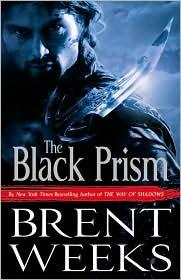
First, a bit of housekeeping, because it trips people up. “The Lightbringer” is the name of the series, not the 2010 book itself. The novel Weeks published that year (the one that starts the whole thing) is titled The Black Prism. So if you go looking for a standalone called The Lightbringer, you’ll come up empty. What you want is book one of Lightbringer, and that’s what we’re reviewing here.
Where it landed, and why it mattered
Weeks arrived in 2008 with the Night Angel trilogy, published in the now-famous “back to back to back” monthly release format that turned him into an overnight fixture on fantasy shelves. Those books were pulpy, brutal, and enormously fun, but nobody accused them of being architecturally clever. The Black Prism was the answer to that: the book where Weeks decided to build something with real engineering behind it.
That something is chromaturgy. Magic-users, called drafters, convert colored light into a physical substance called luxin: red burns, blue sets hard and structured, green flexes, and so on down the spectrum. Each color subtly bends the drafter’s personality toward its nature, drafting too much drives you mad, and at the top of the pyramid sits the Prism: the one person who can split white light and wield every color at once. The catch, established early and mercilessly, is that a Prism gets roughly seven years before the power kills him. It’s the kind of clean, load-bearing rule that makes a magic system feel like physics rather than decoration, and it arrived right as the genre was falling in love with exactly that.
The best trick here isn’t that light becomes matter. It’s that color becomes character, so the magic quietly tells you who a person is before the plot ever gets around to it.
The honest assessment
What’s great: the plotting. Weeks is a ruthlessly efficient storyteller, and The Black Prism moves. It opens with Gavin Guile (the Prism, the most powerful man alive) learning he has a teenage son he never knew about, and that admission cracks open a set of secrets the whole book spends its runtime detonating. There’s a war brewing, a rebel king, a genuinely satisfying midpoint reveal, and a climax that reframes the person you thought you’d been following. For a magic system this dense, the book wears its worldbuilding lightly; you learn the rules by watching people break them.
What’s dated or divisive: two things. First, Kip, the point-of-view boy, spends a great deal of the novel being told he’s fat and telling himself he’s fat, and Weeks’ handling of that self-loathing reads more clumsily now than it did in 2010. It’s meant as vulnerability but often lands as repetition. Second, the female characters are thinner than the machinery around them; Karris in particular gets a lot of narrative attention and not much interiority. And a warning worth its own sentence: this is book one of five, and the series’ final volume became genuinely contentious among fans who felt the payoff didn’t honor the setup. If a saga’s landing matters to you, go in with your eyes open. Judged purely as a standalone opening move, though, The Black Prism holds up well.
The reading experience
It’s fast. Weeks writes short chapters with hard cuts, the prose is functional rather than lyrical (this is not Le Guin, and it isn’t trying to be) and the whole thing has the propulsive, one-more-chapter momentum of a good thriller. Where it earns its keep is the interplay between the magic and the mystery: because color literally shapes who a drafter is, every reveal about someone’s power is also a reveal about their nature. That’s a rare thing, a hard magic system that does emotional work instead of just tactical work. Check the latest price on Amazon.
Who should read it, and what to read next
Read this if you loved Sanderson’s Mistborn for its clockwork rules and want something with a nastier political edge and a faster pulse. Read it if you like flawed, charming, morally slippery protagonists: Gavin is one of the genre’s better ones. Skip it if you need luminous prose, deep female POV work, or an ironclad guarantee that a five-book investment will pay off. If The Black Prism clicks, the natural next steps are Sanderson’s The Way of Kings for scale or Scott Lynch’s The Lies of Locke Lamora for that same con-artist charisma with sharper sentences.
Keep exploring the genre
If color magic and clever systems are your thing, there’s a whole tradition worth mining: see where Weeks sits among the greats in our full 60 best fantasy novels list, from the foundational classics to the contemporary gems conjuring their own magic.