
A freshly dog-eared review
I Moved Into a Dead Woman’s Life and Loved It
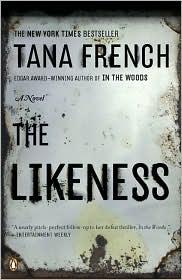
I have pressed this book into the hands of at least six people, and I’ve watched every single one of them get to the last hundred pages and text me some version of “wait, WHAT.” That’s the whole review, honestly. But you came here for more than that, so let’s talk about why Tana French’s second Dublin Murder Squad book might be the most audacious thing she’s ever pulled off, and why the central conceit that makes it brilliant is also the exact thing that will make some of you throw it across the room.
| Author | Tana French |
| Published | 2008 |
| Genre | Literary mystery / psychological crime |
| Format | Book 2 of the Dublin Murder Squad series (6 books), reads fine as a standalone |
| Reception | Beloved by longtime fans as French’s most emotionally hypnotic book, and the one skeptics point to as proof the premise is too far-fetched to bear |
| Our rating | 4.3/5 |
| Read it if | you want a mystery that’s really about identity and belonging, and you can suspend a LOT of disbelief for great atmosphere |
| Skip it if | you need your crime fiction procedurally airtight or you bounced off the “too literary” complaint in her debut |
The girl who was already dead
Here’s the setup, and I need you to just go with it for a second. Cassie Maddox, who we met in In the Woods getting quietly demolished by that book’s ending, is pulled back into undercover work when a young woman is found stabbed in an abandoned cottage in the Wicklow countryside. The dead woman’s ID says her name is Lexie Madison. That’s a problem, because Lexie Madison doesn’t exist. She was a fake identity Cassie invented years ago during an old undercover assignment. And the dead woman doesn’t just have Cassie’s old alias. She has Cassie’s face.
So the plan, cooked up by a detective named Frank Mackey who I will get to because he deserves his own paragraph of complaining, is this: Cassie moves into Lexie’s house with Lexie’s four devoted, strange, hothouse-flower graduate student housemates, and pretends the stabbing didn’t kill her. She becomes the victim. She lives the dead woman’s life, sleeps in her bed, eats breakfast with the people who might have murdered her, all in the hope that the killer will slip.
Look, I know how that sounds. It sounds like a premise from a soap opera pitched by someone who has never met a real police procedure in their life. I’ve read plenty of reviews that say exactly that, and they’re not wrong on the facts. No department would actually do this. But French isn’t writing a procedural here, not really. She’s writing a fever dream about wanting so badly to belong somewhere that you’ll live inside a corpse’s borrowed life to get it, and once you accept that’s the actual subject of the book, the implausibility stops being a bug.
Why it works even when it shouldn’t
The four housemates, Daniel, Justin, Rafe, and Abby, are the real engine of this book, not the murder. They live in a crumbling inherited house called Whitethorn with no internet, communal money, and a self-created world so insular and so seductive that you understand within thirty pages why someone would kill to protect it, and also why Cassie starts to actually want to stay. French writes group intimacy better than almost anyone I’ve read. The nightly dinners, the in-jokes, the way these five people built a life so complete it doesn’t need the outside world. I remember reading the scenes at Whitethorn on a red-eye flight, half asleep, and being annoyed every time the flight attendant interrupted me to ask if I wanted a drink, because I did not want to leave that kitchen table.
Here’s the thing though. Cassie is undercover investigating a murder, living with people who might have done it, and by the two-thirds mark I had genuinely forgotten that was the plot. That’s either the book’s greatest trick or its biggest structural flaw, depending on your patience. The mystery itself, when it resolves, is almost secondary to the emotional wreckage of Cassie falling in love with a dead woman’s family and a dead woman’s life. Some readers find that a bait and switch. I think it’s the point. This is a book about grief for a life you never got to live, wearing a murder mystery as a disguise, which, ha, is exactly what its own main character is doing.
Now, the actual criticism, because I promised you one and I mean it. Frank Mackey, the detective who orchestrates this whole scheme, is a monster of narrative convenience. He shows up whenever the plot needs pressure and manipulates Cassie with a coldness that made me want to reach into the page and shake her. Their dynamic is compelling but it never quite earns the level of control he has over her. And the ending, when the truth about who killed the real Lexie finally lands, is emotionally devastating but logically a little thin if you poke at it too hard. I did poke at it. I poked at it lying in bed unable to sleep because I was too upset about Abby. I’m still not sure if that’s a five star reaction or a sign the plotting has holes big enough to drive a car through.
I’ll also say, and I say this as someone who has reread this book more than any other on this list, that the pacing in the middle third tests you. It’s slow, it’s hypnotic, some might say it stalls. I didn’t mind it. But I know people who put it down for two weeks in the middle and picked it back up only because I guilt tripped them.
Some houses you don’t just live in. Some houses live in you, and this one made me want to live in the wrong life on purpose.
About Tana French
Tana French is an American-Irish author and trained actor who moved to Dublin as a teenager and never really left, which explains why her books feel less like mysteries set in Ireland and more like Ireland itself is a character with a grudge. She started the Dublin Murder Squad series in 2007 with In the Woods and structured the whole series in a way that still feels a little rebellious: each book hands the narration to a different detective, often one who was a minor character in the last book, so nobody’s story ever gets a clean, simple resolution. She trained as an actor before she became a novelist, and you can feel it in how she writes voice, every narrator sounds like a distinct person having a nervous breakdown in their own specific way.
If this wrecked you, read these next
Start with The Likeness if you haven’t, obviously, but here’s where to go after.
- In the Woods by Tana French, the book before this one, for Cassie’s origin story and an ending that will make you furious in the best way
- The Secret History by Donna Tartt, for the same insular, cultish, too-beautiful-to-survive group dynamic that makes Whitethorn feel dangerous
- Broken Harbor by Tana French, for a colder, sadder companion piece later in the same series
- Bunny by Mona Awad, if you want the group intimacy turned feral and a little unhinged
For your book club
- Would you have taken Frank’s assignment, or does the premise only work in fiction?
- Why do you think Cassie becomes more attached to Lexie’s life than to solving her murder?
- What does Whitethorn actually offer the housemates that the outside world doesn’t?
- Is Frank Mackey a good detective doing necessary harm, or is he just using Cassie?
- Did the ending feel earned to you, or did the emotion carry you past the plot holes?
Still thinking about Whitethorn
If this one got its hooks in you, go wander through more of our book reviews for the next book that’ll ruin your sleep schedule.