
A freshly dog-eared review
Best YA Fantasy Novels: 16 Books That Made a Generation of Readers (and a Few That Fooled Us)
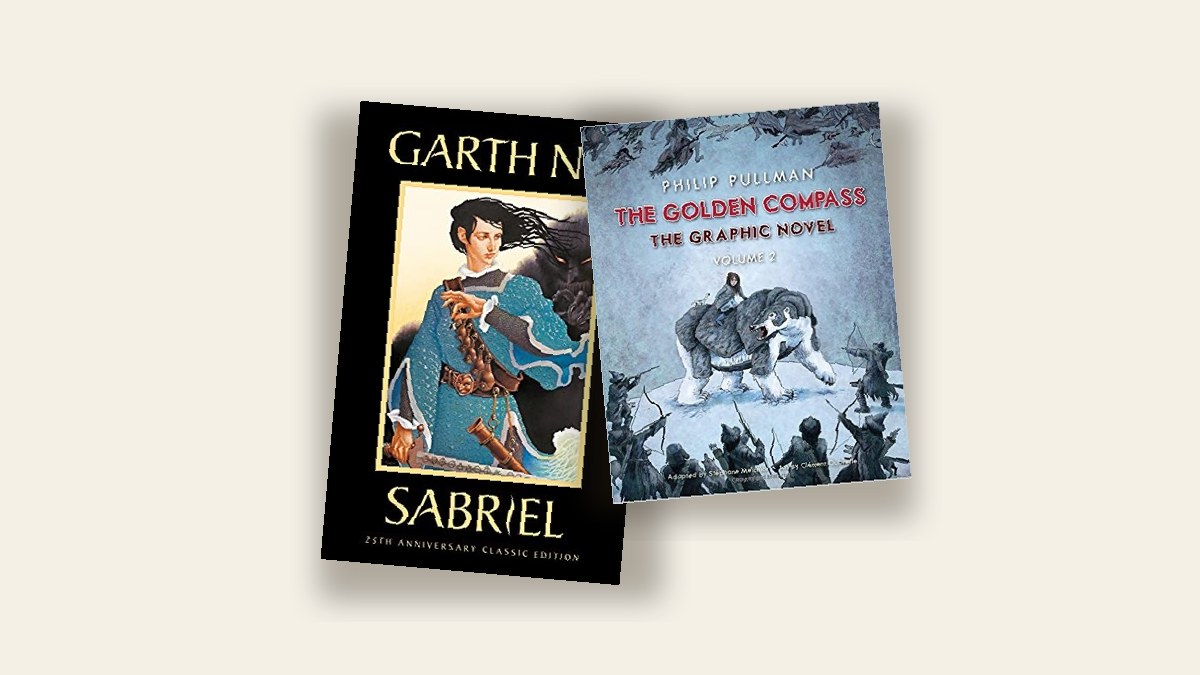
I was fourteen when I pulled Sabriel off a wire spinner rack at my public library, mostly because the girl on the cover had a sword and did not look like she planned to apologize for it. I sat down on the carpet between the stacks and read until the lights flickered for closing. Missed dinner. Got yelled at. Did not care. Every opinion I have about books descends, in some crooked way, from that afternoon.
That library copy had a cracked spine and somebody’s grocery list tucked inside it, which I kept for years like a relic. In the twenty-five-ish years since, I have read YA fantasy through several distinct geological eras: the Tamora Pierce paperback age, the post-Twilight paranormal flood, the dystopia years when every heroine got issued a hooded cloak whether she wanted one or not, the Sarah J. Maas industrial complex, and now the BookTok era, in which every cover is the same illustrated couple glaring at each other in front of a moon.
So when I say this is a list of the best YA fantasy novels, I mean it the old-fashioned, slightly arrogant way: my judgment, formed by actually reading these books, some of them many times, a couple of them until the glue gave out. This is not a Goodreads average wearing a trench coat. Some books here are beloved and deserve it. Some are beloved and I think you deserve a warning label first. At least one entry is going to get me angry emails, and I have made my peace with that.
Quick housekeeping before the pitchforks arrive: Harry Potter is not on this list because it is children’s literature that aged up alongside its readers, which is a different animal. The Hunger Games is not here because it is dystopia, and I keep my genres sorted like a spice rack. Twilight is paranormal romance, and also we would be here all day.
Look, every few years somebody writes a scolding essay about adults who read YA, and every few years I read it, feel vaguely embarrassed for an afternoon, and then go reread The Scorpio Races anyway. My actual position: a good book about being sixteen is a good book, full stop. Being sixteen is one of the most intense things that ever happens to a person. A genre that takes that seriously has earned the right to be taken seriously back. Anyway. The list. It is tiered, because honesty requires tiers.
What YA fantasy actually is (and why it won’t let go of you)
Strip off the marketing stickers and YA fantasy is a simple machine: fantasy where adolescence is the engine, not just the setting. The magic system, the crumbling kingdom, the prophecy, the war, all of it is scaffolding around the real subject, which is what it feels like to come into power for the first time and have absolutely no idea what to do with it. Every good YA fantasy is secretly about that. The bad ones are about the scaffolding.
Reading it feels different from adult fantasy, and the difference is not complexity. Plenty of these books are structurally more ambitious than the thousand-page doorstoppers that condescend to them. The difference is voltage. Adult fantasy characters have usually been disappointed before; they process betrayal with a weary sigh and a drink. YA characters are feeling everything for the first time, with no calluses. First power. First grief. First person who actually sees you. Done badly, that rawness curdles into melodrama. Done well, it goes straight around your defenses, which is why a grown adult can be wrecked by a book written for fifteen-year-olds, and why the books you read at fifteen are still load-bearing walls in your personality.
Also, and I say this with love for the genre next door: YA fantasy moves. Somewhere there is an editor with a stopwatch making sure nothing stalls. Three hundred pages of forward motion and not one forty-page council meeting. Adult fantasy could take notes.
The ones worth the hype
Sabriel by Garth Nix
Still the book I press into people’s hands first. Death, in this world, is a cold river with nine gates, and necromancers wade into it the way you’d wade into surf, carrying a bandolier of seven bells that each do something different and terrible. Ranna puts things to sleep. Kibeth makes the dead walk where you point. Saraneth binds. Nix builds all of this with a craftsman’s calm, no winking, no over-explaining, then sends an eighteen-year-old girl into it to find her father. Sabriel herself is quiet, competent, and honestly a little underwritten, and it does not matter, because the world does the emotional work and Mogget, the sarcastic cat-shaped horror riding her shoulder, does the rest. Three decades old and it has not aged a day. If you buy one book off this list, make it this one.
The Golden Compass by Philip Pullman
Yes, it starts as a children’s book. By the end of the trilogy it is the most emotionally serious thing on this list, and I will die on this hill. Daemons, your soul walking beside you in animal form, remain the best fantasy conceit of the last fifty years, and Pullman weaponizes the idea: the villains cut daemons away from children, and the scene where Lyra finds a boy clutching a dried fish because his soul is gone frightened me more than any horror novel I read as a kid. Honesty compels me to admit the third book gets preachy; Pullman keeps stopping the story to win an argument with a church that isn’t in the room. I finished The Amber Spyglass on a city bus and had to get off two stops early because I was crying about a bench. You’ll know the bench when you get there.
Howl’s Moving Castle by Diana Wynne Jones
The Miyazaki film is lovely. The book is better, because the book is meaner. Sophie gets cursed into old age in chapter one and is immediately liberated by it, barging into a wizard’s castle and reorganizing his entire life through sheer aggressive cleaning. Howl is one of the great comic creations in fantasy: vain, dramatic, cowardly, capable of flooding the castle with green slime because his hair came out wrong. Jones wrote this in 1986 and it is still funnier than nearly everything published this year.
A Wizard of Earthsea by Ursula K. Le Guin
The grandmother of the whole genre, published in 1968, and still the most disciplined book on this list. A gifted boy shows off at wizard school and rips a hole in the world, and the thing that comes through it is, spoiler, himself. Le Guin does in fifty thousand words what modern series need three volumes and a map to attempt. Fair warning: it reads slower and quieter than everything downstream of it. That is not a flaw. That is a woman who never wrote a sentence she didn’t mean.
Six of Crows by Leigh Bardugo
The rare case where the hype undersells it. Six teenage disasters attempt an impossible heist on the most secure fortress in the world, and Bardugo runs the whole operation like a Swiss watch with a knife inside it: rotating perspectives, information withheld exactly as long as it should be, flashbacks landing like verdicts. Kaz Brekker never takes off his gloves, and when you finally learn why, the book quietly moves from fun to devastating. One heresy while I’m here: the Shadow and Bone trilogy this spun off from is aggressively mid, a stock chosen-one story propped up by one good villain, and you should feel zero guilt about skipping straight to the heist. No mourners, no funerals.
Graceling by Kristin Cashore
Katsa can kill anyone with her bare hands, which everyone, including Katsa, believes is her Grace, her inborn gift. What her gift actually turns out to be is the book’s whole argument, and it lands. Quietly radical for 2008: a heroine who refuses marriage, refuses children, means it, and is never punished by the narrative for meaning it. The romance stays warm without swallowing the plot. Honesty: the long mountain crossing in the back half drags like a snagged sweater. Push through.
The Raven Boys by Maggie Stiefvater
Sold as “girl will kill her true love if she kisses him,” which is accurate the way calling Moby-Dick a fishing story is accurate. What it actually is: four private-school boys and one furious psychic’s daughter hunting a dead Welsh king along a ley line in Virginia, wrapped around the sharpest thing YA has ever written about money. Who has it, who performs not having it, what it quietly does to a friendship. Stiefvater’s prose has a strange specific hum I could identify blindfolded. Fair warning: this is a slow burn stretched across four books, and if you need resolution on a schedule, it will make you insane.
Daughter of Smoke and Bone by Laini Taylor
Karou is a blue-haired art student in Prague who runs errands for a shop full of monsters, collecting teeth and knowing better than to ask why. The first half of this book is as good as the genre gets; nobody in YA writes prettier sentences than Laini Taylor, and the wishes-for-teeth economy is genuinely original in a genre that mostly recycles. Honesty: the angel romance at the center is the weakest thing in it, star-crossed in a way that tips into perfume-ad territory. Read it anyway. For the sentences, and for Brimstone, the monster who turns out to be the aching heart of the whole thing.
Deep cuts I will defend until I die
The famous ones are famous for a reason. These got buried, and I resent it.
The Hero and the Crown by Robin McKinley
Won the Newbery in 1985 and somehow almost nobody under forty has read it. Aerin is doing girl-with-a-sword decades before the trope had its own shelf, and McKinley makes her pay honestly for it: the fight with the dragon Maur is not a triumphant set piece, it is a maiming, and the recovery eats years of the book. Fantasy where victory costs something. Imagine.
The Scorpio Races by Maggie Stiefvater
Yes, Stiefvater twice. I don’t care. Every November, on a small cold island, people race horses that come out of the sea, and the horses eat people. That is the whole plot and it is perfect. I read this in a drafty rental on the Oregon coast one October, in two sittings, with the actual sea making actual noise outside, and I have reread it almost every November since, the way some people rewatch a Christmas movie. The best standalone YA fantasy of its decade: salt, blood, butter cakes, a girl who enters the race because her family is coming apart, a boy who loves a monster. Get the paperback. It wants to be read somewhere cold.
Seraphina by Rachel Hartman
Dragons that fold themselves into human bodies and walk around baffled and disgusted by emotion, treating feelings like a contamination event. Into this court walks Seraphina, a musician with a secret that could get her killed, and Hartman writes about music better than almost any novelist I can name in any genre. Cerebral, slow, deeply humane. The sequel wobbles. The first book is a small miracle.
Plain Kate by Erin Bow
A girl sells her shadow to a stranger, and her cat starts talking. Sounds whimsical. It is not whimsical. It is the saddest book on this list by a wide margin, and the cat, Taggle, vain and warm and completely alive, is the reason why. Nobody read this book. It sold quietly and slipped under the water, and I am still not over it. If this paragraph gets five people to find it, the whole list was worth writing.
Proceed with caution: the overrated, the divisive, the mid
First, a rant I’ve been saving. I am so tired of the morally gray fae prince. One writer built him well, a few more built him competently, and then the genre xeroxed him for a decade until every shelf became the same smirking boy with cheekbones and a tragic backstory dispensed like a coupon. “For fans of Sarah J. Maas” now gets stamped on books that resemble Maas only in trim size. Marketing did this, not readers. Anyway. Here are the famous ones I’d hand you with caveats attached.
Throne of Glass by Sarah J. Maas
The most divisive series in the genre, and honestly, both sides are right. The case against: book one stars a supposedly world-class assassin who mostly attends balls, eats candy, and gets rescued, and the prose is workmanlike on its best day. The case for: somewhere around Heir of Fire, Maas locks in, and the back half of the series delivers scale and payoff that very few YA series even attempt, which is why its fans have the fervor of people who crossed a desert to reach the good part. Know yourself. If you need book one to be good, this is not your series. If you can invest on credit, the interest eventually pays.
The Cruel Prince by Holly Black
Divisive, and here is my half-defense: Holly Black earned the fae. She was writing them nasty back in Tithe in 2002, when everyone else was writing vampires, and Jude, a mortal girl clawing for standing in a court that sees her as livestock, is a genuinely great protagonist, spiteful and strategic and never sanded down for likability. The book itself is sharp. The problem is that it spawned the smirking-fae-boy assembly line I was just complaining about, and it is hard to read Cardan now without seeing his ten thousand lesser photocopies. Not the book’s fault. Sort of the book’s fault.
Eragon by Christopher Paolini
Here is where the angry emails come from. If you found Eragon at twelve, it opened a door, and I would never take that from you; a whole generation walked through it into fantasy and that counts for something real. But the book is Star Wars restaged in secondhand Middle-earth, beat for beat, wise old Brom and all, written by a teenager and reading like it. I attempted a reread a few years ago and made it eighty pages before setting it down gently, like a class hamster. You are allowed to love the door and still admit it was plywood.
Red Queen by Victoria Aveyard
The mid-est book on this list. Silver blood, red blood, a girl with lightning, a betrayal visible from space. It is a composite sketch of five better books, assembled competently, and for about two years it sold like the future of the genre. If you’ve read literally anything else on this page, you have already read Red Queen, just better.
YA fantasy is the only genre honest enough to admit that being seventeen felt like the end of the world. Because it was. A world ends, and you build the next one out of whatever you happened to be reading.
Where to start
Sixteen books is a lot of homework, so here is the cheat sheet, sorted by craving:
- You want the genre at its cleanest: Sabriel.
- You’re a literary-fiction person slumming it: A Wizard of Earthsea or The Scorpio Races. Nothing to apologize for in either.
- You want a heist and banter: Six of Crows. Skip the trilogy before it. I mean it.
- You want to cry on public transit like I did: The Golden Compass, all three books. Brace for the bench.
- You want funny: Howl’s Moving Castle.
- You want gorgeous sentences: Daughter of Smoke and Bone.
- You want the sad one: Plain Kate. Godspeed.
- You want to understand what everyone online is fighting about: Throne of Glass, entered with eyes open.
And if you bounce off all sixteen, I honestly don’t know what to tell you. Maybe try again in November, somewhere cold, with the sea making noise outside. That’s how it got me. It’s still getting me.
If you liked this, keep going
I gave the grown-up shelf the same treatment in my list of the best adult fantasy novels, if you prefer your heroes pre-disappointed. And if the romance threads here were your favorite part, my roundup of the best fantasy romance books is where I sort the real swoon from the assembly line.