
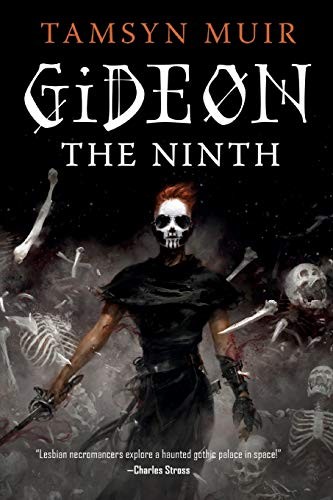
Gideon the Ninth
“Lesbian necromancers explore a haunted gothic palace in space” is the elevator pitch that launched a thousand preorders, and it undersells the book. Nearly a decade on, Gideon the Ninth still feels like nothing else on the shelf: a locked-room murder mystery welded to a bone-magic epic and narrated by a girl who would rather be reading dirty magazines. It matters because it proved a debut could be this weird, this maximalist, and this beloved all at once.
| Author | Tamsyn Muir |
| Published | 2019 |
| Genre | Science fantasy / gothic space opera |
| Format | Book one of The Locked Tomb (four volumes) |
| Best for | Readers who like their SFF strange, funny, and unafraid to confuse them |
| Our rating | 4.5/5 |
Where it came from, and why it caught fire
Muir was a New Zealand-born, long-time short-fiction writer when Tor.com Publishing put out Gideon the Ninth in September 2019. It arrived as the vanguard of a wave the internet loosely called “hopepunk-adjacent, but goth”: a moment when SFF was hungry for books that were emotionally raw, queer without apology, and formally rowdy. What set it apart from the pack was tone. Here was space opera written by someone who had clearly spent formative years on Tumblr and in fandom, and who saw no reason to leave that voice at the door.
The plot is deceptively tidy. The undying Emperor summons a scion (a necromancer) and cavalier (a sworn swordfighter) from each of the Nine Houses to a crumbling planetary palace, dangling the prize of immortal ascension. Gideon Nav is an indentured swordswoman of the Ninth House who despises her necromancer, the acid-tongued teen prodigy Harrowhark Nonagesimus. Then the guests start dying. It is Clue in a cathedral, if the cathedral were made of skeletons and the detective work involved reverse-engineering forbidden magic from the corpses of your competitors.
The honest assessment: brilliant, and a genuine slog to start
Let me be the reviewer who says the quiet part. The first hundred-odd pages are hard. Muir drops you into a byzantine House system with nine factions, unexplained terminology, and a cast introduced faster than any human can file them. Plenty of smart readers bounce off here, and their frustration is legitimate. This book withholds context on purpose and asks you to trust it. Whether that reads as confident or as an unforced error depends on your patience.
The other divisive element is the voice. Gideon narrates in a register thick with contemporary meme cadence and modern slang, dropped into a decayed far-future setting that otherwise feels medieval and liturgical. When it lands, it’s electric: a jolt of profane life against all that solemn bone. When it misses, the anachronism can yank you clean out of the world. If a joke about swords being cool in a “hell yeah” idiom breaks the spell for you, this may not be your book, and that’s a defensible reaction rather than a failure of taste.
Muir’s real trick is making necromancy feel less like spooky window-dressing and more like grief that refuses to stay buried: every skeleton in this house is somebody’s unfinished argument with death.
But here is why the rating stays high. Once the machinery clicks (and it does, somewhere in the middle third) Gideon the Ninth becomes almost impossible to put down. The mystery is real and fairly clued. The magic system is disciplined enough to reward attention. And the central relationship between Gideon and Harrow, two people who have spent their whole lives loathing each other in a sealed tomb of a planet, curdles into something devastating. The final act reframes nearly everything, and the last pages land a gut-punch that has made this book a re-read favorite specifically because you read the whole thing differently the second time.
The reading experience
Expect to be bewildered, then hooked, then wrecked. This is a book that pays off effort. It is dense, allusive (there are jokes and references you will simply not get, and Muir does not care), and structurally more ambitious than its trash-talking narrator lets on. It is also genuinely funny in a way most epic SFF is terrified to be. You will want to keep a mental map of the Houses; you will not need to keep a real one, because the emotional throughline carries you even when the lore doesn’t.
Who should read it, and what to read next
Read it if you love genre-mashing weirdness, morbid humor, prickly rivals-to-something relationships, and books that respect you enough to make you work. Skip it, or at least lower expectations, if you need a clean map handed to you upfront or if modern slang in a gothic setting sets your teeth on edge. If you finish and want more, the sequel Harrow the Ninth is even stranger and more polarizing (it makes Gideon look conventional). For a similar blend of dark tone and inventive worldbuilding, try N.K. Jemisin’s The Fifth Season; for the wit-forward gothic, Susanna Clarke’s Piranesi. Curious how it stacks up? Check the latest price on Amazon.
Keep exploring the genre
If bone-magic space opera whetted your appetite for the strange edges of the genre, dig into our full 60 best fantasy novels list for more modern gems and classic cornerstones worth your shelf space.